

On February 14th, Circular No. 29/2024/TT-BGDDT of the Ministry of Education and Training, regulating supplementary tutoring, officially came into effect. To date, there are still some concerns and questions from teachers and parents regarding this issue.
Below is a frequently asked question from teachers, parents, and students regarding tutoring, awaiting specific guidance:
If a computer science teacher teaches IC3 certification courses at a language and computer center outside of school, is that considered private tutoring?
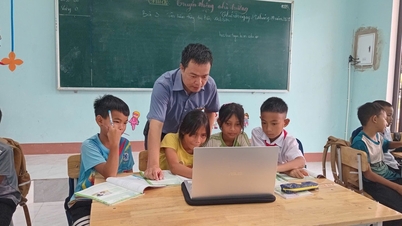
A computer science teacher at a public primary school in Ho Chi Minh City asked: "Outside of my regular working hours, I have a contract to work part-time at a foreign language and computer training center. I'm assigned to teach IC3 certification classes. Does teaching at this center count as part-time teaching according to Circular 29? And if, during the center's enrollment process, the same student I'm currently teaching at the primary school applies to study for the IC3 certification, am I allowed to teach that student at the center?"
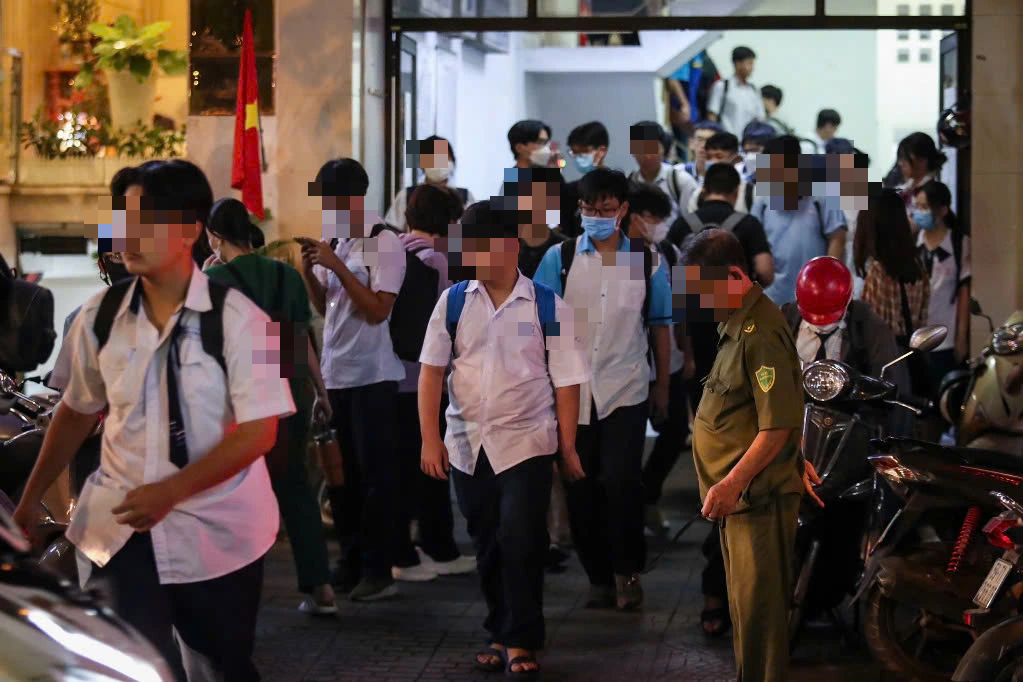
Tutoring and extra classes are a real need for a large number of students and teachers.
Are English teachers who teach Starters, Movers, or IELTS exams eligible for additional tutoring?
Another English teacher at a public primary school asked a similar question. She explained that outside of her school hours, she works under contract at an English center, where the center handles all student recruitment. The center teaches a curriculum different from the current textbooks, helping students obtain various English certificates. Would this additional work be considered supplementary teaching and be subject to the regulations in Circular 29? And if, by chance, she is assigned to a class at the center that includes students she taught at the primary school, would she be in violation of any regulations? "I don't participate in the recruitment process, and I don't collect money from the students. I only teach under contract with the center; they pay me, and I don't know anything about the center's recruitment process or how they collect tuition fees from the students," she stated.
She also raised concerns regarding Clause 1, Article 2 of Circular No. 29/2024/TT-BGDĐ dated December 30, 2024, issued by the Ministry of Education and Training, which regulates supplementary teaching and learning (hereinafter referred to as Circular 29). The definition of supplementary teaching and learning is: "Supplementary teaching and learning is additional teaching and learning activities beyond the time allotted in the educational plan for subjects and educational activities (hereinafter collectively referred to as subjects) in the general education program, the continuing education program at the lower secondary level, and the continuing education program at the upper secondary level issued by the Minister of Education and Training."
According to the current general education curriculum, English is a compulsory subject for students from grade 3 onwards. However, in Ho Chi Minh City, students from grade 1 have been learning English in school as part of a city-sponsored program. So, if an English teacher from a primary school teaches English at an external center, and teaches the same classes with grade 1 and 2 students they teach at school, will this have any negative impact? "Circular 29 stipulates that no extra classes should be organized for primary school students, except for those in arts, sports , or life skills training. But now I see that the vast majority of primary school students are learning foreign languages (mostly English). Does this violate any regulations?" the teacher questioned.
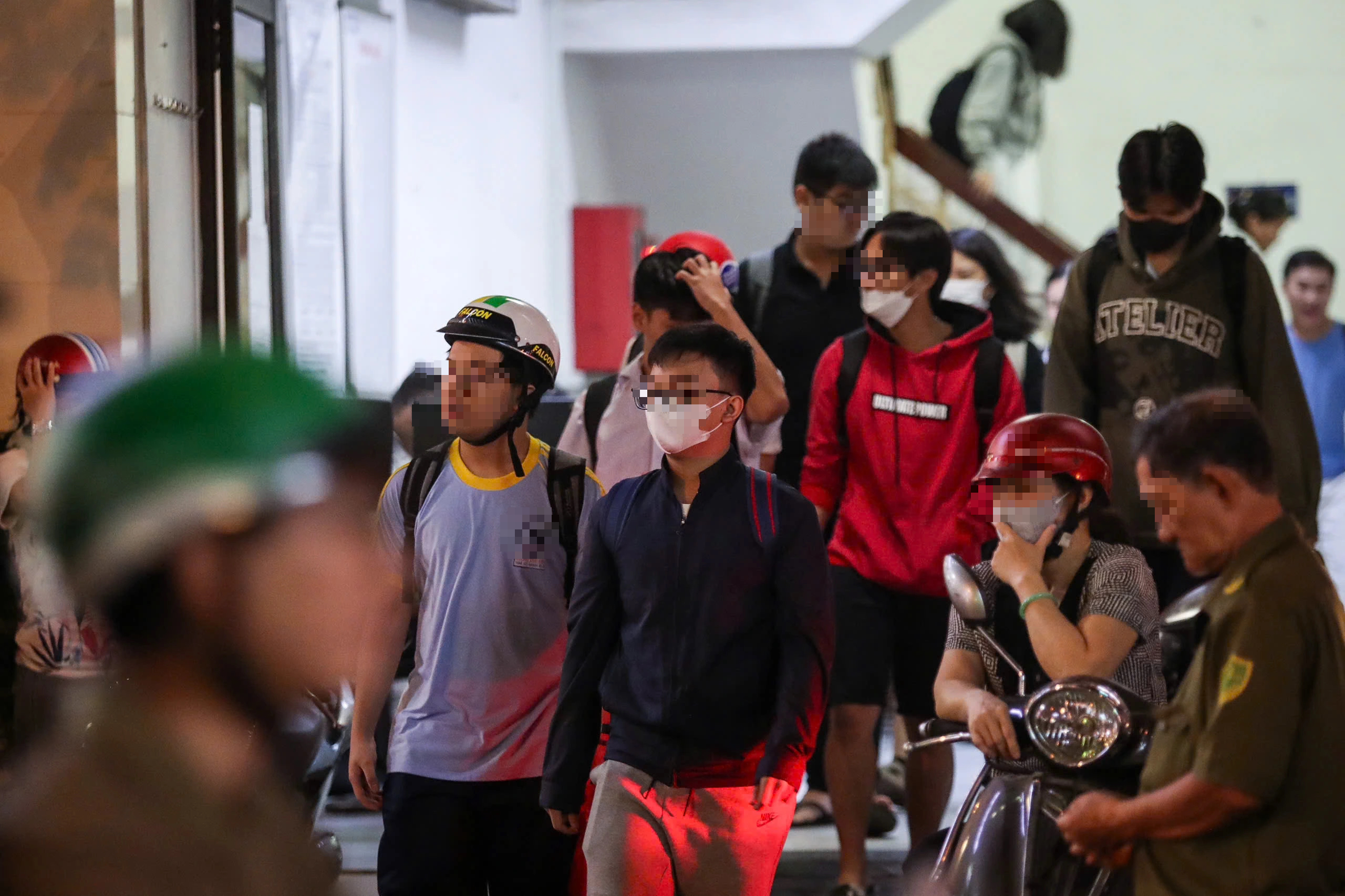
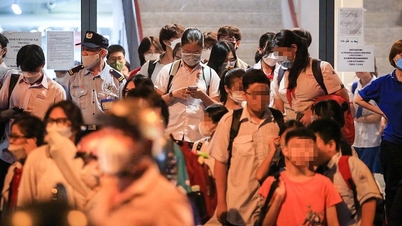
Students leaving school at a tutoring center.
The education company is also concerned.
A representative from education company A, located in Go Vap District, Ho Chi Minh City, asked: "Our company has a creative writing skills class, and we contracted with Ms. B, a primary school teacher at a public school. Our company recruits students and collects tuition fees. The teacher only teaches. According to regulations, the company must publicly disclose the teacher's information, tuition fees, etc., so that students know and can register. Because they know Ms. B is a good teacher, many people have registered to study with her. Some of her students also study with her at her school. Ms. B is worried that if she continues teaching, she will be violating Circular 29, so she is currently requesting a temporary leave of absence. Our education company is also affected because if she stops teaching, many remaining students will not register with other teachers, such as Ms. C. So I would like to ask, if Ms. B continues working with our company, will she be violating any regulations?"
Education department officials raise questions about tutoring and supplementary classes.
An education and training specialist in Ho Chi Minh City raised some questions with a Thanh Nien reporter regarding supplementary tutoring that they were unclear about from Circular 29.
Specifically, the questions are:
- According to Clause 1, Article 2 of Circular 29, teaching programs that are not included in the general education curriculum for that level does not constitute supplementary teaching. However, this can lead to centers (or teachers) creating their own courses to circumvent the regulations, but the content taught is very similar and difficult to distinguish, yet it cannot be considered a subject in the general education curriculum.
- For example, in educational centers, teachers might create their own curricula and materials to elevate the teaching to "skills," ensuring it's not labeled as supplementary instruction in subjects within the standard curriculum. However, the level and requirements for knowledge imparted remain at the same level as regular subjects; it's simply a matter of replacing the data in the textbooks. So, how can any agency or individual determine, during an on-site inspection, whether this is actually a subject within the standard curriculum? Are local officials qualified to determine whether or not supplementary tutoring is taking place? Does the Department of Education and Training have sufficient personnel and time to review similar situations without knowing whether or not it constitutes supplementary tutoring?
- At school, there's a physical education class, which includes several sports taught by teachers at different levels depending on the practical conditions. Then, those teachers take on extra work at sports centers, where they offer badminton, table tennis, tennis classes, etc. Music and art teachers do the same. They also take on extra work at centers offering piano and painting classes. So, is teaching these subjects at a center considered tutoring, and are they subject to Circular 29? If students from the teachers' primary, secondary, and high schools also attend these centers, are the teachers free to teach their own students?
On February 7th, the Ho Chi Minh City People's Committee issued a document to the Ho Chi Minh City Department of Education and Training, the Thu Duc City People's Committee, and the districts and communes regarding the implementation of Circular 29 of the Ministry of Education and Training on supplementary teaching and learning. According to the document, based on Circular No. 29/2024/TT-BGDĐT dated December 30, 2024, of the Ministry of Education and Training on supplementary teaching and learning, the Chairman of the Ho Chi Minh City People's Committee assigned the Department of Education and Training to take the lead and coordinate with relevant agencies to advise the People's Committee on issuing regulations on supplementary teaching and learning in the city.
The official document also requested guidance and organization of the implementation of regulations on tutoring and supplementary classes for schools, organizations, and individuals under its management; organization or coordination with relevant agencies to conduct inspections and checks on tutoring and supplementary class activities within the managed area; and handling violations within its authority or proposing that the competent authority handle them.
Therefore, teachers, parents, students, educational companies, and related units and organizations are hoping that the Ho Chi Minh City Department of Education and Training will soon issue specific guidelines and regulations on tutoring and supplementary classes in the city.
Source: https://thanhnien.vn/nhung-cau-hoi-ve-day-them-hoc-them-dang-duoc-hoi-nhieu-luc-nay-185250207192042868.htm

![[Photo] Prime Minister Pham Minh Chinh attends the Conference on the Implementation of Tasks for 2026 of the Industry and Trade Sector](/_next/image?url=https%3A%2F%2Fvphoto.vietnam.vn%2Fthumb%2F1200x675%2Fvietnam%2Fresource%2FIMAGE%2F2025%2F12%2F19%2F1766159500458_ndo_br_shared31-jpg.webp&w=3840&q=75)





























































Comment (0)