

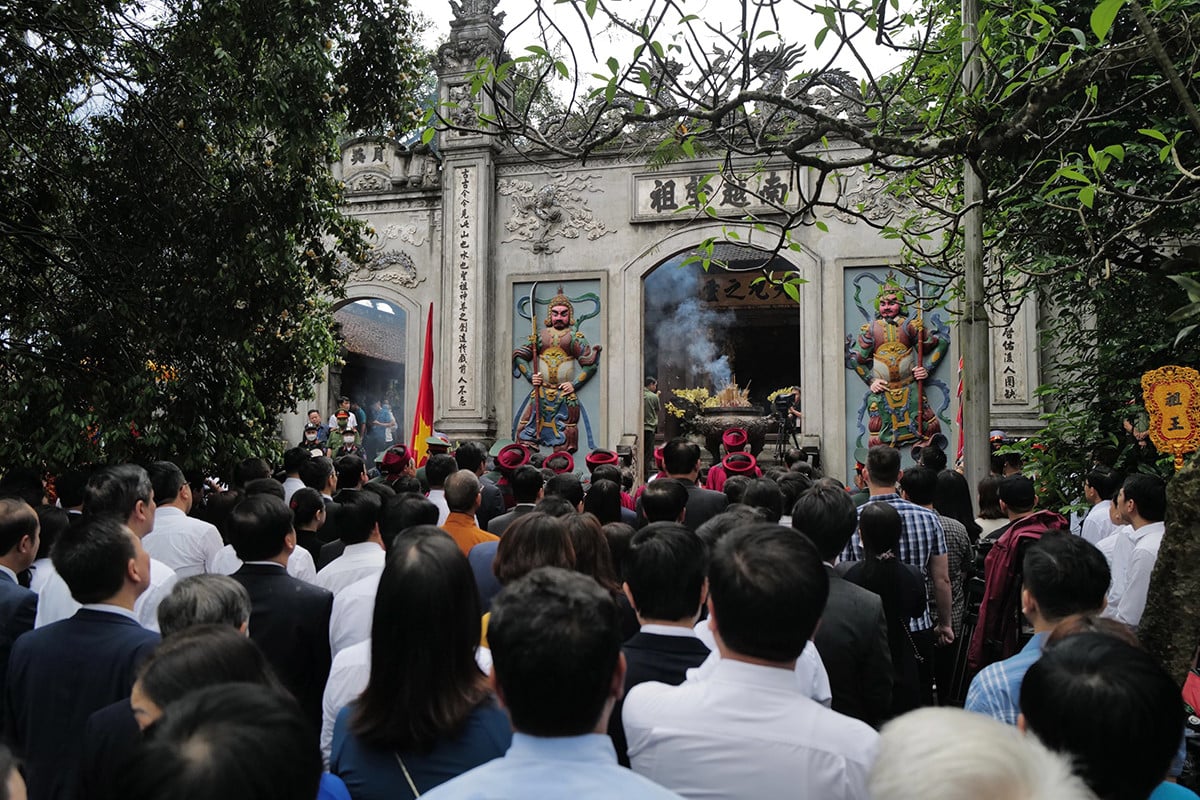
historical site History of Hung Temple Phu Tho It is a complex of temples and pagodas dedicated to the Hung Kings, located on Nghia Linh mountain, in Phong Chau land, which was originally the imperial capital of the Van Lang State.
The Hung Temple complex comprises four temples, a pagoda, a mausoleum, and several other architectural structures, harmoniously integrated with the majestic natural landscape. This is also the most famous Hung Temple in the country and the main venue for the Hung Kings Commemoration Day on the 10th day of the 3rd lunar month each year (this year falling on April 7th). Every year, millions of visitors flock to Hung Temple during this period.
Opening ceremony of Hung Temple Festival, Phu Tho province, 2024. Photo: Ngoc Thanh
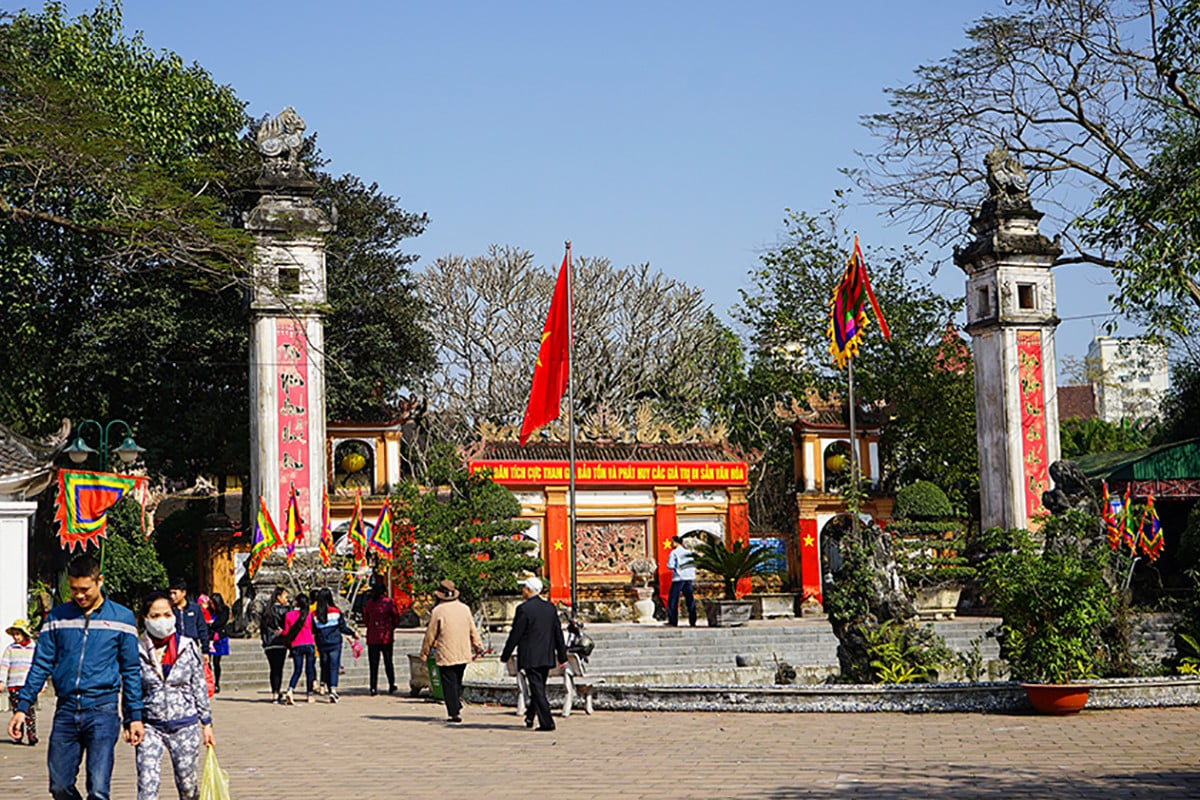
Hong Son Temple is located in Hong Son ward, Vinh city. Nghe An, recognized as a national historical site since 1984. Previously known as Vo Mieu Linh Tu, the temple was built during the Tran Dynasty to worship Quan Van Truong. In 1982, Hong Son Ward was established, and the Vo Mieu Linh Tu historical site took its name from the ward, hence the name Hong Son Temple.
The temple is situated within a spacious area of over 6,200 square meters, comprising 19 architectural structures including the main gate, auxiliary gates, surrounding walls, a crescent-shaped lake, a royal courtyard, the upper hall, the middle hall, and a bell tower. Today, the temple is a place of worship for King Hung, Saint Tran, and the Holy Mother. The temple currently hosts three major festivals: the Hung King's Commemoration Day (10th day of the 3rd lunar month), the Hung Dao Great King Tran Quoc Tuan's Commemoration Day (20th day of the 8th lunar month), and the Mother Lieu Hanh's Commemoration Day (3rd day of the 3rd lunar month). These festivals attract thousands of visitors from all over the country and local residents. (Photo: [Image caption]) Visit Nghe An
Ho Chi Minh City
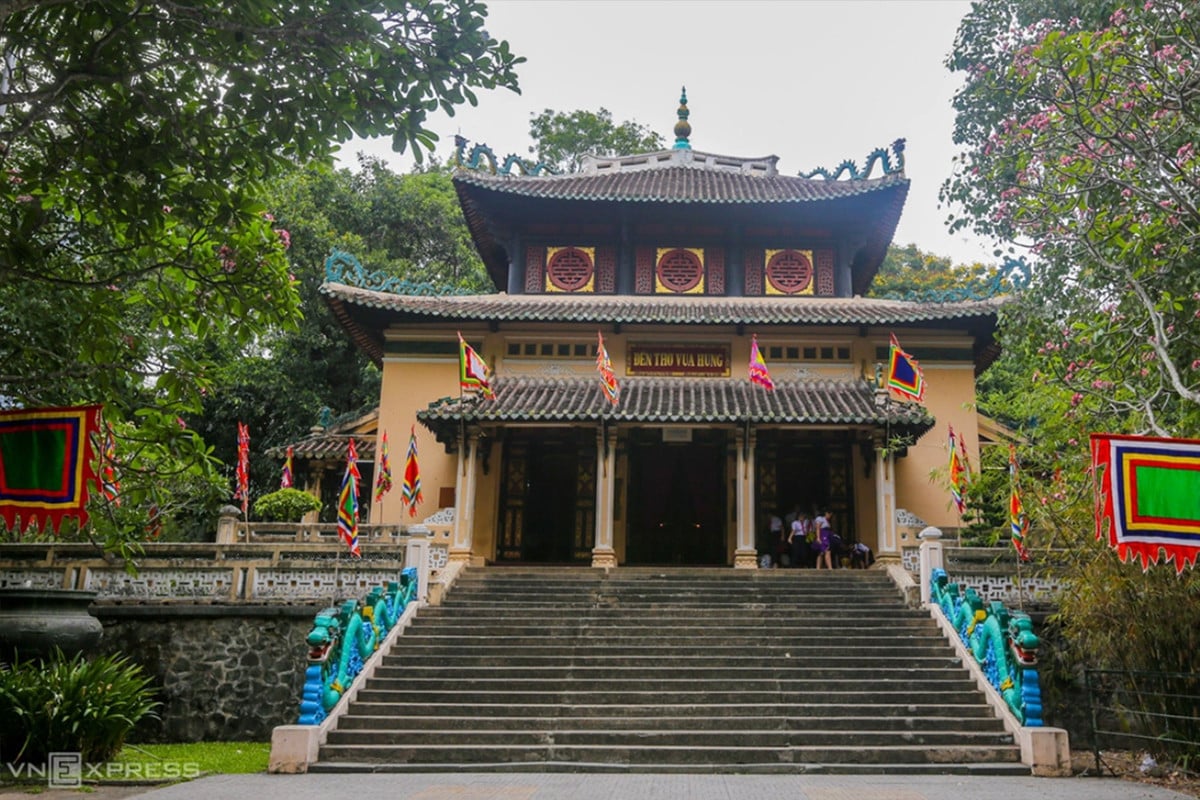
Hung King Temple Located within the Saigon Zoo in District 1, it was built by the French in 1926. Initially, the structure served as a memorial to Vietnamese soldiers who died fighting for the French in World War I.
After 1954, when the French withdrew from Vietnam, the structure was renamed the Hung Vuong National Ancestor Temple. Besides worshipping the Hung Kings, the temple also venerates other historical figures such as Tran Hung Dao and General Le Van Duyet. After 1975, the temple was renamed the Hung Vuong Temple and placed under the direct management of the Vietnam National Historical Museum. Every year on the Hung Vuong Ancestor Commemoration Day (the 10th day of the 3rd lunar month), a ceremony is held here to offer incense, attracting thousands of visitors. (Photo) Quynh Tran

The second shrine dedicated to King Hung is located at Ho Chi Minh City The Hung Kings Memorial Area is located within the National Historical and Cultural Park. The temple is built on a hill over 20 meters high, offering panoramic views of the more than 400-hectare park in Long Binh ward, District 9, about 30 km from the center of Ho Chi Minh City.
The complex (pictured), completed in 2009, consists of four main parts: a square, a bamboo walkway, a temple, and a viewing platform. Right at the entrance to Hung Temple is a 4,000 m2 square with a sun-shaped base, modeled after the Dong Son bronze drum. On either side of the square are nine 6-meter-high stone pillars symbolizing the 18 generations of Hung Kings. This place is considered "the largest Hung Temple in Southern Vietnam."
In addition, Ho Chi Minh City also has another temple dedicated to Hung Vuong, located in alley 22/93, Tran Binh Trong Street, Ward 1, District 5. (Photo) Quynh Tran
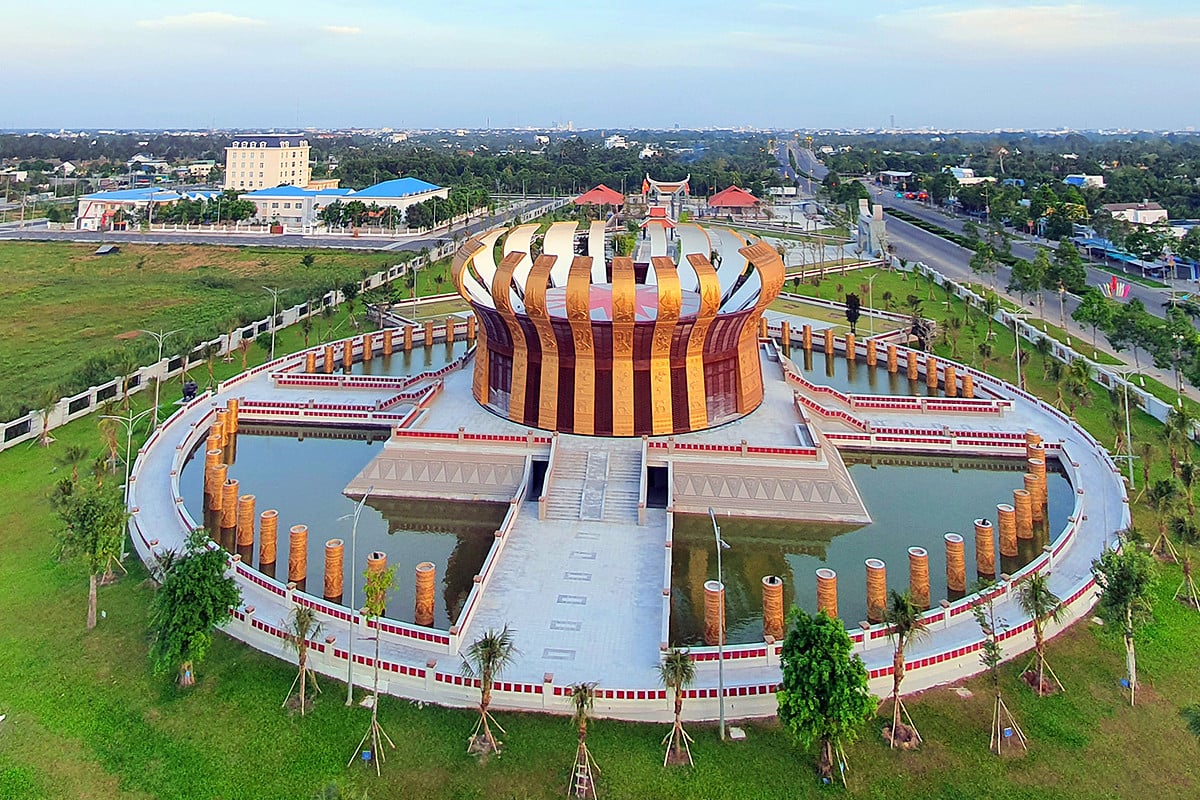
Hung King Temple Located in Can Tho, the monument sits on a 4-hectare park in Binh Thuy district, approximately 2 km from Can Tho airport. The project was inaugurated on the occasion of the Hung Kings' Commemoration Day in 2022, with a construction cost of 130 billion VND.
The main temple, 19.5 meters high and covering nearly 1,300 square meters, has a circular shape built on a square base, symbolizing heaven and earth. The design evokes the image of the Ngoc Lu bronze drum, surrounded by 18 arched panels with carved patterns, representing the 18 generations of Hung Kings. The main worship hall inside, spanning 400 square meters, houses altars dedicated to the National Ancestor Hung Vuong, Ancestor Lac Long Quan, Ancestor Au Co, Lac Hau, and Lac Tuong. The ceremonial drums, bells, and ancient bronze drums were brought from Phu Tho province.
On the 10th day of the third lunar month, locals and tourists from the southern provinces often visit this place and offer incense. (Photo) Huy Phong
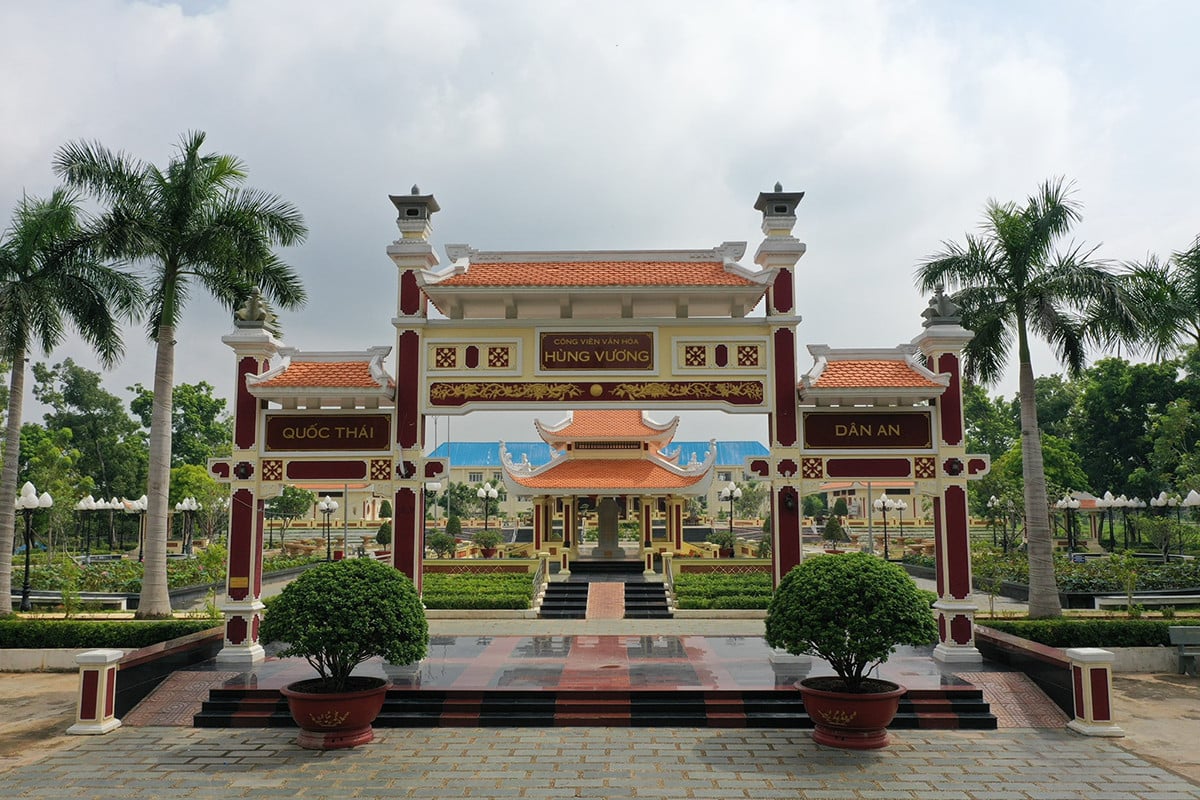
Dong Nai
Hung Vuong Cultural Park (pictured), located in Ward 3, Trang Bom town, was inaugurated on the occasion of the Hung Vuong Ancestor Commemoration Day in 2018. In addition, Dong Nai There are also two other locations: the Hung Kings' Ancestral Temple in Binh Da Ward, Bien Hoa City, and in Phu Son Commune, Tan Phu District. The Hung Kings' Ancestral Temple in Bien Hoa was built in 1968 and was classified as a provincial-level historical site in 2015.
These temples are open year-round, serving as places where locals and tourists come to commemorate and offer incense to the Hung Kings on the anniversary of their death. (Photo) Facebook/Trang Bom Culture and Information.

Lam Dong
The Au Lac Temple complex (commonly known as Hung Temple) is located amidst a pine forest in the Prenn Waterfall Tourist Area, at the gateway to the city. Dalat, on Phoenix Mountain with its "kneeling elephant, crouching tiger, and bowing dragon" formation. The three temples, Upper, Middle (pictured), and Lower, are all built to closely resemble the original Hung Temple architecture in Phu Tho. This is where the main activities such as offering incense and performing rituals take place every March 10th in Lam Dong.
Visitors to Hung Temple here not only pay respects and offer incense to commemorate the Hung Kings, but can also go hiking and visit streams and waterfalls to cool off on a hot summer day. It's also an ideal destination for visitors to immerse themselves in nature and escape the hustle and bustle of modern life. (Photo:) Baolamdong
Source: https://baoquangninh.vn/nhung-den-tho-vua-hung-an-tuong-khap-viet-nam-3351836.html
![[Image] Pleasant weather helps students enter the 10th grade entrance exam with confidence.](https://vphoto.vietnam.vn/thumb/1200x675/vietnam/resource/IMAGE/2026/05/29/1780034401612_ngay-1-thi-lop-10-minh-duy-8-5009-jpg.webp)

![[Photo] Ba Lang An Lighthouse - the "eye of the sea" amidst the "rock museum" of Quang Ngai province.](https://vphoto.vietnam.vn/thumb/1200x675/vietnam/resource/IMAGE/2026/05/29/1780038698840_anh-man-hinh-2026-05-29-luc-14-10-42.png)


























































Comment (0)