

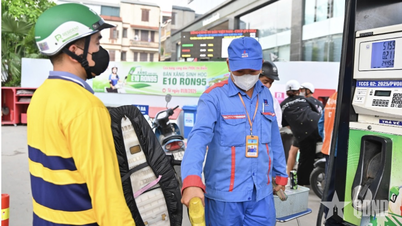
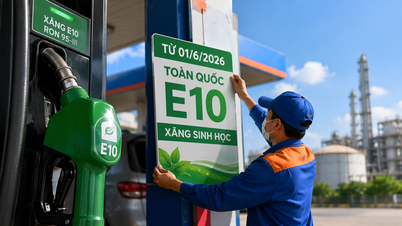
E10 gasoline has been approved by most major automobile and motorcycle manufacturers worldwide.
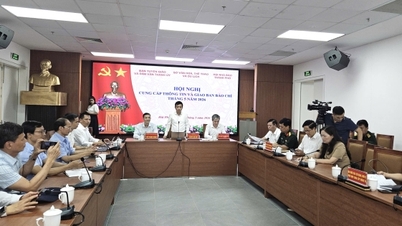
Regarding the compatibility of vehicles with E10 bioethanol, Mr. Bui Ngoc Bao, Chairman of the Vietnam Petroleum Association, said that currently, most major automobile manufacturers have officially assessed and notified the Ministry of Industry and Trade through the Association of Automobile Manufacturers about the compatibility of their vehicles with biofuels.
 |
| Mr. Bui Ngoc Bao, Chairman of the Vietnam Petroleum Association. |
In fact, many international car manufacturers have now designed engines compatible with biofuels, including E10 gasoline. E10 gasoline has been approved by most major car and motorcycle manufacturers worldwide, from Mercedes-Benz, BMW, Toyota to Japanese manufacturers and many other vehicle producers. Therefore, with the majority of cars and motorcycles currently in circulation in Vietnam, especially newer models, people should not be overly concerned about switching to this type of fuel.
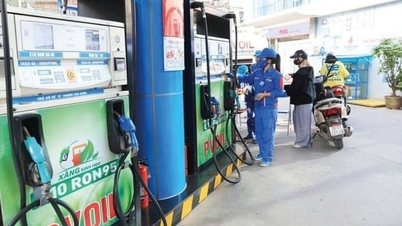
In fact, most car fuel tanks now clearly indicate the type of fuel suitable, including octane ratings such as RON 91, RON 95, or the ability to use biofuels like E5, E10, or even E20.
 |
Most motorcycle models manufactured from 2000 onwards are compatible with E10 gasoline. |
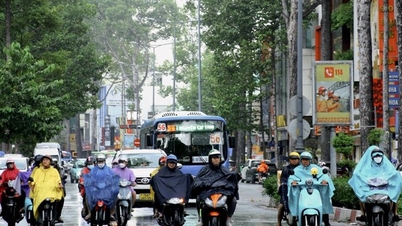
Most vehicles currently in circulation in Vietnam are compatible with E10 gasoline.
Mr. Do Van Tuan, Chairman of the Vietnam Biofuel Association, also informed that most motorcycle models manufactured from 2000 to the present are compatible with E10 gasoline.
During the drafting of Circular No. 50/2025/TT-BCT of the Ministry of Industry and Trade, which stipulates the mandatory roadmap for applying the blending ratio of biofuels with traditional fuels in Vietnam, the Vietnam Motorcycle Manufacturers Association (VAMM) also affirmed that these vehicles can safely use E10 gasoline. Current fuel tanks have already been treated and coated internally; the piping system and related fuel components are also designed to be compatible with this type of biofuel. Therefore, concerns about E10 gasoline affecting newer motorcycles are unfounded.
For older vehicles, manufactured before 2000, some parts such as rubber gaskets or fuel lines may age faster over time when using E10 gasoline. However, this mainly affects the rubber material after prolonged use and does not directly impact the engine. Replacing these parts is also quite simple and inexpensive. Concerns that E10 gasoline can damage the engine, cause corrosion, or reduce vehicle durability are completely unfounded and unverified.
 |
| Mr. Do Van Tuan, Chairman of the Vietnam Biofuel Association. |
As for automobiles, according to Do Van Tuan, Chairman of the Vietnam Biofuel Association, the Vietnam Automobile Manufacturers Association (VAMA) – an organization that brings together most automobile manufacturers and distributors in the Vietnamese market – assesses that most vehicles currently in circulation are compatible with E10 gasoline. According to this assessment, only about 60,000 Suzuki light trucks have been identified as unsuitable for this fuel type.
This is also one of the reasons why the Ministry of Industry and Trade continues to maintain the circulation of E5 RON 92 gasoline until the end of 2030, in order to ensure a suitable transition roadmap and avoid disruption to some specific types of vehicles that are not yet fully compatible with biofuels.
Meanwhile, E5 gasoline has been available on the Vietnamese market since 2015, and practical use over the years has shown that this fuel is suitable for most vehicles, including many older models still in circulation today.
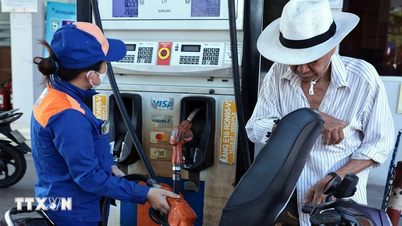
Consumers should perform basic maintenance before switching to E10 gasoline. According to Mr. Bui Ngoc Bao, Chairman of the Vietnam Petroleum Association, E10 gasoline has a higher cleaning capacity and solvent properties than regular mineral gasoline. Therefore, when used, the fuel tends to dissolve and carry away dirt and impurities that have accumulated over time in the fuel storage and supply system. These trapped dirt particles can clog fuel filters, affect fuel pumps or injector systems, especially in vehicles that have been in use for many years without regular maintenance and cleaning as recommended by the manufacturer. Therefore, the Vietnam Petroleum Association recommends that people, especially those with older vehicles or those manufactured before 2000 using carburetors, should perform basic maintenance before switching fuel. This may include cleaning the fuel supply system, replacing the fuel filter, and adjusting the carburetor for smoother vehicle operation. For older vehicles, the Vietnam Petroleum Association also recommends continuing to use E5 RON 92 gasoline to ensure proper vehicle operation and minimize breakdowns. Meanwhile, for newer vehicles using electronic fuel injection systems, users should also clean the fuel system regularly to ensure smooth operation of the biofuel. |
Source: https://www.qdnd.vn/kinh-te/cac-van-de/nhung-dong-xe-nao-tuong-thich-voi-xang-e10-1041856




![[Image] Nearly 125,000 Hanoi students completed the Literature exam for the 10th grade entrance exam.](https://vphoto.vietnam.vn/thumb/1200x675/vietnam/resource/IMAGE/2026/05/30/1780117233041_ndo_br_thiet-ke-chua-co-ten-2-png.webp)























![[Photo] Admire the coral "masterpiece" amidst the million-year-old heritage of Dak Lak province.](https://vphoto.vietnam.vn/thumb/1200x675/vietnam/resource/IMAGE/2026/05/30/1780107638639_y25-jpg.webp)





































































Comment (0)