

Any predictions should only be considered as a guideline, because anything can happen, including the worst-case scenario where Niger becomes the focal point of a regional conflict, the main battleground of a new proxy war in Africa.
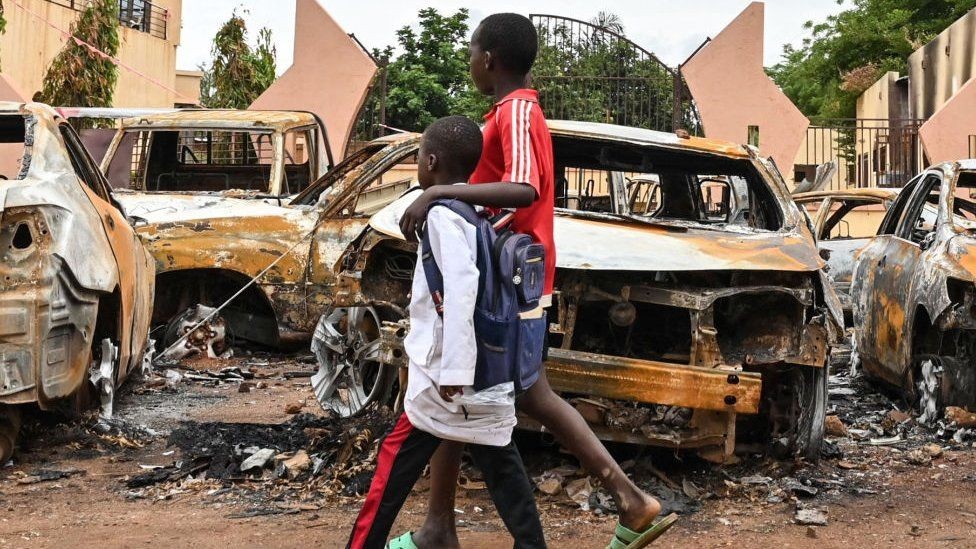 |
| Most Nigeriens are still trying to make ends meet regardless of the conflict between the ruling group and other countries in the region. (Source: BBC) |
The coup in Niger - meticulously and thoroughly prepared.
On July 26, 2023, Niger's presidential guard declared a coup, overthrowing Mohammed Bazoum, who had taken power after winning the 2021 elections. Following the coup, Brigadier General Abdourahamane Tiani, commander of Niger's presidential guard, declared himself "the chosen head of state," ordered the closure of borders, abolished the current constitution, and imposed a nationwide curfew.
Less than two weeks later, the coup forces in Niger formed a new government headed by Prime Minister Ali Mahaman Lamine Zeine, an economist. This was the fifth military coup since Niger declared independence and the seventh in Central and West Africa in the past three years.
However, unlike previous coups, this one has attracted particular attention from politicians , policymakers, analysts, and international commentators, who have explored it from many different angles.
Observers believe that this coup was meticulously and systematically prepared by the presidential guard, reflecting the changing global and domestic situation, and influenced by both internal and external factors.
In this context, subjective factors played a major role, directly determining the overthrow of Nigerien President Mohammed Bazoum. We can make this assessment based on the following reasons:
Firstly , the Nigerien presidential guard staged a coup against the backdrop of heightened strategic competition between major powers. At the time of the coup, international attention was focused on the conflict between Russia and Ukraine, particularly the large-scale counterattack by the Ukrainian army in eastern Ukraine, as well as the controversies surrounding the "rebellion" of the Wagner private military group and the fate of its leader, Yevgeny Prigozhin.
Therefore, the coup plan was kept secret until the last minute, and the Nigerien presidential guard faced little opposition from major powers before organizing the coup, allowing their actions to proceed very quickly. Only when the announcement of the overthrow of Nigerien President Mohammed Bazoum was made did the world react in astonishment to what was happening in the country; major powers were caught off guard before the government fell into the hands of the coup plotters.
Secondly , the Niger coup was part of a "wave of coups" in the Sahel region. Previous coups not only acted as a catalyst but also reinforced the motivation for the Niger presidential guard to overthrow the incumbent leader.
According to politicians, analysts, and international commentators, the coup plotters who organize a military coup at this time will certainly face pressure from major powers, but they will receive support from countries led by military regimes. These countries will unite to overcome the "heat" of international public opinion, resist sanctions, and even military measures from countries in the region.
In fact, Mali and Burkina Faso have declared that the Economic Community of West Africa (ECOWAS) military intervention in Niger amounts to a declaration of war against them. Furthermore, ECOWAS members who recently experienced a coup are actively promoting negotiations and employing "shuttle diplomacy" to de-escalate the situation and prevent a conflict that threatens the peace and security of the West African region.
Thirdly , the coup forces, led by Brigadier General Abdourahamane Tiani, consolidated their social base within the country to overthrow incumbent President Mohammed Bazoum. In March 2021, with the intervention of the presidential guard, the coup attempt against President-elect Mohammed Bazoum by a group of Nigerien soldiers was thwarted.
According to international political analysts and commentators, following the 2021 election, Mohammed Bazoum received strong and widespread support from voters. Therefore, while a coup might succeed, the post-coup government would soon face a dead end due to a lack of popular support. After more than two years in power, President Mohammed Bazoum's administration has increasingly demonstrated weaknesses in leading the country.
Socio-economic policies have not yielded practical results for the people, terrorism is on the rise, and Niger is becoming increasingly dependent on major powers, especially the United States and France. On this issue, the coup forces declared that "the government of the democratically elected president has failed in its economic policies, putting the country at increased risk of instability."
Furthermore, Mohammed Bazoum is of Nigerien Arab descent, not a native, and a segment of the Nigerien population already harbors skepticism towards politicians of Arab origin. Following failures in governance, their suspicion and resentment towards Bazoum's handling of national issues intensified.
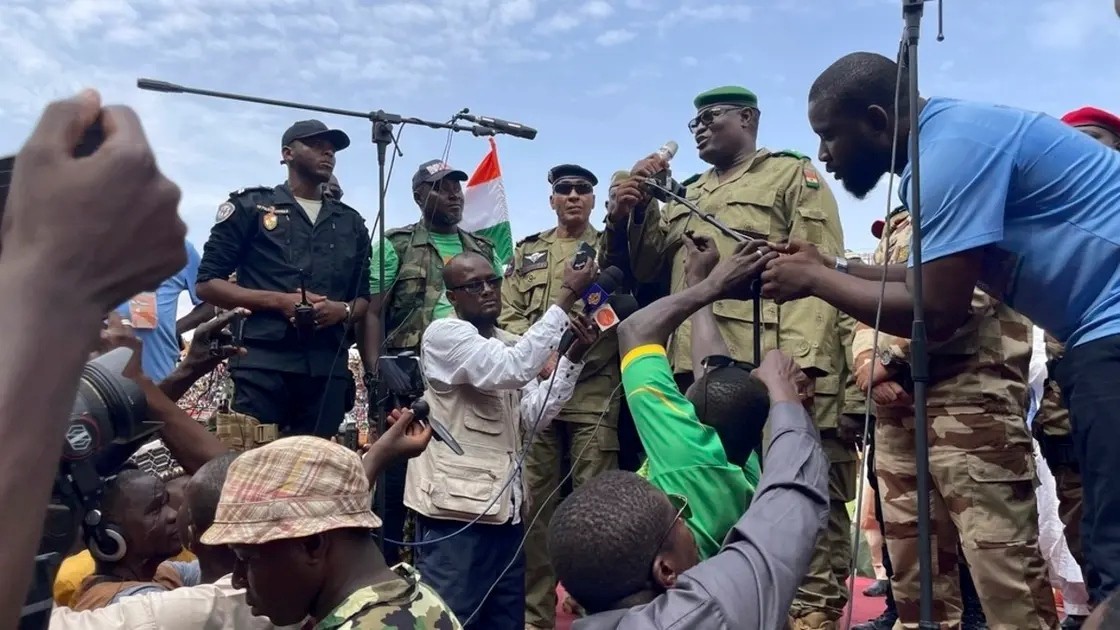 |
| Mohamed Toumba, one of the two generals leading the coup, speaks to supporters of Niger's ruling government in Niamey on August 6. (Source: AP) |
Fourth , the coup forces had fully prepared the political and ideological foundation to lead the country after overthrowing the old regime. Following the successful coup, the military government headed by Brigadier General Abdourahamane Tiani advocated minimizing the influence of Western countries, eliminating the remaining colonial remnants in Niger, implementing nationalist policies, and promoting foreign relations with Russia and China.
It is evident that the policies and strategies of the military government have received strong support from the people of Niger; hundreds of thousands of Nigerien citizens gathered in the capital Niamey and major cities across the country to express their support for the coup, with many holding banners protesting the French presence and expressing support for Russia. To promote national reconciliation, the Nigerien military government leaders also announced the start of a 30-day "national dialogue" to develop proposals for establishing a foundation for a "new constitutional life."
Thus, it can be seen that this coup was prepared by the Niger President's guard for a long time, exploiting national and historical factors; analyzing the international and domestic situation, ensuring the coup would take place quickly, be victorious, and not cause bloodshed. Post-coup developments increasingly confirm this assessment, showing that the coup forces were ready to take over the government from the overthrown President Mohammed Bazoum.
| Niger is a country in the Sahel region of West Africa, characterized by its hot, arid, and desertified landscape; high unemployment rates, 41% of the population living in poverty, and ranking 189th out of 191 countries in the Human Development Index. Security is unstable, with frequent terrorist attacks by extremist Islamic groups (13 incidents between January 2020 and August 2022), resulting in thousands of deaths. |
What does the future hold for Niger?
Shortly after the Nigerien presidential guard declared a successful coup, the international community reacted with mixed opinions. The United States and Western countries took a firm stance against the Nigerien coup, arguing that the coup forces needed to respect the constitutional order and immediately restore power to the ousted President Mohammed Bazoum. The US and France even stated they did not rule out the use of military means to restore order in the West African nation.
On September 7, US officials revealed that the Pentagon was redeploying some troops and equipment in Niger and would withdraw a small number of non-essential personnel “out of an abundance of caution.” This marks the first major US military move in Niger since the coup in the West African nation in July.
Two days later, Niger's military government accused France of deploying forces in several West African countries with the aim of "military intervention" in Niger, amid protests by hundreds of people camping outside a French military base in the capital Niamey demanding the withdrawal of French troops from the country.
Earlier, on August 31, the foreign ministers of the European Union (EU) countries agreed to establish a legal mechanism for imposing sanctions on officials involved in the coup in Niger.
In line with the US and Western countries, ECOWAS imposed sanctions on Niger's military forces and issued an ultimatum demanding the coup leaders reinstate President Mohammed Bazoum. After the ultimatum was rejected, military leaders from ECOWAS member states met and declared they would intervene militarily in Niger at any time. In a speech published on September 1st in a Spanish newspaper, Niger's top diplomat stated that ECOWAS was determined to take military action if the coup plotters who overthrew President Mohamed Bazoum did not compromise.
Conversely, Niger received significant support from the Sahel region countries that had recently experienced coups, including Mali, Burkina Faso, Chad, and Guinea. Mali and Burkina Faso threatened war if Niger faced military intervention, while Chad and Guinea—both ECOWAS member states—opposed military action, maintaining their stance on resolving the political crisis in Niger through diplomatic means.
| On September 16, three Sahel countries – Mali, Niger, and Burkina Faso – signed a security treaty in which the parties committed to supporting each other in the event of violence or external interference. |
For Russia and China, both countries believe that the instability in Niger needs to be resolved through political means to maintain a peaceful and stable environment in the region and the world. On September 4th, Niger's state television reported that the Chinese ambassador to the country, Jiang Feng, stated that the Chinese government intends to play a "mediating role" in the political crisis in Niger after meeting with the Prime Minister appointed by the military government, Ali Mahaman Lamine Zeine.
Faced with conflicting statements and actions from the international community, the military government in Niger has demonstrated a firm and resolute stance, refusing to compromise under external pressure. The head of the military government in Niger, Brigadier General Abdourahamane Tiani, asserted that "any attempt at military intervention in Niger will not be a walk in the park, as many mistakenly believe."
In addition, Niger has prepared the necessary conditions in case of war; declaring it will execute the ousted President Mohamamed Bazoum if there is military intervention and refusing to receive diplomatic delegations from ECOWAS. However, the military government has also left open the possibility of negotiations to resolve the political crisis in the country.
Recent political developments in Niger have led ECOWAS to block financial transactions and electricity supplies to Niger, and close its borders, making access to essential goods extremely difficult. Following the coup, the lives of the Nigerien people have been greatly disrupted. Already difficult living conditions have become even harder, with soaring prices, food shortages, and electricity scarcity becoming increasingly common, threatening production and daily life.
After July 26, 2023, electricity shortages worsened, affecting people's lives and production; food prices also skyrocketed due to border closures. Niger's food supply depends on imports, and domestic production is not promising due to the severe drought and limited arable land in this West African nation.
Following the Nigerien presidential guard's takeover, residents of Maradi, a bustling city in southern Niger near the border with Nigeria, reported that rice prices rose by approximately 20%, from 11,000 CFA francs per bag (US$18.30) to 13,000 francs in just a few days.
Meanwhile, fuel prices have nearly doubled, from 350 Nairo (approximately $0.45) to 620 Naira per liter of petrol following the political upheaval in Niger. Many Nigerien residents are uncertain about their future, noting that “most households are stockpiling supplies. In just a few days, some items have increased in price by 3,000-4,000 CFA francs ($5-6). Will the situation be like this in the next month?”
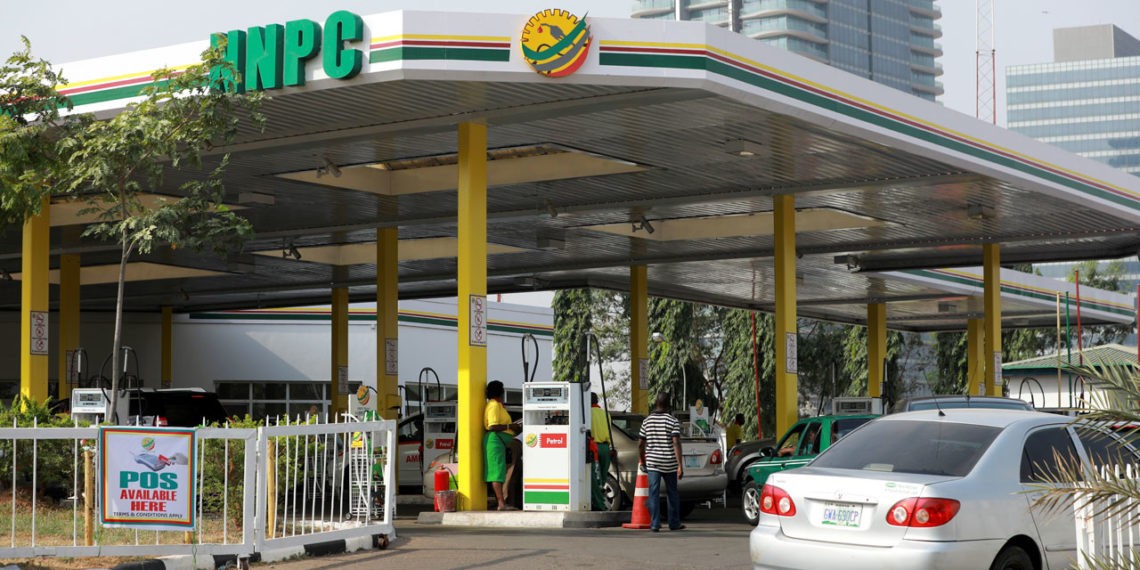 |
| People in Niger are finding it difficult to cope with soaring prices amid economic and political instability. (Source: Guardian Nigeria) |
Standing at a crossroads in history, anxiety and doubt about the path ahead are inevitable, especially when domestic difficulties are overwhelming, foreign pressure is increasing, and the entire country is at risk of becoming a new battleground in the competition between great powers, with a very high possibility of a proxy war breaking out in Niger.
Every policy and move of the Niger military government is being closely watched by the whole world, because it not only determines the future of approximately 27 million people in this country but also affects peace, stability, and sustainable development in West Africa in particular and the world in general.
[*] People's Security Academy
[**] Me Linh District Police, Hanoi
Source
![[Photo] The heat at the fireworks display site on the opening night of the Da Nang International Fireworks Festival 2026](https://vphoto.vietnam.vn/thumb/1200x675/vietnam/resource/IMAGE/2026/05/27/1779889741485_ndo_br_z7872039145157-fecaba5112f39e8352544099d7ef4738-5140-jpg.webp)
















































































Comment (0)