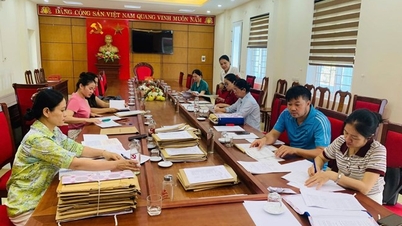
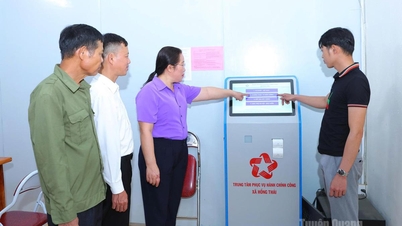
Over the past period, Quang Ninh province has paid attention to and created favorable conditions in terms of policies and resources to promote socio-economic development, gradually narrowing the development gap in ethnic minority areas within the province.
Over the years, Quang Ninh province has paid much attention to and provided practical support to ethnic minority communities through various policies. For example, in Bang Ca commune (Ha Long City), where 92% of the population are Thanh Y Dao people, the community has recently received support in the form of seeds and capital; priority has been given to infrastructure development; and the potential and advantages of the locality have been leveraged through the development of tourism models, medicinal plant cultivation, and livestock farming. The commune has also received investment from Ha Long City in roads and schools, creating more jobs and increasing income for the people.
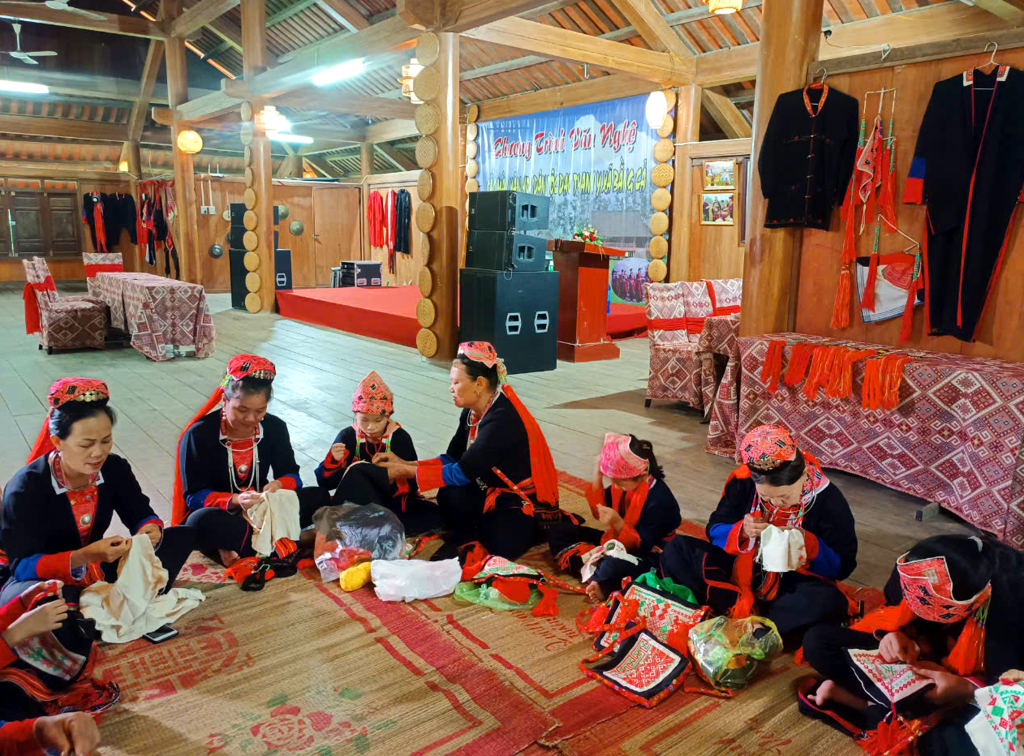
In addition to providing resources to localities, the province has organized and implemented programs and policies of the Party and State for ethnic minority and mountainous areas, contributing to promoting socio-economic development. Currently, Quang Ninh has more than 40 ethnic minority groups, accounting for 12.31% of the province's total population. These ethnic minorities live in communities and are interspersed in 13 localities in the province, mainly in mountainous and border areas. Therefore, since the 3rd National Congress of Ethnic Minorities (2019), the entire political system has made efforts and is determined to help ethnic minority areas rise up and narrow the development gap between regions.



First and foremost, this work has received comprehensive attention from Party committees and governments at all levels through the issuance of numerous decisions and directives on the implementation of ethnic policies; and many mechanisms and policies for socio-economic development in ethnic minority areas. The Provincial Party Committee has issued resolutions on sustainable socio-economic development linked to ensuring strong national defense and security in ethnic minority areas.
The Provincial People's Council also issued resolutions on mechanisms and policies; the Provincial People's Committee also provided specific guidance linking Resolution 06-NQ/TU with national target programs. At the local level, Party committees and authorities have been timely, creative, and innovative in organizing implementation, leveraging all resources, and exploiting potential and advantages to sustainably develop the socio-economic conditions of ethnic minority areas. The province has assigned localities to focus on implementing 414 essential infrastructure investment projects supported by the provincial budget, including 121 projects under the overall program for ethnic minorities and 293 projects under the new rural development program.
This has contributed to changing and inspiring the self-reliance and aspirations for innovation and development among the people, creating endogenous resources that rapidly transform the rural landscape and improve the material and spiritual lives of the people. People of various ethnic groups boldly participate in production development, demonstrating dynamism and diligence, not relying on government support, and not hesitating to experiment with new livelihood models that bring high economic value and increase income.




Thanks to these efforts, the appearance and socio-economic life of ethnic minority communities in Quang Ninh province have undergone many changes. 100% of communes in ethnic minority, mountainous, and border areas have had their roads paved with asphalt or concrete; 100% of roads from commune centers to villages and hamlets have been concreted according to the new rural development criteria; 64 out of 64 communes have health stations that meet the national health standards; and 100% of households in communes and villages have access to the national power grid.
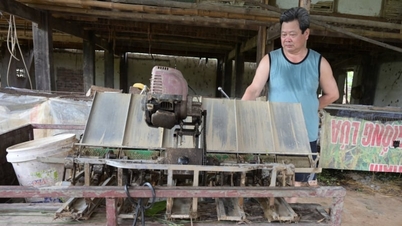
Some localities have initially developed high-value-added agricultural and forestry production areas such as medicinal plants, timber trees and non-timber products, and crops and livestock associated with the OCOP program. The average per capita income in ethnic minority and mountainous areas has reached a high level compared to ethnic minority areas nationwide, and the rate of poor and near-poor households has decreased rapidly and sustainably.
Source




![[Photo] Strengthening character and expertise: Intense training for artillery soldiers.](https://vphoto.vietnam.vn/thumb/1200x675/vietnam/resource/IMAGE/2026/06/30/1782815602541_lu-368-1875-4571-jpg.webp)