

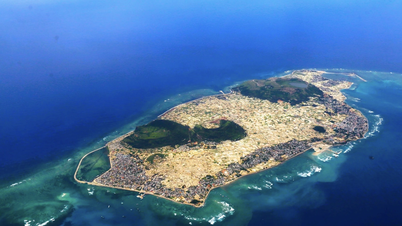
In Tien Hai commune, besides traditional occupations like diving, squid fishing, and trawling, local people also build cages for fish farming. Mr. Tran Van Loi, a resident of Tien Hai commune, said that his family used to make a living mainly from diving and fishing at sea. In recent years, marine resources have gradually become depleted, so he invested in building cages to raise grouper, snapper, and abalone. "Since switching to cage fish farming, my family's income has been more stable. To date, I have two cages raising grouper, snapper, and other fish, with an estimated yield of over 1.5 tons, plus abalone, bringing in a profit of about 600 million VND per year," Mr. Loi said.
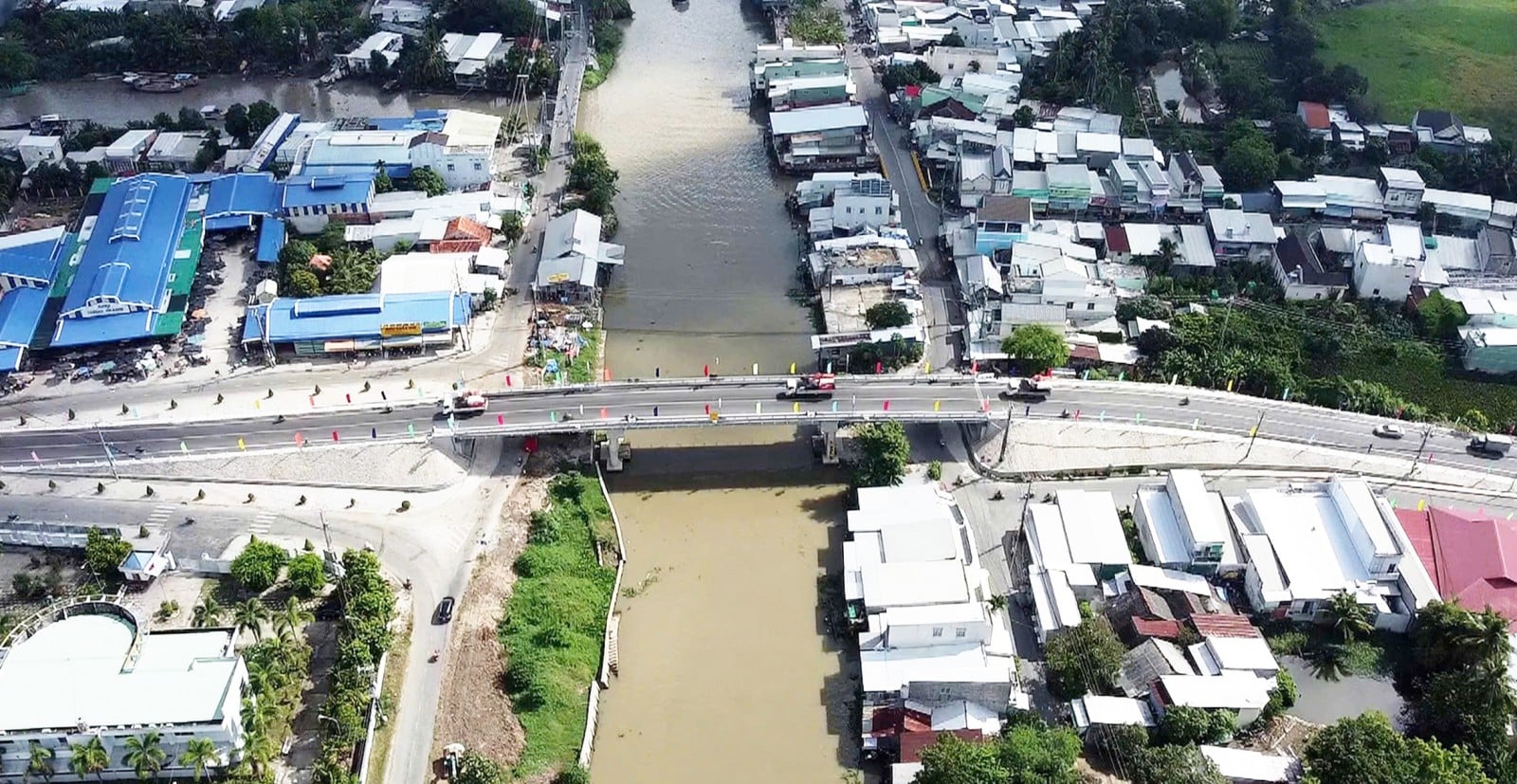
Mr. Tran Van Loi feeds the fish in his cages. Photo: PHAM HIEU
It's not just Mr. Loi; many households on the island have also boldly invested in marine farming. Mr. Thach Van Xuyen, residing in Tien Hai commune, shared that the Hai Tac archipelago has sheltered waters, stable salinity, and relatively little water pollution, making it an ideal environment for marine farming. “After many years of raising fish in cages, my family has expanded to eight cages. The most important thing in this profession is the water source; if the water environment is stable, there is less fish loss, and fish farmers make more profit. Overall, the income and living conditions are better than fishing offshore,” Mr. Xuyen said.
According to local fish farmers, marine fish species such as grouper, snapper, and other types of fish can be sold after about 10-12 months of farming, with prices ranging from 120,000 to 240,000 VND/kg depending on the type of fish and the time of year. The market is quite stable, with traders buying directly from the farms. This work is hard, but the income is quite good. With good care, a single fish cage can yield a profit of tens to hundreds of millions of VND per season. In addition to traditional farming methods, many households have begun applying new techniques, focusing on environmental hygiene and diversifying the species raised. Some models combining marine farming with experiential tourism are being tested, opening up new avenues for economic development.
According to Nguyen Cong Tuoc, Deputy Head of the Economic Department of Tien Hai Commune, in 2000, only a few households in the area raised fish in cages. Later, the model proved effective, so more people on the island focused on raising fish in cages. “We plan to coordinate training on raising fish in cages at sea, including techniques for selecting healthy fish fry, proper feeding methods, and disease prevention and control, to help people improve their skills and reduce losses in fish production. In addition, the locality will find other mollusk species such as oysters and green mussels for people to raise, contributing to increased income,” Mr. Tuoc said.
According to Mai Quoc Thang, Secretary of the Party Committee and Chairman of the People's Committee of Tien Hai commune, the locality has oriented marine aquaculture as a key economic sector. By 2025, the commune expects to produce over 821 tons of commercial grouper and snapper. The commune encourages residents to participate in cooperatives and associations to create a stable supply chain. However, marine aquaculture also faces numerous challenges such as price fluctuations, diseases, and unpredictable weather. “We are strengthening links with businesses and tourist restaurants on the island to serve tourists, reduce intermediaries, and increase profits for the people. The commune is currently developing a detailed plan for the aquaculture area and guiding residents through the procedures for allocating sea surface area to ensure long-term and stable aquaculture,” Mr. Thang said.
PHAM HIEU
Source: https://baoangiang.com.vn/nuoi-bien-kha-len-a484582.html
![[Photo] National Assembly Chairman Tran Thanh Man attends the groundbreaking ceremony for the National Highway 1A spatial axis project.](https://vphoto.vietnam.vn/thumb/1200x675/vietnam/resource/IMAGE/2026/05/19/1779161360398_ndo_br_bnd-1412-jpg.webp)
![[Photo] Capturing the moment the tide recedes at Yen Binh Son rapids - a million-year-old scenic spot in Quang Ngai.](https://vphoto.vietnam.vn/thumb/1200x675/vietnam/resource/IMAGE/2026/05/19/1779175463885_yen9-1199-jpg.webp)









































![[Photo] General Secretary and President To Lam receives Indian Defense Minister Rajnath Singh](https://vphoto.vietnam.vn/thumb/402x226/vietnam/resource/IMAGE/2026/05/19/1779184046302_anh-man-hinh-2026-05-19-luc-16-46-58.png)













Comment (0)