

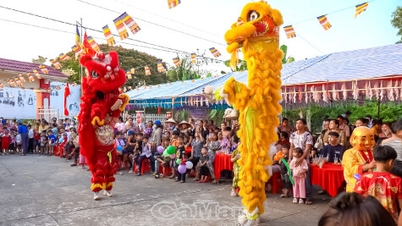
- Showing care and gratitude to the Vietnamese Heroic Mothers and the Khmer people on the occasion of the Sene Dolta festival.
- The Khmer people believe in a life of abundance and prosperity.
- The unique Ok Om Bok Festival of the Khmer people
From breeding cows to new hope
Hiep Thanh Ward has a large Khmer population . For many years, the lives of numerous households have been difficult due to a lack of production resources and small-scale farming practices. Implementing the National Target Program for Sustainable Poverty Reduction, the locality has implemented policies to support poor and near-poor households with livestock and crops.
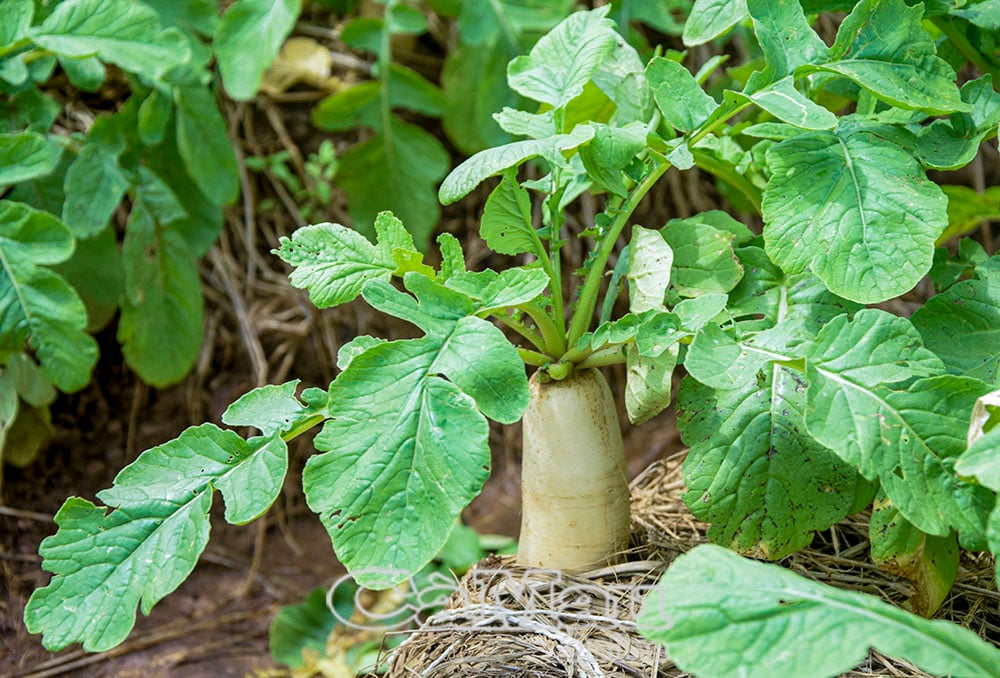 The lush green flowerbeds provide the Khmer people with a stable income, helping them to become relatively wealthy.
Receiving a breeding cow from the program, Ms. Lam Thi Tha Vy, from Bien Dong B hamlet, emotionally shared: “My family is so happy to receive a cow from the local authorities. I will try my best to work hard to escape poverty.” Previously, her family was classified as a poor household, with income relying solely on catching crabs and snails, making their livelihood unstable. Their situation became even more difficult when Ms. Vy was diagnosed with a brain tumor requiring urgent surgery, forcing her family to borrow money from everywhere for treatment. In 2024, she was granted a breeding cow by the local authorities – the most valuable asset her family possessed – and a driving force to help her overcome adversity and move towards sustainable poverty alleviation. These first breeding cows became a “means of livelihood,” helping households to develop long-term business opportunities. After a period of raising them, the cows are bred, giving birth, creating a sustainable livelihood cycle.
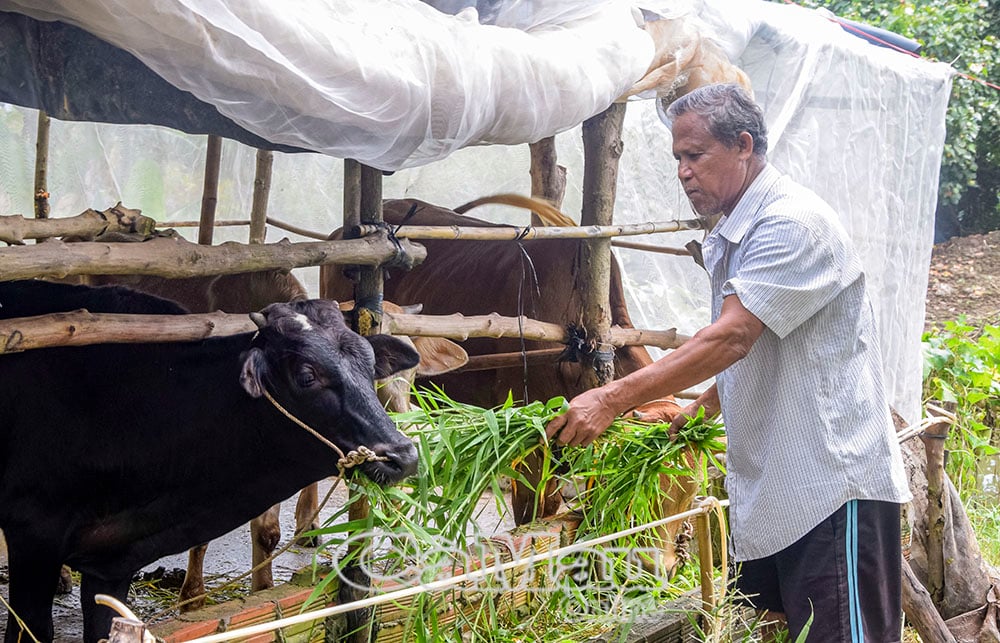 For the family of Ms. Lam Thi Tha Vy in Bien Dong B hamlet, the cow is a valuable asset that has helped them rise out of poverty.
According to Mr. Thach Van, Head of the Farmers' Association in Bien Dong B hamlet, the model helps many landless households improve their income. Mr. Van said: “Difficult households are considered for support with breeding cows. After only one year, the cows will give birth. When they sell the cows, people have additional capital to manage their lives. Previously, people mainly lived by catching crabs and snails, and engaging in small-scale fishing, but now their lives are more stable.”
Besides bringing economic benefits, the model also creates a positive shift in awareness, helping people gradually move from exploiting nature to developing livestock farming and production in a sustainable direction.
New livelihood directions for the Khmer people.
Alongside the seed support program, the vegetable farming model in Hiep Thanh ward has also yielded positive results. Utilizing vacant land around houses to intercrop short-term vegetables helps save on living expenses while creating a stable source of income.
In the Bien Dong A hamlet, more than 600 out of 700 households grow vegetables, mostly Khmer people. Ms. Lam Thi Ha, a household participating in the model, said: "When vegetables are expensive, the profit is high; when they are not, the profit is low, but farming is never a loss. We harvest every two months, and then plant again every half month, providing a more stable income than before."
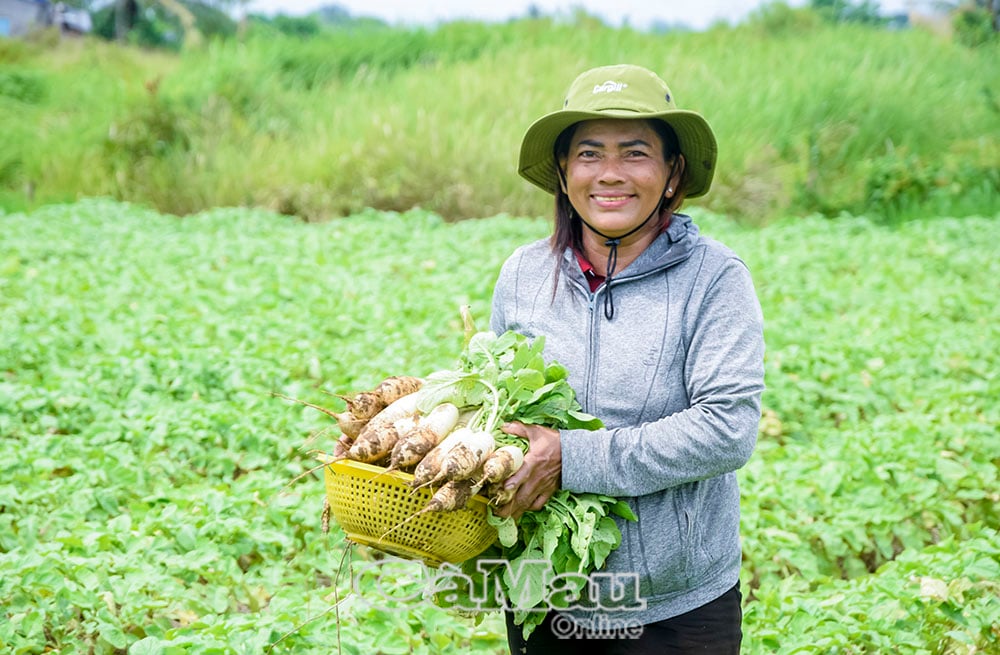 The vegetables grown on Mrs. Ha's farm provide her with income year-round.
According to Mr. Ly Ty, Head of the Farmers' Association of Bien Dong A hamlet, thanks to year-round vegetable cultivation, most households have escaped poverty: "Thanks to the vegetable cultivation model, many households have applied to be removed from the poverty list and have achieved stable lives. Currently, there is only 1 poor household and 5 near-poor households in the hamlet."
According to statistics from Hiep Thanh ward, after nearly a year of implementing livelihood support models in a coordinated manner, more than 70% of participating households have increased their income by 20-30%. Many families who were previously poor or near-poor now have the means to provide for their children's education, renovate their homes, and improve their quality of life.
To date, the entire ward has only 28 poor households of Khmer ethnicity, a number that demonstrates the commendable efforts of the locality in the journey towards sustainable poverty reduction.
Combining support for livestock breeding with crop cultivation not only helps people diversify their livelihoods but also creates conditions for them to change their way of thinking and doing things. People learn to apply new farming models, proactively seek markets, and gradually establish production linkages towards stability and long-term sustainability.
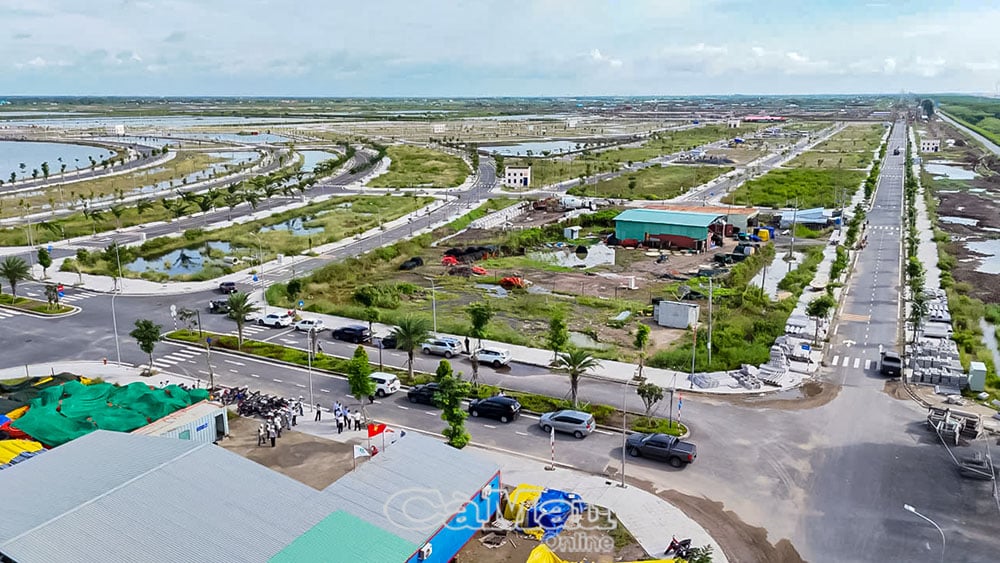 Hiep Thanh Ward is changing day by day.
Although the initial support models were small and had little economic value, they held significant importance for the Khmer people here. They not only helped increase income but also instilled confidence and a will to strive for improvement, laying the foundation for sustainable change. Thanks to the support of the government, various organizations, and the self-reliance of the people, Hiep Thanh ward is gradually transforming, becoming brighter, more vibrant, and full of life.
"These 'seeds' are sprouting into hope. It's not just about livelihood, but also a testament to the resilience and aspiration to escape poverty of the Khmer people in this historically rich region."
Diamond
Source: https://baocamau.vn/doi-thay-tu-nhung-mo-hinh-nho-a124203.html
![[Photo] Mrs. Ngo Phuong Ly meets and exchanges views with Mrs. Peng Li Yuan](https://vphoto.vietnam.vn/thumb/1200x675/vietnam/resource/IMAGE/2026/04/16/1776277858080_phu-nhan-1-jpg.webp)
![[Photo] National Assembly Chairman Tran Thanh Man attends the opening session of IPU-152](https://vphoto.vietnam.vn/thumb/1200x675/vietnam/resource/IMAGE/2026/04/16/1776277863731_ctqh5-jpg.webp)
![[Photo] The General Secretary, President and his wife meet with Vietnamese-Chinese friendship leaders.](https://vphoto.vietnam.vn/thumb/1200x675/vietnam/resource/IMAGE/2026/04/15/1776264829725_vna-potal-tong-bi-thu-chu-tich-nuoc-to-lam-gap-mat-nhan-sy-huu-nghi-viet-nam-trung-quoc-8703641-3130-jpg.webp)
![[Photo] My Son at night: A thousand-year-old heritage site amidst the Milky Way](https://vphoto.vietnam.vn/thumb/1200x675/vietnam/resource/IMAGE/2026/04/15/1776261039184_ndo_br_chon6-jpg.webp)





















































Comment (0)