In this context, retail systems and supermarkets in the province are making efforts to implement various solutions to maintain stable prices of essential goods and support consumers in maintaining their purchasing power.
Surveys conducted at several large supermarkets such as GO! Bac Giang, WinMart, and Co.opmart show that, despite price increases in many input materials, most essential consumer goods such as rice, fresh food, vegetables, cooking oil, instant noodles, and cosmetics remain relatively stable in price or have only seen slight adjustments. Some supermarkets even maintain numerous promotional programs and deep discounts to stimulate consumer demand.

|
Customers choose to buy food at GO! supermarket in Bac Giang (Tan Tien ward). |
At GO! Bac Giang supermarket (Tan Tien ward), many stalls selling fresh food, vegetables, and essential goods are offering discounts of 10-20%. Ms. Duong Thi Van Nga, Director of GO! Bac Giang supermarket, said: “The increase in fuel prices has led many suppliers to propose price adjustments. However, the supermarket has proactively negotiated with strategic partners, signed long-term contracts, and placed large orders to limit the impact of input costs on retail prices. As a result, most essential items have maintained stable prices.”
Similarly, at WinMart supermarket (Nguyen Gia Thieu Street, Kinh Bac Ward), the unit proactively reduced costs. At the same time, they arranged a more efficient delivery schedule, cut unnecessary advertising expenses, and boosted the sourcing of local goods, especially agricultural products from localities within the province and neighboring provinces and cities.
This method helps reduce intermediate costs and shorten transportation distances, keeping fruits and vegetables fresh while minimizing the impact of fuel prices on product prices.
In April alone, retail sales of goods reached nearly 9,770 billion VND, an increase of 2.6% compared to the previous month and a 15.6% increase compared to the same period last year. Of this, the food and beverage group increased by 14.6%; and the household goods and equipment group increased by 23.6%. |
In particular, the supermarket collaborates with many manufacturers to continuously implement and maintain deep discount programs for essential items such as rice, cooking oil, pork, and vegetables. Membership customers are eligible for discounts of 10% - 20% on many fresh food items during peak hours.
Ms. Trinh Thi Nhung (Kinh Bac ward) shared: "Despite the increase in gasoline prices, the prices of many items in supermarkets remain stable, and some products are even cheaper thanks to promotional programs."
Not only large supermarkets, but many retail stores and food shops in the province are also proactively sharing the difficulties with customers by maintaining prices or increasing prices only slightly.
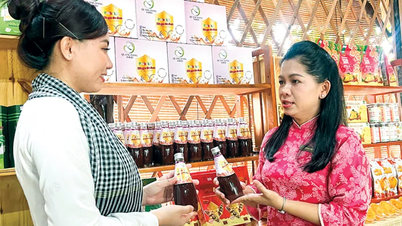
For example, at the Ruong Bac Thang organic food store (Vo Cuong ward), many familiar items have maintained their prices for a long time despite increased transportation costs.
Mr. Tung Anh, the shop owner, said: "If we raise prices across the board, it will directly affect purchasing power and make it difficult to retain customers in the long term. Therefore, the shop has chosen to reduce operating costs and profits to maintain a stable customer base."
According to the Department of Industry and Trade, the goods market in the province is currently basically stable, supply is ensured, and there is no shortage or sudden price increase; purchasing power continues to maintain a fairly strong upward trend. In April alone, retail sales reached nearly 9,770 billion VND, an increase of 2.6% compared to the previous month and a 15.6% increase compared to the same period last year.
Specifically, the food and beverage group increased by 14.6%; the household goods and equipment group increased by 23.6%, demonstrating the proactive efforts of retail chains and manufacturing and trading businesses in maintaining market stability, stimulating consumer demand, and supporting consumers. Authorities intensified inspections and controls, promptly detecting and handling acts of speculation, hoarding, and exploiting fluctuations in fuel prices to raise prices unreasonably.
Looking ahead, fuel prices and input costs are expected to remain volatile, and the commodity market will continue to face many unpredictable factors. To maintain stability, key businesses in the retail system affirm that they will continue to steadfastly pursue the goal of maintaining stable prices by diversifying supply sources and preventing shortages or price spikes.
Mr. Nguyen Van Phuong, Deputy Director of the Department of Industry and Trade, said: “When commodity prices rise, it directly impacts the purchasing power of the market. Businesses maintaining prices also means retaining customers. The Department of Industry and Trade is continuing to implement many solutions to stabilize the market.”
Accordingly, the Department will continue to closely monitor market developments; continue to inspect and control price listing and ensure sales are conducted at the listed price; strictly handle acts of exploiting rising fuel prices for speculation, hoarding, and unreasonable price increases; encourage suppliers and distribution systems to share responsibility for price stabilization and limit price adjustments; and encourage retail businesses to continue participating in market stabilization programs, prioritizing the consumption of domestically produced goods and strengthening linkages with local production facilities to reduce distribution costs.
The proactive approach of retail businesses, along with market management solutions from relevant authorities, is contributing to price stability and supporting consumers amidst fluctuating input costs.
Text and photos: Thanh Ngan
Source: https://baobacninhtv.vn/on-dinh-gia-hang-hoa-truc-bien-dong-chi-phi-dau-vao-postid446169.bbg



![[Image] Hanoi's urban life under the challenge of a "scorching hot" environment](https://vphoto.vietnam.vn/thumb/1200x675/vietnam/resource/IMAGE/2026/05/25/1779706979265_nang-nong-t5-2026-minh-duy-7-4636-jpg.webp)

























































































Comment (0)