

Pakse was still cool and drizzly. Our group departed from the Vietnam-Laos Rubber Company and traveled to the Dau Tieng - Vietnam-Laos Rubber Company, a journey of only about 10 minutes by car. The Dau Tieng - Vietnam-Laos Rubber Company is headquartered in Nomnamkhaonoy village, Bachiang district, Champasak province, and officially commenced operations on January 1, 2007.
VRG brings "white gold" to neighboring Laos:
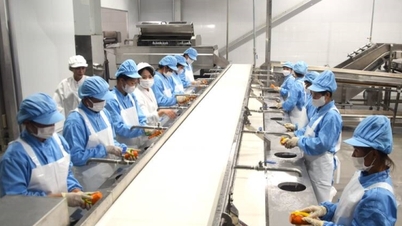
The total land area currently managed by the company for rubber tree development projects in the two provinces of Champasak and Salavan (Laos) is over 6,700 hectares. The company has 4 plantations and 1 processing plant with a total workforce of approximately 1,600 people.
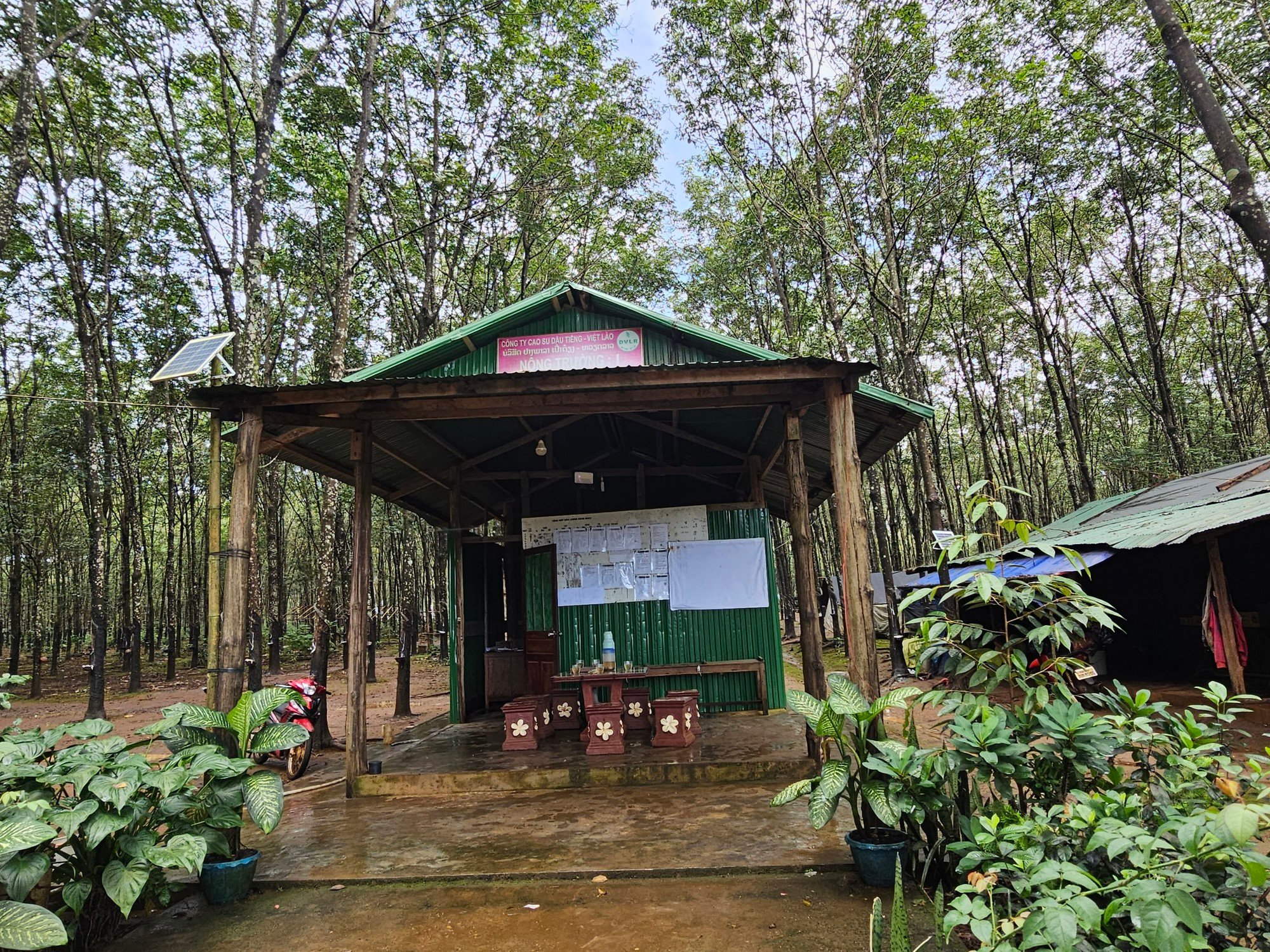
Workers' dormitory of Dau Tieng Rubber Company - Vietnam-Laos
With the support of VRG, the Vietnamese Consulate General in the four southern provinces of Laos, the leaders of Binh Duong province, and local authorities in the project area, Dau Tieng - Vietnam-Laos Rubber Company has had favorable conditions for sustainable development in Laos.
Over 17 years of operation, the project has provided regular annual employment for more than 1,600 local workers with stable incomes. Social welfare in the project area has been emphasized, including the implementation of welfare projects such as electricity supply, well drilling, dam construction, inter-village road construction, construction and repair of temples and schools, and other welfare activities.
The average annual latex harvest yields 8,500 - 10,000 tons; a latex processing plant system with 2 standard production lines has been built, with an annual processing capacity of 15,000 - 18,000 tons.
This project also strongly promotes the friendly cooperative relationship between Vietnam and Laos, and is a sustainable project that provides employment for thousands of Lao workers. Currently, planting, caring for, and harvesting rubber latex has become very familiar to the people in and around the project area. People have grasped and learned a lot about the techniques of planting, caring for, harvesting, and processing rubber latex; on that basis, they have planted rubber trees, gradually improving their family's economy .
The sustainable development of the project has also brought a new look to Bachiang district - the poorest district in Champasak province - with significant changes. Many houses with brick walls and tiled roofs have replaced the simple wooden houses, creating many positive changes in living conditions; the spirit and life are becoming increasingly prosperous and fulfilling.
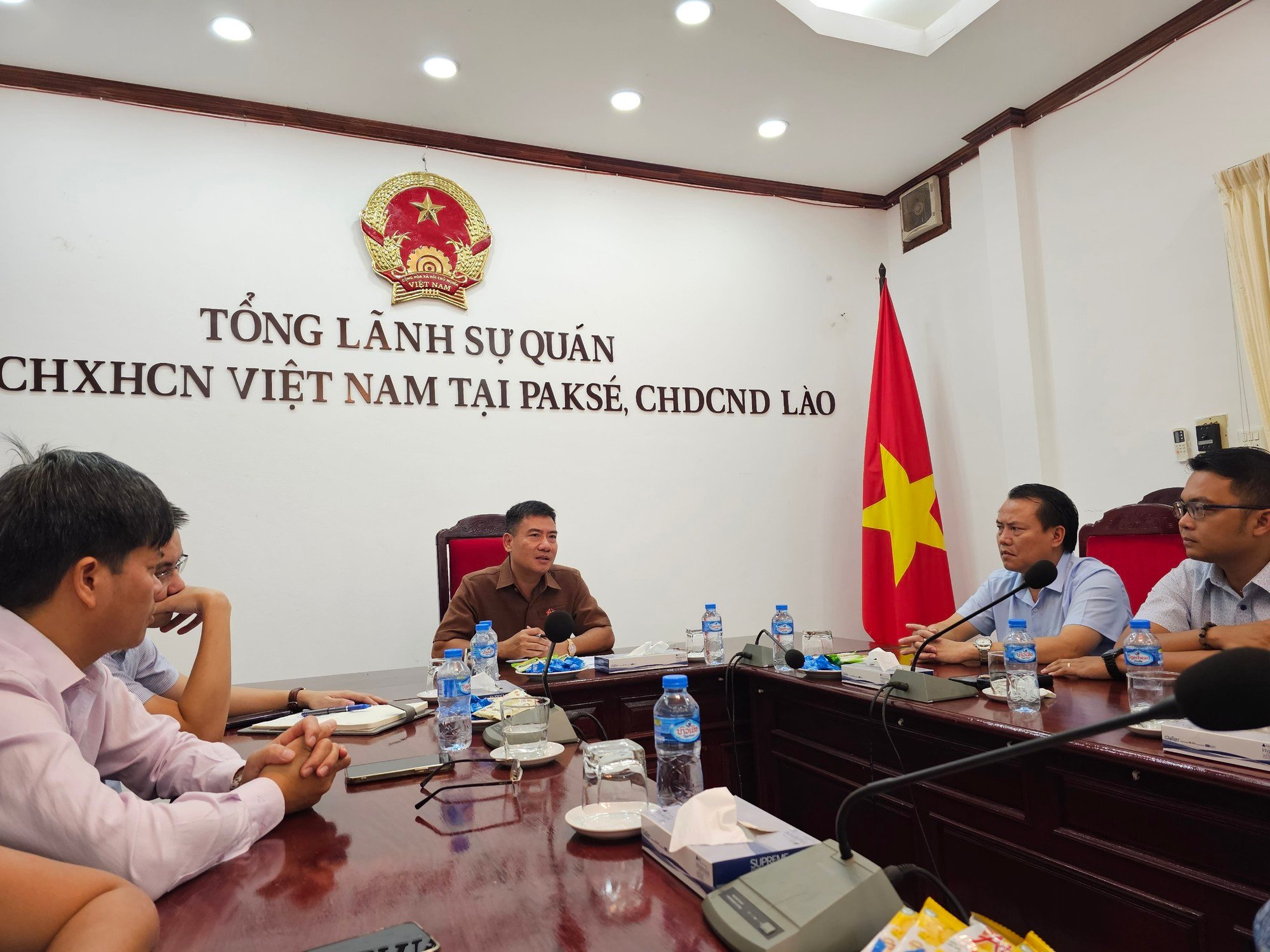
Mr. Nguyen Van Trung, Consul General of Vietnam in Pakse city, worked with the Vietnam-Laos Rubber Company and the Dau Tieng - Vietnam-Laos Rubber Company.
A bridge of friendship
Mr. Nguyen Van Trung, Consul General of Vietnam in Pakse (Champasak), said that VRG's rubber development project in Laos has received significant attention, guidance, and support from the governments , ministries, and relevant agencies of both Vietnam and Laos.
Among VRG's rubber plantation projects in Laos, three have proven effective, generating high revenue and profits: the Vietnam-Laos Rubber Company, the Quasa-Geruco Rubber Company, and the Dau Tieng-Vietnam-Laos Rubber Company. A prime example is the Vietnam-Laos Rubber Company project, covering over 10,000 hectares, with an annual production exceeding 15,000 tons. Total revenue over the past five years (2018-2022) reached over 3,000 billion VND, creating jobs for more than 2,600 workers. This was also the first VRG project in Laos to be awarded the title of Hero of Labor in the Renovation Period by the President of the Socialist Republic of Vietnam.
Since launching its rubber development program in Laos in 2005, VRG has invested in numerous social welfare projects serving the people in and around the project area. VRG consistently supports local communities in improving social welfare, charity, and other projects to support production, while also providing practical benefits for workers and residents in the project region. VRG also prioritizes the construction of housing for workers, transportation infrastructure, and more.
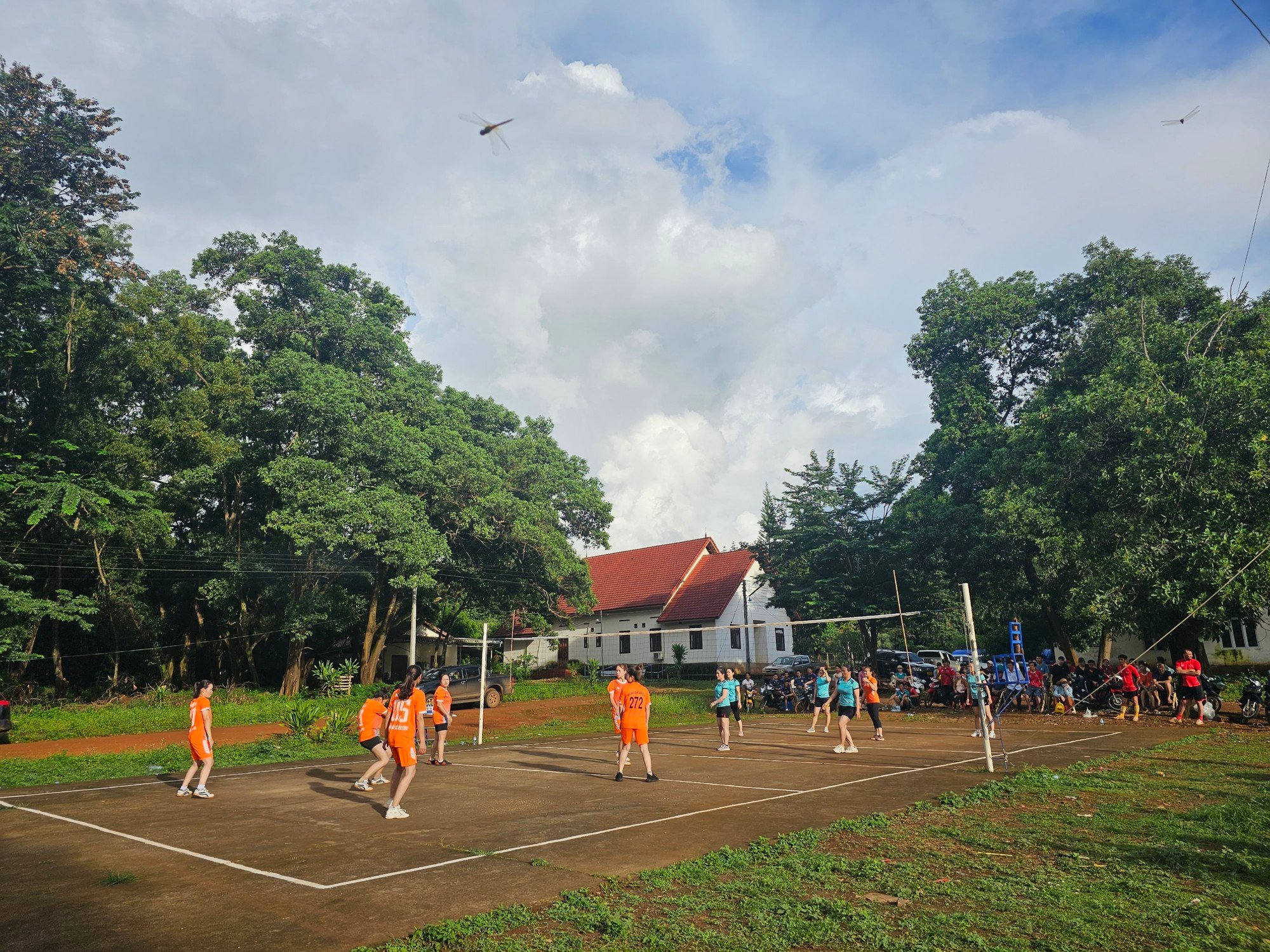
Rubber workers belonging to VRG in Champasak participate in sports competitions on their day off.
Furthermore, rubber projects have contributed to supporting local communities in building or repairing bridges, roads, schools, markets, local government offices, forest protection houses, etc. This strengthens the good and trusting relationship between the enterprise and the community, bringing infrastructure benefits to the project area and stable income for local workers. Workers' incomes have gradually improved, increasing year after year, and their benefits and policies are ensured, thus giving workers peace of mind, trust, and loyalty to VRG's projects.
Mr. Nguyen Van Trung emphasized that VRG's implementation of the rubber plantation investment program in Laos since 2005 was a correct direction, contributing to success in political, economic, social, and diplomatic aspects, and further strengthening the Vietnam-Laos and Laos-Vietnam friendship, ensuring it remains "evergreen and enduring for generations to come."
The Lao government provided enthusiastic support.
To better understand the initial stages of introducing rubber to Laos, we met with Mr. Le Minh Chau, one of the pioneers in developing rubber tree planting projects in the country. At that time, Mr. Chau was the Director of Phu Rieng Rubber Company.
Mr. Chau shared that in the early days of VRG's rubber plantation operations in Laos, it received enthusiastic support from the Lao government, at that time headed by Mr. Thongloun Sisoulith, the Deputy Prime Minister in charge of agriculture (now the President of the Lao People's Democratic Republic). Accordingly, Mr. Thongloun Sisoulith immediately developed a plan for the company in a single working session.
Recalling the years around 2004 when VRG began introducing rubber trees to Laos, Mr. Chau couldn't help but feel emotional: "There were only about 10 of us on the trip, and we named the delegation '904' because we went in September 2004. I believe none of the members of the delegation will ever forget that name."
According to Mr. Le Minh Chau, with the attention of the Lao government, VRG has laid a fairly favorable foundation for the development of rubber trees in Laos. In addition, VRG's rubber tree planting project in Laos aims primarily at creating a comprehensive cooperative relationship between the two countries; the surplus value generated from the project will be reinvested by the rubber industry into the social welfare of Laos.
Accordingly, people in the rubber project area now have full infrastructure such as electricity, roads, schools, and health stations. People have a stable income from the time they plant rubber trees until the plantations begin to yield harvests.
Source link
![[Photo] Secretary of the National Assembly Party Committee, Chairman of the National Assembly presides over the meeting of the Standing Committee and Executive Committee of the National Assembly Party Committee.](https://vphoto.vietnam.vn/thumb/1200x675/vietnam/resource/IMAGE/2026/06/03/1780480353201_ndo_br_bnd-2585-jpg.webp)
![[Photo] General Secretary and President To Lam presides over a meeting with the Central Organizing Committee.](https://vphoto.vietnam.vn/thumb/1200x675/vietnam/resource/IMAGE/2026/06/03/1780482764658_a1-bnd-4741-3342-jpg.webp)

![[Photo] First session of the 14th Congress of the Vietnam Trade Union](https://vphoto.vietnam.vn/thumb/1200x675/vietnam/resource/IMAGE/2026/06/03/1780465947883_ndo_br_img-3852-jpg.webp)

































![[Video] Sunset at Lap An Lagoon – Where the sun sets over the fishing nets](https://vphoto.vietnam.vn/thumb/1200x675/vietnam/resource/IMAGE/2026/05/31/1780192137701_beach-landscape-sea-water-nature-grass-745871-pxhere-com.jpeg)





















Comment (0)