

However, a synchronized connection and a comprehensive, widespread network are necessary to fully utilize this model.
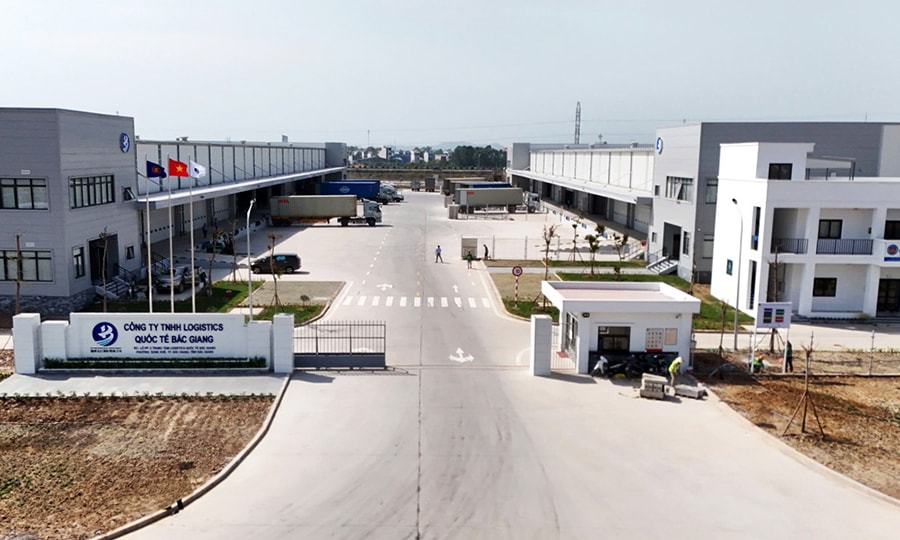
Development in both scale and technology.
In late April, the Bac Giang International Logistics Center officially commenced operations. Spanning 67 hectares, the center aims to connect various modes of transport: air, sea, rail, road, and the rapidly developing river network in the region.
According to Ms. Truong Thi Mui, Deputy General Director of Bac Giang International Logistics Co., Ltd., the center is developing in a cross-chain and integrated manner, while also developing in a green and smart direction.
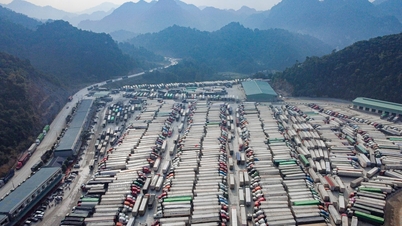
Also developing a comprehensive ecosystem for a cross-border export logistics chain system, Viettel Lang Son Logistics Park commenced its first phase of operation at the end of 2024. Covering an area of 143 hectares, Viettel Lang Son Logistics Park boasts a state-of-the-art scale, making it a leading facility in the North and the entire country.
Statistics from the Import-Export Department ( Ministry of Industry and Trade ) show that in the period 2007-2012, there were only 6 logistics centers nationwide. However, in the last 10 years, this number has increased tenfold, reaching 69 centers with increasingly modern facilities. Previously, logistics centers were mainly concentrated in the Southeast region, but now large logistics centers have also emerged in the North and Central regions.
Logistics centers are not only growing in number and scale, but are also increasingly investing in operational technology. From 2017 to the present, traditional logistics centers have transformed into modern centers applying Industry 4.0 technology. These centers are diverse in type, integrating cold storage, bonded warehouses, or domestic warehouses; some logistics centers are built specifically to serve agricultural products...
Strengthening the linkages between logistics centers
Logistics is recognized as a crucial service industry, playing a supporting, connecting, and driving role in the socio -economic development of the entire country. Many modern logistics centers, with integrated infrastructure, are increasingly attracting investment and development from localities and businesses. These logistics centers perform functions ranging from basic to advanced, such as warehousing, loading and unloading goods, sorting goods, creating added value, reverse logistics transshipment, trade promotion activities, and boosting product consumption.
However, due to the lack of effective connectivity to form a more complete network, the advantages of the logistics market model cannot be fully utilized. Furthermore, the uneven distribution of logistics centers and the lack of regional linkages mean that many centers operate in a fragmented manner, failing to take advantage of economies of scale. For example, key production areas such as the Mekong Delta and the Central Highlands, which supply the majority of fruits, vegetables, and seafood, still lack specialized storage and distribution facilities.
According to Hoang Dinh Kien, General Director of Hoa Phat Logistics, the company is facing double pressure: rising raw material and fuel prices on one hand, and customer demands for lower service prices on the other. Without shared infrastructure, utilizing turnaround times, and shared cold storage, it is very difficult to maintain product quality while ensuring competitive pricing.
"The logistics industry needs a specialized digital platform that connects the cold chain transportation needs of export businesses and operators. This system needs to integrate real-time data to optimize routes, warehouse capacity, and loading and unloading capabilities," Mr. Hoang Dinh Kien commented.
According to Dao Van Thuan, Deputy Director of Viettel Logistics Park Lang Son, thanks to the implementation of full-process export services to China, customs clearance time has been reduced by nearly 40%. However, to expand the scale and efficiency, stronger linkages with the nationwide network of logistics centers are needed because operating in isolation makes it difficult to maintain long-term efficiency.
According to Mr. Dao Van Thuan, in addition to investing in scale and modern technological infrastructure, the standardization of data within the logistics center ecosystem, as well as data consistency between logistics centers, also needs more attention in the future. When we synchronize data, customers can utilize a complete service from a single location, shortening the goods flow and ensuring synchronized control of the logistics process.
Currently, the Import-Export Department (Ministry of Industry and Trade) is finalizing the National Logistics Development Strategy until 2035, prioritizing the construction of multi-functional centers integrating digital technology, automated cold storage, and low-emission transportation. At the same time, it is advising the Ministry of Industry and Trade to propose a separate legal framework to attract private investment in goods storage and transportation infrastructure.
Source: https://hanoimoi.vn/phat-trien-trung-tam-logistics-tang-suc-canh-tranh-cho-chuoi-cung-ung-705607.html

![[Image] Close-up view of the interchange connecting the two expressways and Long Thanh Airport.](https://vphoto.vietnam.vn/thumb/1200x675/vietnam/resource/IMAGE/2026/05/25/1779703378210_ndo_br_z7863716673926-224453a31600126cce10622af6290afd-4549-jpg.webp)



![[Image] Hanoi's urban life under the challenge of a "scorching hot" environment](https://vphoto.vietnam.vn/thumb/1200x675/vietnam/resource/IMAGE/2026/05/25/1779706979265_nang-nong-t5-2026-minh-duy-7-4636-jpg.webp)












































































Comment (0)