On October 30th, according to information from the Quang Ninh Provincial People's Committee, with the approval of the Government and relevant ministries and agencies, the Quang Ninh Provincial People's Committee issued Decision No. 3259/QD-UBND approving the pilot plan for managing self-driving tourist vehicles from China entering Mong Cai City and Ha Long City (both in Quang Ninh province) and coordinating the management of self-driving tourist vehicles from Vietnam to China via the Mong Cai International Border Gate.
According to the approved pilot plan, self-driving vehicles from China entering Vietnam via the Mong Cai International Border Gate are permitted to operate within Mong Cai City, Ha Long City, National Highway 18A, and the Ha Long - Mong Cai Expressway. Vehicles are not allowed to operate, stop, or park in military areas or other restricted zones.
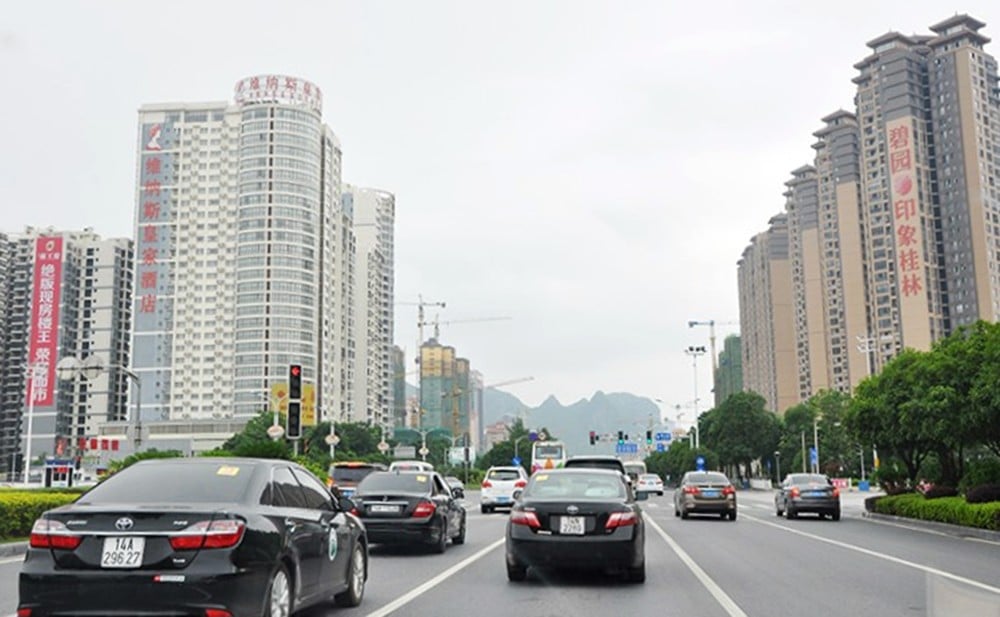
Self-driving tourist vehicles traveling from Vietnam to China via the Mong Cai International Border Gate in 2018 (Photo: Quang Ninh Newspaper).


Self-driving vehicles are vehicles with fewer than 9 seats, inspected and licensed for transport by competent authorities of both countries, displaying the logo of the organizing unit for easy identification, must travel in a convoy, with a Vietnamese vehicle leading the convoy, and operate according to a pre-determined route (vehicles are not allowed to separate from the convoy or travel independently).
Drivers of self-driving vehicles must possess a driver's license appropriate for the type of vehicle being driven; have a valid passport, visa, or other valid international travel document; be familiar with traffic rules, conditions, operating areas, and signage systems; and comply with the road traffic laws of the host country.
When driving a vehicle, the following documents must be carried: Passport, valid border pass or other valid international travel document and visa as prescribed; Driving license appropriate to the type of vehicle being driven, issued by Vietnam; Certificate of technical safety and environmental protection inspection for motor vehicles; Vehicle registration certificate issued by the competent authority of the country where the vehicle is registered and still valid; Certificate of civil liability insurance for motor vehicle owners valid in Vietnam; Temporary import document for the vehicle; Transport permit.
For self-driving vehicles from Vietnam entering China, they must travel in a convoy, with a lead vehicle provided by the Chinese organizing unit. The procedures and paperwork are as stipulated by the Chinese side.


The People's Committee of Quang Ninh province has assigned relevant departments, agencies, and localities to unify the implementation of the plan, ensuring compliance with current laws and regulations. Simultaneously, they are to implement measures to promote and develop effective self-driving tourist car products .
Source


![[Photo] Prime Minister Le Minh Hung presides over the thematic session on promoting science and technology development and innovation.](https://vphoto.vietnam.vn/thumb/1200x675/vietnam/resource/IMAGE/2026/06/23/1782207872934_ndo_br_dsc-1724-jpg.webp)