

Disjointed arguments
When Resolution No. 57-NQ/TW dated December 22, 2024, of the Politburo on breakthroughs in national science, technology, innovation, and digital transformation was implemented, some websites specializing in opposing Vietnam published articles deliberately fabricating and distorting the content of Resolution 57. One article "asserted": "Freedom is the 'national policy,' not science and technology as defined by our Party," and then claimed that Resolution 57 was merely a "lure" to "attract talent"! Several other individuals echoed this rhetoric.
Following the Politburo's issuance of Resolution No. 59-NQ/TW on January 24, 2025, on "International Integration in the New Situation," some websites hostile to Vietnam have published articles sharing a similar biased narrative: "Vietnam is secretly 'following' its comprehensive strategic partner... to oppose other countries"; "Vietnam is leaning towards the West"; "Vietnam has abandoned its independent and self-reliant foreign policy in international relations"...
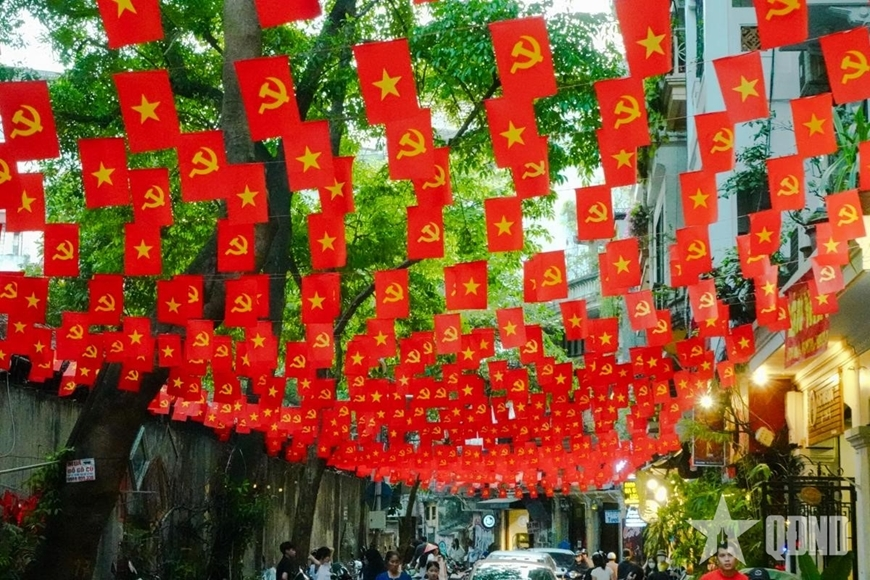
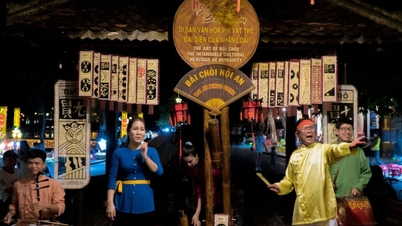
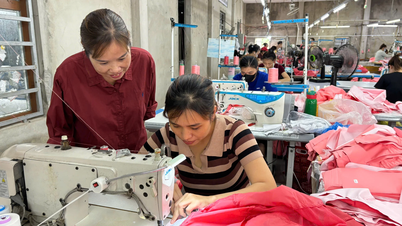
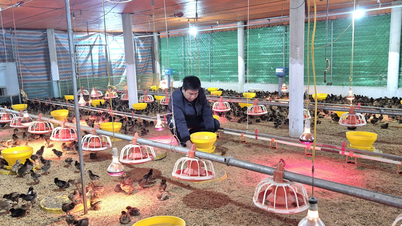
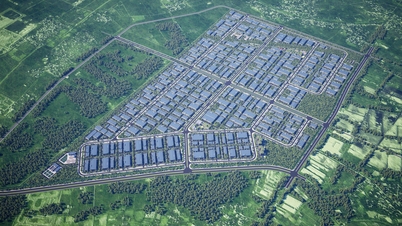
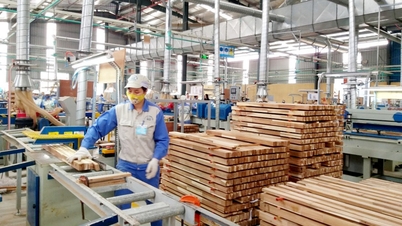
Illustration photo: qdnd.vn |
Recently, taking advantage of the Politburo's issuance of Resolution No. 66-NQ/TW dated April 30, 2025, on reforming the work of lawmaking and enforcement to meet the requirements of national development in the new era, and Resolution No. 68-NQ/TW dated May 4, 2025, on the development of the private economy , a series of news articles, images, and video clips with distorted slogans such as: "Vietnamese law, a step backward for social progress," "creating barriers to business," etc., have appeared on popular social media platforms such as Facebook, YouTube, TikTok, Telegram, and personal blogs of opposition groups. On many online forums, hostile forces, exiled reactionary organizations, and opposition groups have spread the rumor that the Party's current stance on the development of the private economy is "inconsistent," considering the private economy as the most important driving force of the economy, which means "acknowledging exploitation, acknowledging capitalist production relations." "meaning." They argue that this "contradicts the Party's views in previous periods." From there, they sow doubt, resentment, and incitement in order to divide the national unity.
Understanding the resolutions considered to be the "four pillars"
Nearly 40 years of comprehensive reform, accelerated industrialization, modernization, and international integration have led to significant advancements in science and technology across all sectors, making practical contributions to socio-economic development, improving people's living standards, and strengthening national defense and security. In 2024 alone, Vietnam's innovative startup ecosystem ranked 56th in the Global Startup Ecosystem Index. Vietnam's Global Innovation Index (GII) has continuously improved, rising from 59th (in 2016) to 44th in 2024. Vietnam's 2024 GII results show three indicators ranking among the world's top, including, for the first time, the Creative Goods Export Index. The total annual national budget allocation for science, technology, innovation, and digital transformation is steadily increasing in line with development needs. These achievements have proven that the rhetoric of hostile forces is false, fabricated, and clearly reveals their reactionary nature.
Resolution 57, born from the foundation of the country's rapidly developing science and technology, serves as a necessary support, launching pad, and legal framework to maximize and strengthen development in this field. Only when science and technology develop can the country truly develop and assert its superiority.
Resolution 59 was issued with the overarching principle that: International integration is the undertaking of the entire nation, under the absolute, direct, and comprehensive leadership of the Party, the unified management of the State, with the people and businesses at the center and as the creative subjects. In practice, nearly 35 years of implementing the "Program for Building the Country during the Transition Period to Socialism" has shown that the Party has identified many complex and intertwined relationships requiring correct and effective handling, including the relationship "between independence and self-reliance and proactive, positive international integration." Regional and global integration has significantly contributed to improving domestic potential and enhancing Vietnam's geostrategic position in the region and globally. According to the General Statistics Office, in 2024, the total value of goods exports and imports reached US$786.29 billion, an increase of 15.4% compared to the previous year. This is a record figure for Vietnam's import and export trade. The Party, State, and relevant ministries and agencies have proactively, flexibly, and sincerely implemented solutions to overcome obstacles and promote economic and trade cooperation. This deep international integration has also helped Vietnam break through the blockade and embargo, becoming a partner and friend to countries around the world. The Party and State's viewpoint has consistently demonstrated and progressively concretized the content of an independent and self-reliant foreign policy in international integration for each stage, in accordance with the global and regional context. These are the core guiding principles identified in Resolution 59, but which hostile forces deliberately ignore and distort.
Over the past period, the Party and State of Vietnam have paid great attention to, strived for, and prioritized the building and improvement of the legal system. For example, in the period from 2019 to the end of 2022 alone, the National Assembly passed 49 laws, including many legal documents directly related to human rights and citizens' rights such as: the 2015 Criminal Procedure Code (amended and supplemented in 2021), the 2019 Labor Code, the 2020 Residence Law... In 2023 alone, the National Assembly passed 16 laws, including important draft laws with many difficult and complex contents such as: the Housing Law, the Real Estate Business Law... To meet the requirements of streamlining the apparatus, the National Assembly is continuing to supplement and improve the system to pass amendments to the Constitution and laws to meet development requirements. Constitutional human rights and civil rights continue to be concretized through law and better implemented in practice. Internationally, Vietnam has actively and proactively participated in global and regional human rights mechanisms; ratifying and joining key international conventions in all fields.
Practical experience in both Vietnam and other countries shows that perfecting institutions and laws is a powerful driving force for the rapid and sustainable development of a country; it becomes a competitive advantage and a solid foundation for development. These results are vivid evidence to refute the distorted claims of hostile forces when they fabricate the idea that "Vietnamese law is a step backward for social progress."
After nearly 40 years of reform, Vietnam has achieved an impressive GDP growth rate, averaging 6.37% per year. Compared to other ASEAN countries, Vietnam has achieved the highest GDP growth rate. Vietnam has risen to become one of the fastest-growing economies in Southeast Asia... The private sector in our country has gradually developed both in quantity and quality, becoming one of the important driving forces of the socialist-oriented market economy. The private sector contributes approximately 50% of GDP, over 30% of total state budget revenue, and employs about 82% of the total workforce in economic growth, creating jobs, and is a crucial force in promoting innovation, improving labor productivity, increasing national competitiveness, contributing to poverty reduction, and stabilizing social life.
It is precisely on the basis of timely and correct changes and developments in understanding the position and role of the private economy, along with the mechanisms and policies of a multi-sector economy and a socialist-oriented market economy, that conditions and prerequisites have been created for the private economy to develop, continuously grow stronger, and become one of the important factors for the rapid growth of the economy. Shortly after Resolution 68 was issued, a series of large and small private enterprises boldly proposed and invested in many fields, most notably in the investment of transportation infrastructure, highways, airports, and seaports, using their own capital and self-mobilized funds without using the state budget, based on the legal framework established in Resolution 68.
Both theory and practice affirm that the four Resolutions – the "four pillars" – are a creative application of Marxism-Leninism and Ho Chi Minh Thought, consistent with the current realities of our country's revolution. They also serve as proof refuting erroneous, reactionary, and distorted views on the spirit of the "four pillars," which deviate from the socialist orientation and the trajectory of building socialism in our country. Therefore, cadres, Party members, and the people need to be vigilant in identifying and resolutely combating these erroneous and hostile views, contributing to strengthening the people's trust in the Party, the State, the socialist regime of Vietnam in general, and in the Party and State's economic development policies and guidelines in particular.
Lieutenant Colonel, Dr. DO NGOC HANH, Deputy Head of the Department of Marxist-Leninist Philosophy, Political Officer Training School
*Please visit the section on Protecting the Party's Ideological Foundation to view related news and articles.
|

Source: https://www.qdnd.vn/phong-chong-dien-bien-hoa-binh/phe-phan-luan-dieu-xuyen-tac-cac-nghi-quyet-bo-tu-tru-cot-831874































































Comment (0)