

Philippine President Ferdinand Marcos Jr.'s state visit to Japan from May 26-29 coincides with a special milestone as the two countries celebrate the 70th anniversary of the establishment of diplomatic relations.
However, beyond its symbolic significance, observers believe this trip clearly reflects a shift in Manila's strategic calculations in the face of increasingly complex developments in the Indo-Pacific region.
A notable highlight just before the visit was the Japanese government's decision to award the Order of the Chrysanthemum – the country's highest honor – to President Marcos Jr., and the Order of the Crown to First Lady Louise Araneta Marcos.
According to Japanese Chief Cabinet Secretary Minoru Kihara, this move aims to further promote the deep friendship between the two countries, conveying the message that Tokyo attaches special importance to Manila's role in the current regional security structure.
Amidst increasingly intense strategic competition among major powers, the Philippines has emerged as a crucial link in the security network of partners with shared interests in the region.
Following the royal ceremonies, President Marcos Jr. had a packed agenda centered around talks with Japanese Prime Minister Takaichi Sanae and a speech to the Japanese Parliament on May 28.
Analysts believe the most prominent aspect of the visit will be the promotion of defense cooperation and maritime security. This is also an area that has seen rapid rapprochement between the two countries in recent years, driven by the increasingly unstable security environment in the region.
The focus of discussions is expected to revolve around the implementation of the Reciprocal Access Agreement (RAA) signed in 2024 and the Cross-Procurement and Support Agreement (ACSA) signed in January 2026.
While RAA facilitates the stationing and joint exercises of the two countries' militaries on each other's territory, ACSA paves the way for the sharing of logistics such as fuel, ammunition, food, and medical support in coordinated operations or humanitarian relief.
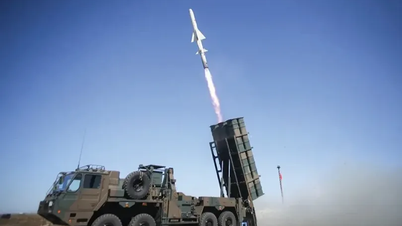
Regional media reports indicate that the Philippines is particularly interested in gaining access to Japanese military equipment, including the Type 88 land-to-ship missile system and used destroyers.
This is seen as a follow-up to Japanese Defense Minister Shinjiro Koizumi's visit to Manila in early May 2026, demonstrating that bilateral defense cooperation is progressing along a fairly consistent path.
Besides defense cooperation, maritime security is also expected to be a key topic of the talks, as 2026 marks the tenth anniversary of the South China Sea arbitration ruling.
Both sides are likely to reaffirm the importance of adhering to international law and ensuring freedom of navigation and overflight in the region's waters.
The increased cooperation between Japan and the Philippines on maritime security stems not only from bilateral interests but also reflects a broader regional trend as many nations strive to strengthen their self-defense capabilities and diversify strategic partnerships to address emerging security challenges.
Maintaining and strengthening cooperation is crucial for all parties to respond to the increasingly complex situation in the Indo-Pacific region.
While defense cooperation reflects Manila's foreign policy priorities, the economic and energy commitments made during this visit are closely tied to the domestic pressures facing President Marcos Jr.'s administration.
The Philippines is still experiencing a persistent energy shortage, significantly impacting people's lives and the competitiveness of its economy.
Therefore, finding solutions to ensure energy security has become one of the top priorities of the government. Ahead of the visit, President Marcos Jr. thanked Japan for its support to Manila in its efforts to diversify fuel sources, emphasizing that this is a vital issue for the Philippines' national development strategy.
Against this backdrop, Manila is placing high hopes on the $10 billion Powererr Asia initiative, launched by Japanese Prime Minister Takaichi Sanae in April 2026.
The Philippines hopes to leverage this resource to boost renewable energy development and gain access to advanced small modular reactor (SMR) technology from Japan.
Beyond energy, the Luzon Economic Corridor project has also emerged as a noteworthy area of interest. The Philippines expects Japanese corporations to increase investment in connecting transportation infrastructure and semiconductor supply chains in this key economic region, thereby creating more high-quality jobs and driving industrial transformation.
This move reflects Manila's efforts to leverage the restructuring of global supply chains to enhance its position in the technology and high-value manufacturing sectors.
However, in addition to opportunities for cooperation, this visit also attracted attention due to its impact on the strategic balance in the region. Expert Rommel C. Banlaoi, President of the Philippine Society for International Security Studies (PSISS) and Director of the Center for Philippine-China Studies, noted that the trip took place at a particularly sensitive time when competition among major powers continues to intensify.
According to him, the Philippines-China relationship remains fragile and urgently needs stabilization. Therefore, Manila's reaction after the visit will send an important signal about the direction of its future foreign policy.
Many international analysts also believe that the biggest challenge for President Marcos Jr. is how to strengthen national defense capabilities through international cooperation without becoming overly dependent on any single partner.
Simultaneously, there is a need to maintain a strategic balance, both promoting relations with Japan and its allies, and keeping the door open for dialogue with relevant parties to limit the risk of confrontation in the region.
From a broader perspective, President Marcos Jr.'s visit demonstrates the Philippines' pursuit of strategic diversification aimed at reducing reliance on traditional partners, with the goal of balancing security assurance and economic development amidst a volatile regional environment.
For Tokyo, strengthening ties with Manila is also part of an effort to expand Japan's strategic role in Southeast Asia and consolidate its network of partners in the Indo-Pacific region. Clearly, this visit is not merely a diplomatic formality.
The agreements and cooperation directions promoted this week could have a lasting impact on the Philippines' development strategy and help shape the security and economic landscape in the region in the coming years.
Source: https://www.vietnamplus.vn/philippines-va-nhat-ban-tang-toc-lien-ket-chien-luoc-post1112705.vnp
![[Photo] General Secretary and President To Lam presides over the meeting to approve the draft report on the results of the second inspection by the Politburo of the Standing Committee of the Hanoi City Party Committee.](https://vphoto.vietnam.vn/thumb/1200x675/vietnam/resource/IMAGE/2026/05/26/1779789811432_a2-bnd-4430-9620-jpg.webp)



































































Comment (0)