


Workers at UT Tea Investment and Development Co., Ltd. are processing purple tea buds.
Many models have proven effective.
At the end of April, we had the opportunity to visit Thanh Ba and admire the endless hills of purple tea buds. Few would have imagined that this tea variety, once on the verge of extinction, would be so powerfully revived through innovative processes, market strategies, and development.
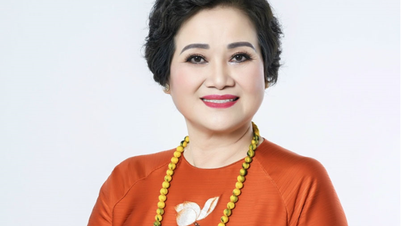
Sharing her thoughts on this choice, Ms. Le Thi Hong Phuong, Director of UT Tea Investment and Development Co., Ltd., said: "Purple bud tea has many active ingredients that other types of tea do not have, so the company wants to create a distinctive product of Phu Tho . Not only is the tea variety being restored, but the company is also investing in raw material areas, guiding organic farming practices, and guaranteeing the purchase of products from farmers. As a result, the value of the tea has increased, and growers are no longer completely dependent on the spontaneous market."
On each tea plantation, production processes are standardized. Farmers no longer produce based on individual experience but become a link in a production chain with a stable output. When the product achieves OCOP 5-star certification and gradually accesses the international market, the value of the tea plantation is also "re-evaluated". Workers' incomes are stable at 7-8 million VND/month.
Besides tea, many other clean agricultural models are also showing clear effectiveness. A prime example is the Đoan Hùng pomelo production linkage project, involving 136 households on 100 hectares, generating approximately 30 billion VND in annual output. Similarly, the model of producing safe vegetables according to VietGAP standards is also yielding positive results, with selling prices 15-20% higher and profits reaching nearly 140 million VND/hectare/season.
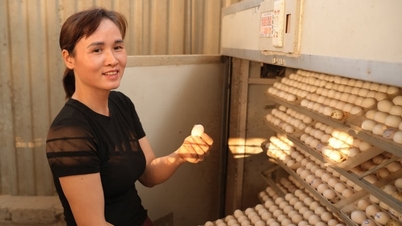
In livestock farming, the model of raising chickens according to VietGAHP standards on a scale of 150,000 birds has completely changed traditional methods, helping to improve survival rates and economic efficiency. The dairy farming model in a linked chain with "big players" like Vinamilk and FrieslandCampina not only ensures output but also increases product value, creating stable livelihoods for more than 1,400 households.
In the field of aquaculture, the model of cage fish farming according to VietGAP standards in the Son La - Hoa Binh hydroelectric reservoir area, with a scale of 500m³ of cages, has initially yielded positive results, opening up a direction for effectively exploiting the potential of the water surface, and is being actively learned and replicated by the people.

Hai Dang Group Aquaculture Co., Ltd. is a leading enterprise in cage fish farming in the Da River reservoir area.
Prospects for scaling up
According to statistics from the Department of Agriculture and Environment, by the end of 2025, the entire province will have nearly 3,780 hectares of crops meeting VietGAP standards, along with 378 hectares of organic production and thousands of hectares producing according to equivalent standards. This not only represents an increase in scale but also reflects a shift in production thinking, from focusing on yield to prioritizing safety, sustainability, and added value.
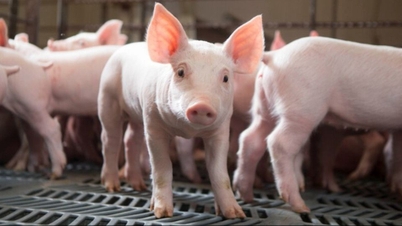
In the livestock and aquaculture sectors, clean production and the application of high technology are also gradually expanding. The province currently has 255.6 hectares of aquaculture farms certified under VietGAP, with many production models based on value chains yielding significant economic benefits. Notably, 22.8% of pig farms have adopted waste treatment technology, contributing to environmental protection and enhancing the sustainability of production.
The economic benefits of clean agricultural models are becoming increasingly evident. The average product value per hectare of cultivated land and aquaculture currently reaches approximately 140 million VND/ha, a significant increase compared to before. These supply chains not only create stable outlets but also provide stable income for rural workers. |
Current models are no longer developing in isolation but are increasingly closely linked to the value chain. The role of businesses and cooperatives is clearly affirmed in organizing production, standardizing processes, and connecting to markets. When production is "ordered" according to market demand, farmers are assured of output, proactively apply new techniques, and gradually professionalize production.
Comrade Nguyen Huy Nhuan - Director of the Department of Agriculture and Environment, stated: "The development of clean agriculture applying science and technology not only aims to enhance product value but is also an essential direction for restructuring the agricultural sector towards sustainability. In reality, production models adhering to VietGAP standards, organic farming, or value chain linkages all yield higher economic efficiency, more stable output, and gradually change the production mindset of the people. This will be an important foundation for the province to continue expanding green, safe, and competitive agricultural models in the market.”
From specific models, a production trend is becoming increasingly clear: clean agriculture, high-tech applications, and integration into value chains. This is not only an essential requirement in an increasingly demanding market but also a crucial direction for sustainable agricultural development. With effective models, the participation of businesses, and a shift in the production mindset of the people, Phu Tho is gradually shaping a green, clean, and truly competitive agricultural sector.
Nguyen Yen
Source: https://baophutho.vn/phu-tho-nhan-rong-mo-hinh-nong-nghiep-sach-253128.htm
![[Image] Pleasant weather helps students enter the 10th grade entrance exam with confidence.](https://vphoto.vietnam.vn/thumb/1200x675/vietnam/resource/IMAGE/2026/05/29/1780034401612_ngay-1-thi-lop-10-minh-duy-8-5009-jpg.webp)


![[Photo] Ba Lang An Lighthouse - the "eye of the sea" amidst the "rock museum" of Quang Ngai province.](https://vphoto.vietnam.vn/thumb/1200x675/vietnam/resource/IMAGE/2026/05/29/1780038698840_anh-man-hinh-2026-05-29-luc-14-10-42.png)



























































Comment (0)