

REPORTER: How does the Deputy Minister assess the progress of the 12 component projects of the North-South Expressway (Eastern section) passing through the provinces of Ha Tinh , Quang Binh, Quang Tri, Quang Ngai, Binh Dinh, Khanh Hoa, and the Mekong Delta provinces?
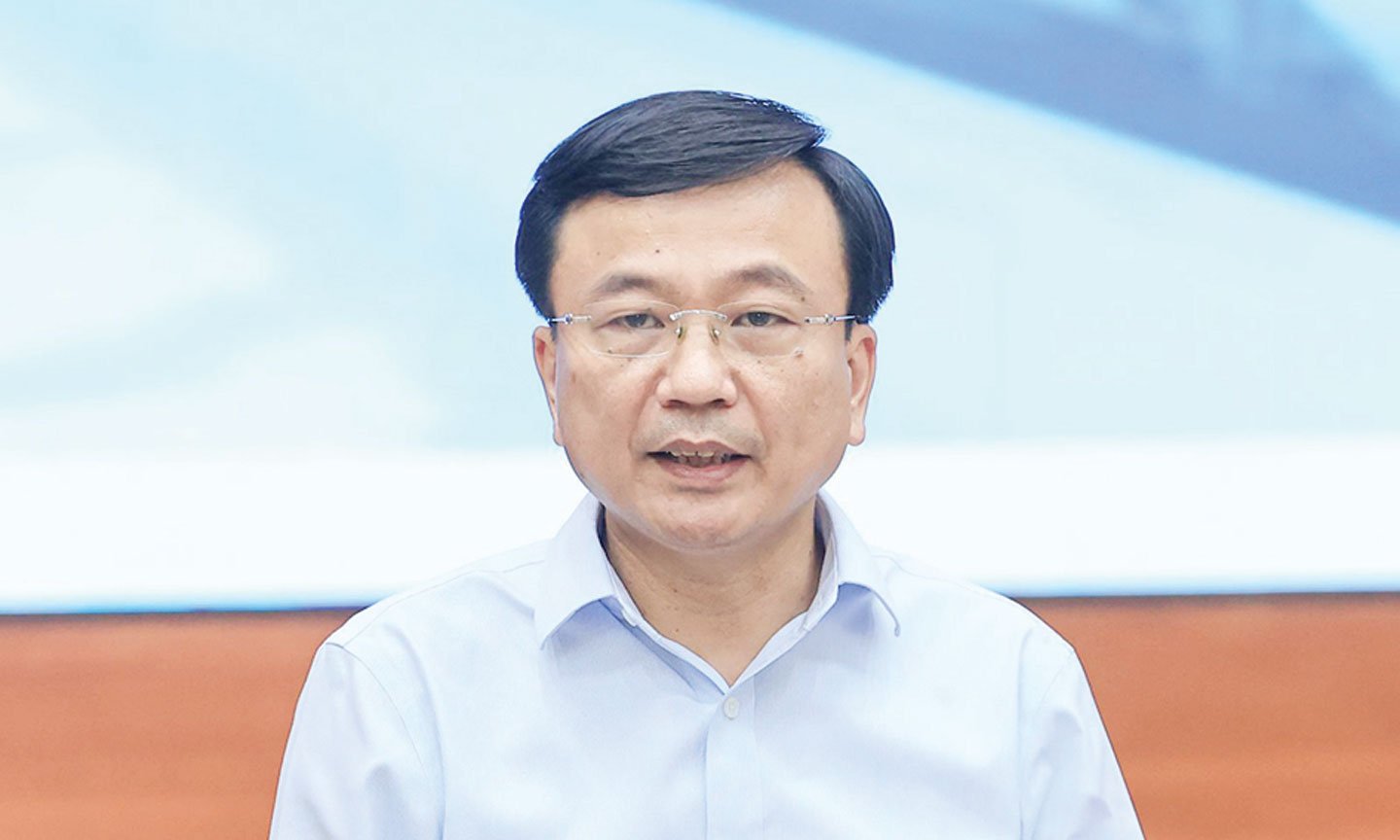 |
| Deputy Minister of Construction Nguyen Danh Huy |
* Deputy Minister NGUYEN DANH HUY : To date, the difficulties and obstacles of the component projects of the North-South Expressway in the East have been resolved, and the implementation progress is closely following the set plan. Besides the four projects whose timelines have been shortened to be ready for operation by April 30th (the last 70km of the Van Phong - Nha Trang route; Bai Vot - Ham Nghi; Ham Nghi - Vung Ang; Bung - Van Ninh), four component projects (Vung Ang - Bung; Van Ninh - Cam Lo; Hoai Nhon - Quy Nhon; Quy Nhon - Chi Thanh) will be open to traffic by the end of September.
Specifically, the two component projects, Can Tho - Hau Giang and Hau Giang - Ca Mau , are behind schedule due to passing through areas with weak soil, requiring a long settlement waiting period, and facing difficulties in material supply. Those of us working on these projects are hoping for understanding regarding these objective challenges. The Ministry of Construction is decisively directing investors and contractors to use technical solutions to shorten the settlement waiting period and organize construction to complete the projects by the end of this year.
In recent times, the two biggest obstacles to the progress of transportation projects have been land clearance and embankment materials. Could the Deputy Minister please explain the role of local authorities in this matter?
* In practice, land clearance and material supply have been the main bottlenecks in the implementation of transportation projects to date. Recognizing this issue, right from the project preparation stage, the Ministry of Transport (now the Ministry of Construction) reported to and advised the Government and the National Assembly to issue resolutions allowing the application of special mechanisms in land clearance, licensing, and material exploitation. As a result, land clearance has been largely resolved, and the supply of materials has been adequately secured, contributing to the acceleration of project progress.
Throughout this process, local authorities played a crucial and direct role. There were many difficulties and obstacles, but with the close and decisive guidance of the State Steering Committee for key national projects, especially the involvement of the entire political system at all levels of the locality, these issues were resolved, and the projects were completed on schedule.
In reality, some highway projects have deteriorated shortly after being put into operation. So, how is the quality control of these projects being implemented?
* First of all, I would like to affirm that our guiding principle for all projects is "quality is vital; we will not compromise quality for speed." From the very beginning of each project, the Ministry of Construction has required investors to improve their operational capacity, effectiveness, and efficiency in construction investment management, especially in quality management. Investors are also responsible for inspecting and urging construction contractors to comply with the design requirements and technical specifications of the project.
For design consulting firms, the Ministry of Construction requires improved quality of survey and design work, especially the completeness and accuracy of topographic, geological, and hydrological survey data, and the development of appropriate design solutions. For supervision consulting firms, the Ministry of Construction requires strict inspection and supervision of construction quality, particularly the quality and origin of materials. For construction contractors, the Ministry of Construction requires that the site manager and contractor personnel meet the required competency standards. Furthermore, the investor must strictly adhere to the project acceptance procedures.
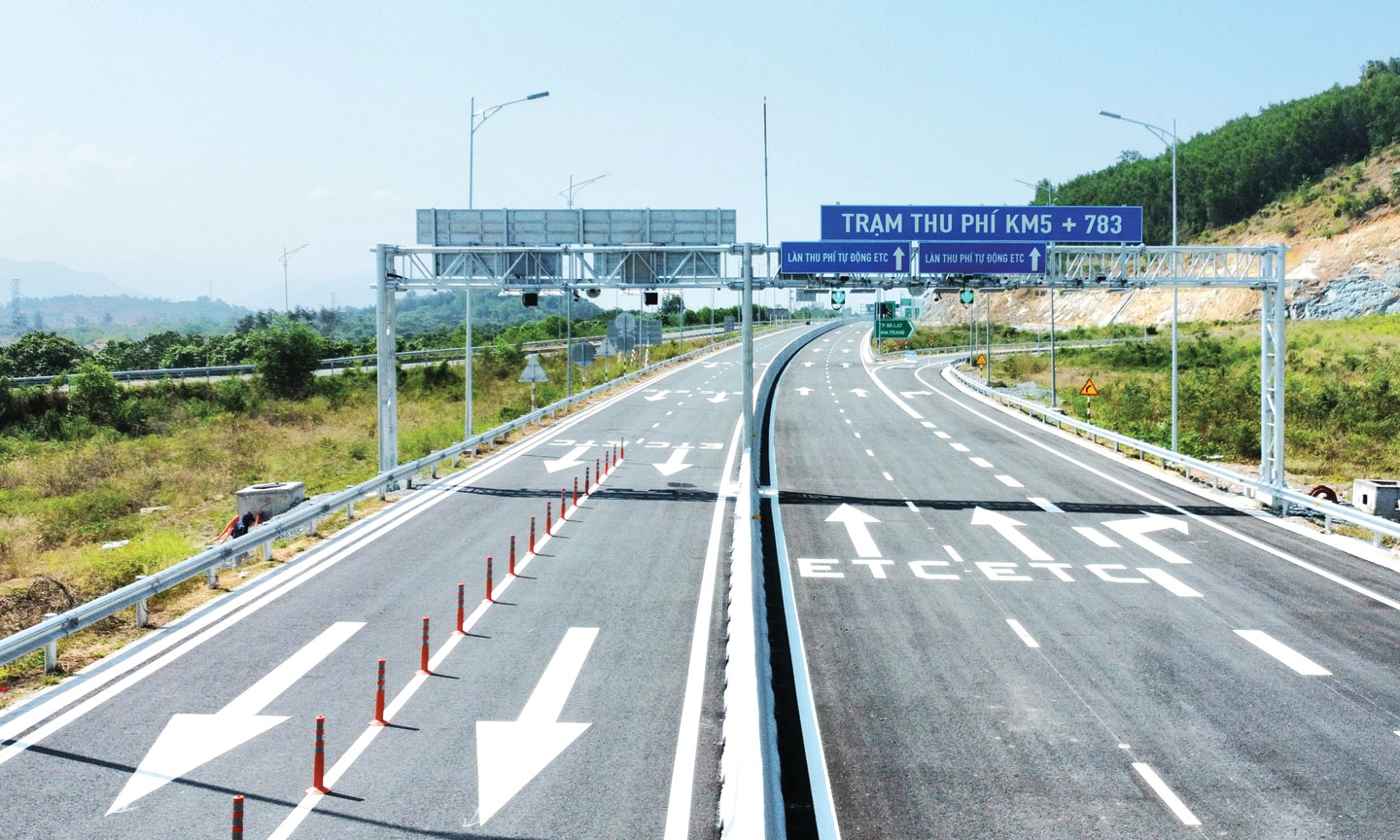 |
| The Van Phong - Nha Trang expressway (Khanh Hoa province) was put into operation at 6:00 AM on April 20th. Photo: Hieu Giang |
With the completion of the entire North-South Expressway and Ho Chi Minh Highway in 2025, how will the construction industry continue to invest in and complete the expressway network in the coming period?
The national target of having over 5,000km of expressways by 2030 was set in the Resolution of the 13th National Congress of the Communist Party of Vietnam. To date, the country has more than 2,000km of expressways, with over 1,800km under construction (of which over 1,000km will be completed by the end of 2025 to reach the target of over 3,000km), and funding has been allocated for the implementation of over 500km. Thus, the research and preparation for investment and commissioning of approximately 700km in the 2026-2030 period will contribute to achieving the set target of 5,000km.
The early completion of the highway network development plan will help ensure the formation of the main transportation framework according to the plan, contributing to inter-regional connectivity and promoting the socio-economic development of the country in the new period.
| The Ministry of Construction has just proposed to the Government to approve the allocation of 6,500 billion VND from the state budget to participate in the investment project to expand the Ho Chi Minh City - Long Thanh expressway section (equivalent to 40% of the total investment). At the same time, the Ministry also proposed assigning the Vietnam Expressway Investment and Development Corporation as the managing agency, responsible for mobilizing the remaining capital of 9,814 billion VND (accounting for approximately 60% of the total investment) to implement the project. |
According to sggp.org.vn
Source: https://baoapbac.vn/phong-van-doi-thoai/202504/quyet-tam-hoan-chinh-mang-luoi-duong-bo-cao-toc-1040356/
![[Photo] The General Secretary, President and his wife begin their state visit to the Philippines.](https://vphoto.vietnam.vn/thumb/1200x675/vietnam/resource/IMAGE/2026/05/31/1780230559452_anh-man-hinh-2026-05-31-luc-19-28-11.png)

![[Image] Hanoi Police officially crowned champions of V-League 2025/2026](https://vphoto.vietnam.vn/thumb/1200x675/vietnam/resource/IMAGE/2026/05/31/1780244769054_ndo_br_039d561b692be875b13a-jpg.webp)

![[Photo] Admire the coral "masterpiece" amidst the million-year-old heritage of Dak Lak province.](https://vphoto.vietnam.vn/thumb/1200x675/vietnam/resource/IMAGE/2026/05/31/1780221235105_anh-man-hinh-2026-05-31-luc-16-53-27.png)
![[Photo] Solemn bathing ceremony and Buddha procession in Hue](https://vphoto.vietnam.vn/thumb/1200x675/vietnam/resource/IMAGE/2026/05/31/1780228263543_1-jpg.webp)










![[Video] Sunset at Lap An Lagoon – Where the sun sets over the fishing nets](https://vphoto.vietnam.vn/thumb/340x192/vietnam/resource/IMAGE/2026/05/31/1780192137701_beach-landscape-sea-water-nature-grass-745871-pxhere-com.jpeg)































































Comment (0)