

At the Boao Forum for Asia on March 25, many Chinese robotics industry leaders acknowledged that the prospect of robots becoming commonplace in homes to help with cooking or cleaning is still quite far off.
Some optimists, like Wang Xiaogang from Daxiao Robotics, believe it could be done in about two years if there is enough data and better simulation technology. Vivo's experts, however, are more cautious, suggesting it could take nearly 10 years because training robots to work in real-world environments is expensive and complex.
The common point emphasized by experts is that robotics will not "explode" after just one major invention, but will progress gradually across many fields.

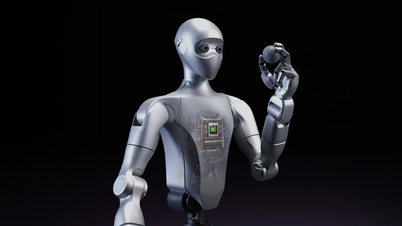
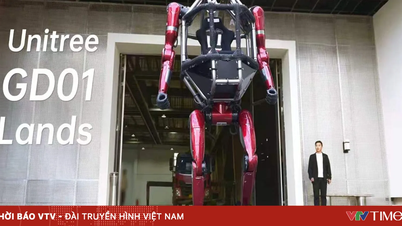
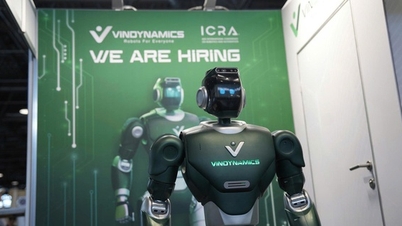
Currently, although humanoid robots can perform acrobatics, martial arts, or appear on large stages, most still only function well in controlled environments. When brought into real life, they still encounter many problems.
The biggest challenges include a lack of training data, high costs, and insufficient operational stability. According to Baidu representatives, the robots are still weak in terms of durability, flexibility, and accuracy during operation.
Beyond technology, another major issue is human trust. During the discussion, a robot from the Beijing Humanoid Robotics Innovation Center directly asked how to gain human trust.
Former New Zealand Prime Minister Jenny Shipley responded that robots need to demonstrate reliability, have clear limits, and be genuinely useful, while not interfering deeply with human emotions.
In addition, experts also warn of risks such as job losses, data issues, and liability when AI causes problems. Therefore, countries need to both encourage technological development and establish regulations to control risks.
Source: https://congluan.vn/robot-hinh-nguoi-chua-the-som-ung-dung-rong-rai-10335817.html
![[Photo] First session of the 14th Congress of the Vietnam Trade Union](https://vphoto.vietnam.vn/thumb/1200x675/vietnam/resource/IMAGE/2026/06/03/1780465947883_ndo_br_img-3852-jpg.webp)
![[Photo] General Secretary and President To Lam presides over a meeting with the Central Organizing Committee.](https://vphoto.vietnam.vn/thumb/1200x675/vietnam/resource/IMAGE/2026/06/03/1780482764658_a1-bnd-4741-3342-jpg.webp)

![[Photo] Secretary of the National Assembly Party Committee, Chairman of the National Assembly presides over the meeting of the Standing Committee and Executive Committee of the National Assembly Party Committee.](https://vphoto.vietnam.vn/thumb/1200x675/vietnam/resource/IMAGE/2026/06/03/1780480353201_ndo_br_bnd-2585-jpg.webp)



















































![[Video] Sunset at Lap An Lagoon – Where the sun sets over the fishing nets](https://vphoto.vietnam.vn/thumb/1200x675/vietnam/resource/IMAGE/2026/05/31/1780192137701_beach-landscape-sea-water-nature-grass-745871-pxhere-com.jpeg)



































Comment (0)