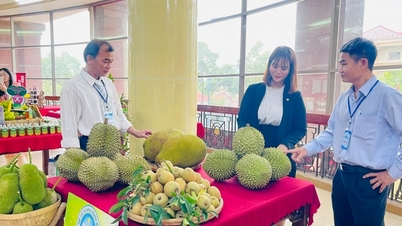
Preserving and promoting cultural identity
According to representatives from the Provincial Department of Ethnic Minorities and Religion, in recent years, the communes with predominantly ethnic minority populations in the southeastern part of the province have received concentrated investment from the central and provincial governments to comprehensively develop basic cultural and sports facilities.
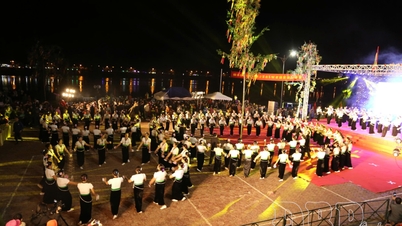
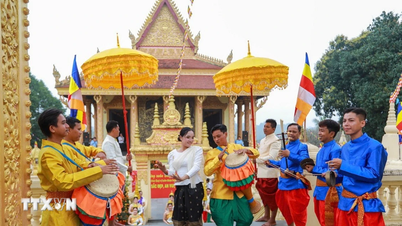
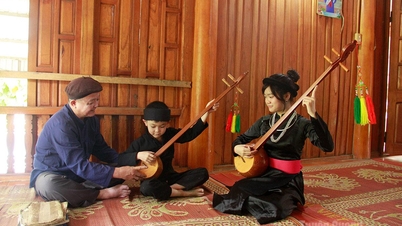
As a result, 100% of communes in ethnic minority areas now have cultural centers, 100% of villages have community centers, and maintain amateur performing arts groups. Traditional cultural activities, festivals, and handicrafts of the ethnic minorities are preserved, protected, and linked to tourism development, especially within the Cham community.
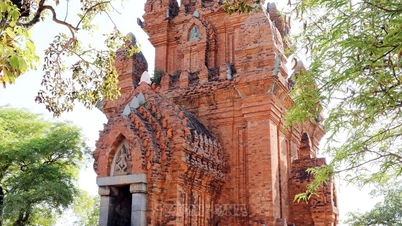
In addition, the entire region currently has 4 national and 4 provincial-level historical sites associated with ethnic minority communities, many of which have been restored and protected from deterioration.
Currently, the Binh Thuan Museum and the Provincial Cham Culture Exhibition Center are preserving many rare and valuable artifacts and antiques of various types and materials belonging to ethnic minorities in the province. The collection of Cham royal cultural heritage is preserved at the home of a descendant of the Cham dynasty in Hong Thai commune, containing many relics and antiques.
In addition, some traditional cultural activities of the ethnic minorities, especially the Cham people, are implemented in conjunction with local tourism development. Regularly showcasing Cham brocade and pottery products at tourist areas, and organizing exhibitions and presentations of cultural artifacts at festivals.


In particular, the province has been implementing a project to preserve and promote the Katê Festival of the Cham people to serve local tourism development. At the same time, it is coordinating with neighboring provinces to build a scientific dossier on "Traditional Cham Pottery Making Art" for UNESCO to include in the list of intangible cultural heritage in need of urgent safeguarding.
Education in mountainous regions is flourishing.
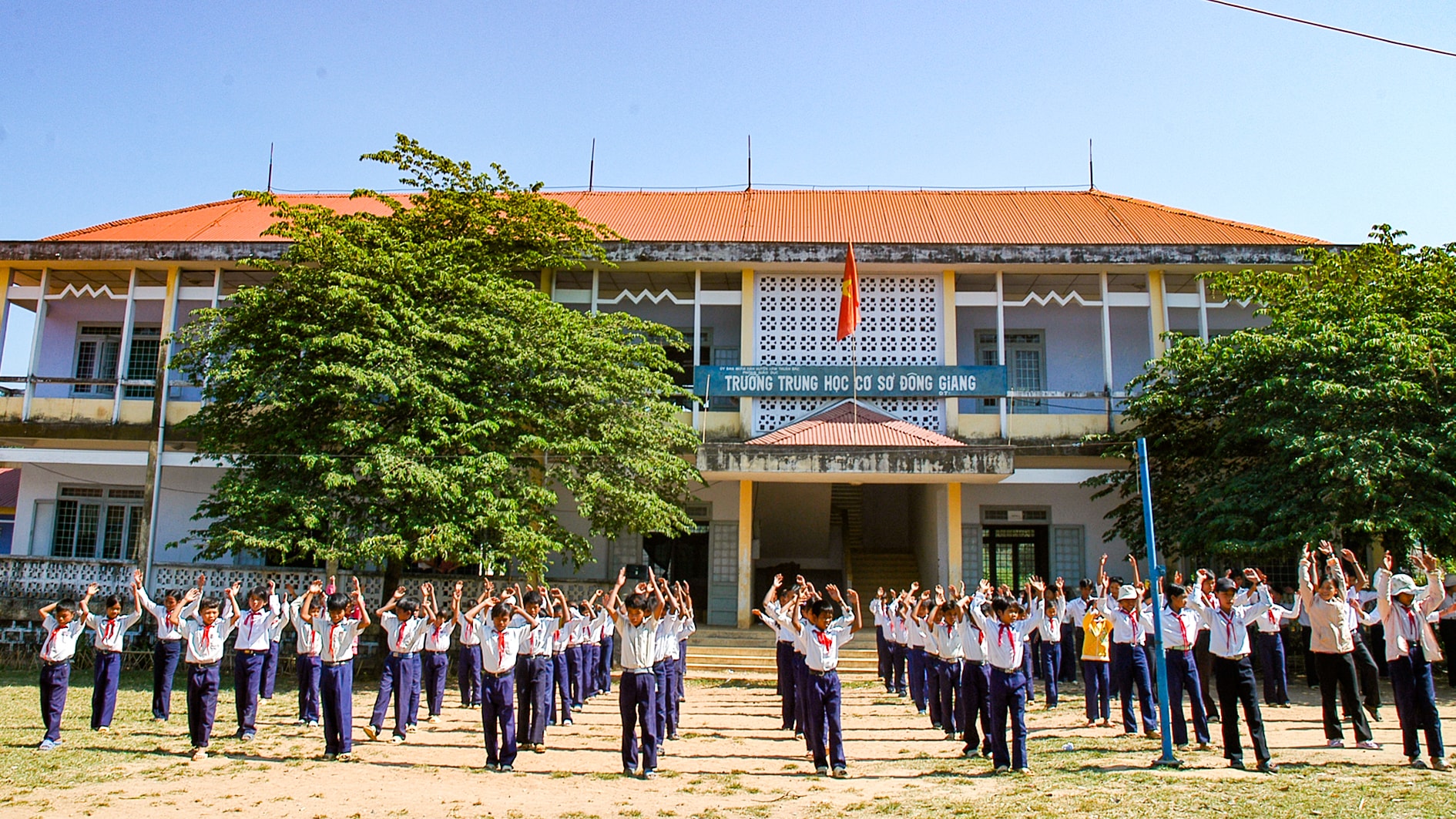
Education and training have been identified as one of the priority areas. To date, the southeastern region of the province has one provincial-level ethnic boarding school and four district-level ethnic boarding schools. The school system in ethnic minority areas is becoming increasingly modern and aims to meet national standards.
Thanks to synchronized investment, the quality of teaching and learning has improved, and the dropout rate has decreased significantly. The enrollment rate of children in schools has increased, reaching 99.86% for preschool, 99.5% for primary school, 92.91% for lower secondary school, and 61.17% for upper secondary school. 100% of communes in ethnic minority areas have achieved universal primary education at the appropriate age and universal lower secondary education.
Alongside teaching and learning Vietnamese, schools also maintain the teaching of the Cham language for 2-4 lessons per week for all primary school grades. In addition, 49 schools with ethnic minority students receive enhanced Vietnamese language instruction, achieving 100% of the target set in the Vietnamese Language Enhancement Project. Vocational training and scholarship programs for ethnic minority students are also regularly implemented.
Every year, the region collaborates with colleges and universities to organize vocational training and scholarship programs in accordance with Decree 141, creating opportunities for children of ethnic minorities to study, improve their skills, and meet the human resource requirements of the new era.
Nevertheless, ethnic minority communities in the southeastern part of the province still face many difficulties due to the scattered settlements of the ethnic minority population; their living standards remain significantly lower than the provincial average...


Despite numerous challenges, the achievements in education, culture, and social affairs affirm the Party and State's concern for ethnic minorities and mountainous communities in the southeastern part of the province.
This also serves as a foundation for the locality to continue implementing comprehensive solutions aimed at sustainable development, improving the material and spiritual quality of life for the people, and strengthening national unity.
Source: https://baolamdong.vn/rut-ngan-khoang-cach-vung-mien-388732.html