

 |
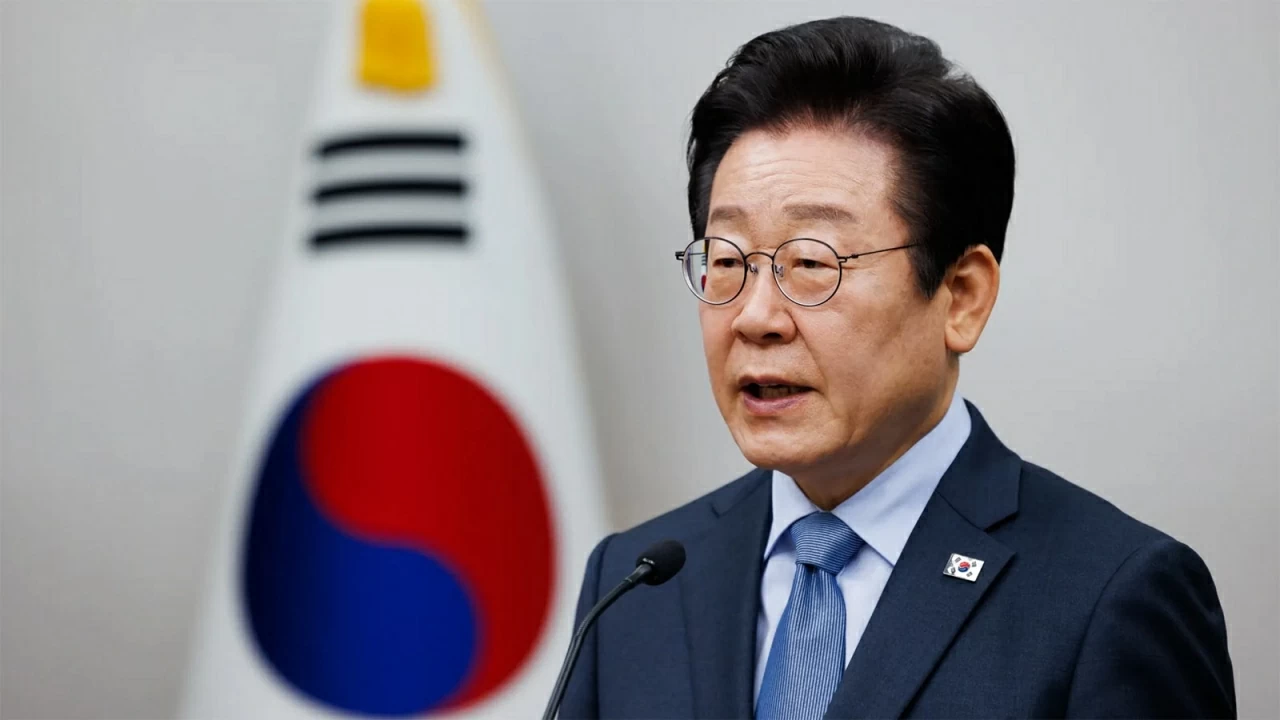
| South Korean President Lee Jae Myung. (Source: Yonhap) |
This is the first White Paper from the South Korean Ministry of Unification under President Lee Jae-myung. Notably, this document shows Seoul is adjusting its approach to emphasize dialogue, tension management, and peaceful coexistence.
Indeed, the two sides have not had any exchange visits or economic cooperation in the past five years. Pyongyang continues to demonstrate a hardline stance by amending its Constitution, defining its territory as adjacent to South Korea and removing provisions related to inter-Korean unification, strengthening its forces at the southern border, and increasing defense cooperation with Russia.
Conversely, following a hardline period under former President Yoon Suk Yeol, the current administration is pursuing a somewhat "softer" approach. The new White Paper from the South Korean Ministry of Unification is a sign of this shift.
Old bottle, new wine.
In terms of format, the White Paper continues to follow previous documents, which have been regularly published since 1990, ranging from 200 to 400 pages in Korean with an English summary. With 232 pages and seven chapters, this document continues to focus on core issues such as policy implementation, promoting inter-Korean exchange and cooperation, humanitarian issues, and dialogue. However, in terms of content, this White Paper has undergone several adjustments.
Firstly , the document is said to have adjusted the presentation of some content related to sanctions and UN resolutions, in order to better reflect the approach of peaceful coexistence.
Secondly, the document also outlines three major principles of South Korea regarding future inter-Korean relations, including: respecting North Korea's political system; opposing unification by annexation; and refraining from provocative actions. The document also proposes resuming the September 19, 2018 military agreement under President Moon Jae-in, establishing a new "Basic Inter-Korean Agreement" on bilateral relations, and calls for a three-step approach of "freeze-reduce-dismantle" in denuclearization on the Korean Peninsula.
Thirdly, the 2026 White Paper of the South Korean Ministry of Unification emphasizes the element of "two de facto states": "Recognizing the reality that South and North currently exist as two independent states, we aim to develop inter-Korean relations into a relationship of peaceful coexistence, alongside pursuing the process of unification." Accordingly, this document affirms the desire to transform North Korea's current stance into a "bilateral relationship oriented towards peace."
This is clearly reflected in the wording of the 2026 White Paper compared to the previous version: The frequency of the words "peace" (from 29 to 196 times), "peaceful coexistence" (from 108 to 627 times), and "dialogue" (from 50 to 144 times) has increased sharply. Conversely, the frequency of critical words such as " human rights " (from 156 to 26 times), "defection" (from 203 to 10 times), and "freedom" (from 43 to three times) has decreased significantly.
Unlike the previous version released under Yoon Suk Yeol, which focused on increasing pressure, propaganda, and criticism, this version emphasizes confidence-building measures such as halting anti-North Korea posters, banners, and broadcasts, and restoring communication channels. South Korean Unification Minister Chung Dong Young affirmed, "Peace on the Korean Peninsula is not a choice, but our way of life." The football match between the South Korean women's club Suwon and North Korea's Naegohyang in Suwon on May 20th was an effort toward achieving that goal.
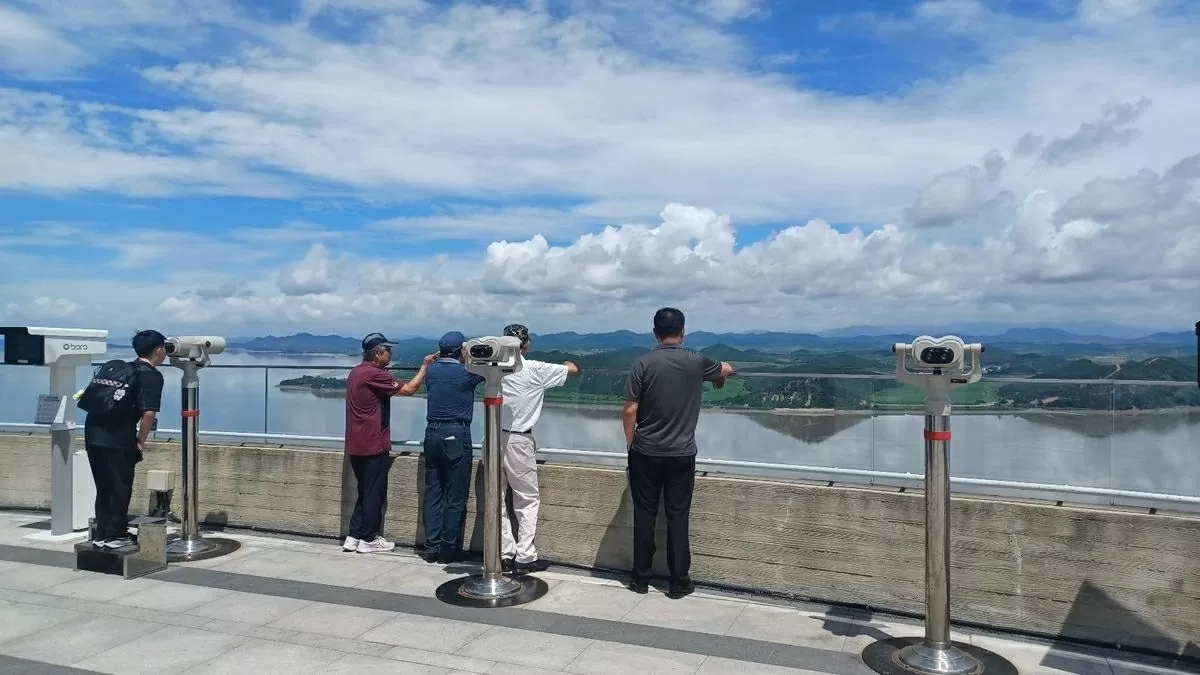 |
| Tourists observe North Korean territory from the observation deck of a Starbucks cafe at Aegibong Peace Ecological Park in Gimpo, Gyeonggi Province, South Korea. (Source: Korea Times) |
Nine people, ten opinions.
However, not everyone agrees with Chung Dong Young's assessment. In South Korea, some conservative opinions and constitutional scholars argue that officially designating the two Koreas as two independent nations is unconstitutional, because the Constitution considers the Korean Peninsula as a single territory and refers to reunification by peaceful means.
In response, the South Korean Ministry of Unification asserted that the document was consistent with previous statements and was an important stepping stone toward the reunification process.
For its part, North Korea has not issued an official statement. However, recent statements and actions suggest that Pyongyang maintains a cautious and skeptical attitude toward any move by Seoul.
However, North Korea's recently amended constitution does not specify the location of the inter-Korean border. According to South Korean observers, this could signal that Pyongyang does not want to immediately create new points of tension with Seoul, thus indicating that there is still room for both sides to promote and improve relations, albeit a fragile one.
Similarly, Japan, China, and the United States have yet to issue official responses. However, during a meeting with President Lee Jae-myung at the Andong Summit on May 19th, Japanese Prime Minister Takaichi Sanae stated that the two sides discussed North Korea's nuclear program. Meanwhile, Chinese media reported that President Xi Jinping and President Donald Trump discussed the situation on the Korean Peninsula during their meeting on May 14th, but did not provide details.
However, given its stance prioritizing stability and opposing unification by force, Beijing is unlikely to object to the document. Meanwhile, Washington, which maintains that denuclearization is a prerequisite, may have a different view of the text.
Ultimately, with significant changes from its predecessor, the 2026 White Paper of the South Korean Ministry of Unification reflects a notable shift in Seoul's approach, moving from confrontation to prioritizing dialogue, toward peaceful coexistence on the Korean Peninsula.
However, this is only the first step in the effort to make a difference, and there is still a long journey ahead for both sides to achieve true peace.
Source: https://baoquocte.vn/sach-trang-cua-han-quoc-dinh-hinh-phuong-an-moi-396297.html

![[Photo] General Secretary and President To Lam presides over the meeting to approve the draft report on the results of the second inspection by the Politburo of the Standing Committee of the Hanoi City Party Committee.](https://vphoto.vietnam.vn/thumb/1200x675/vietnam/resource/IMAGE/2026/05/26/1779789811432_a2-bnd-4430-9620-jpg.webp)






























































Comment (0)