

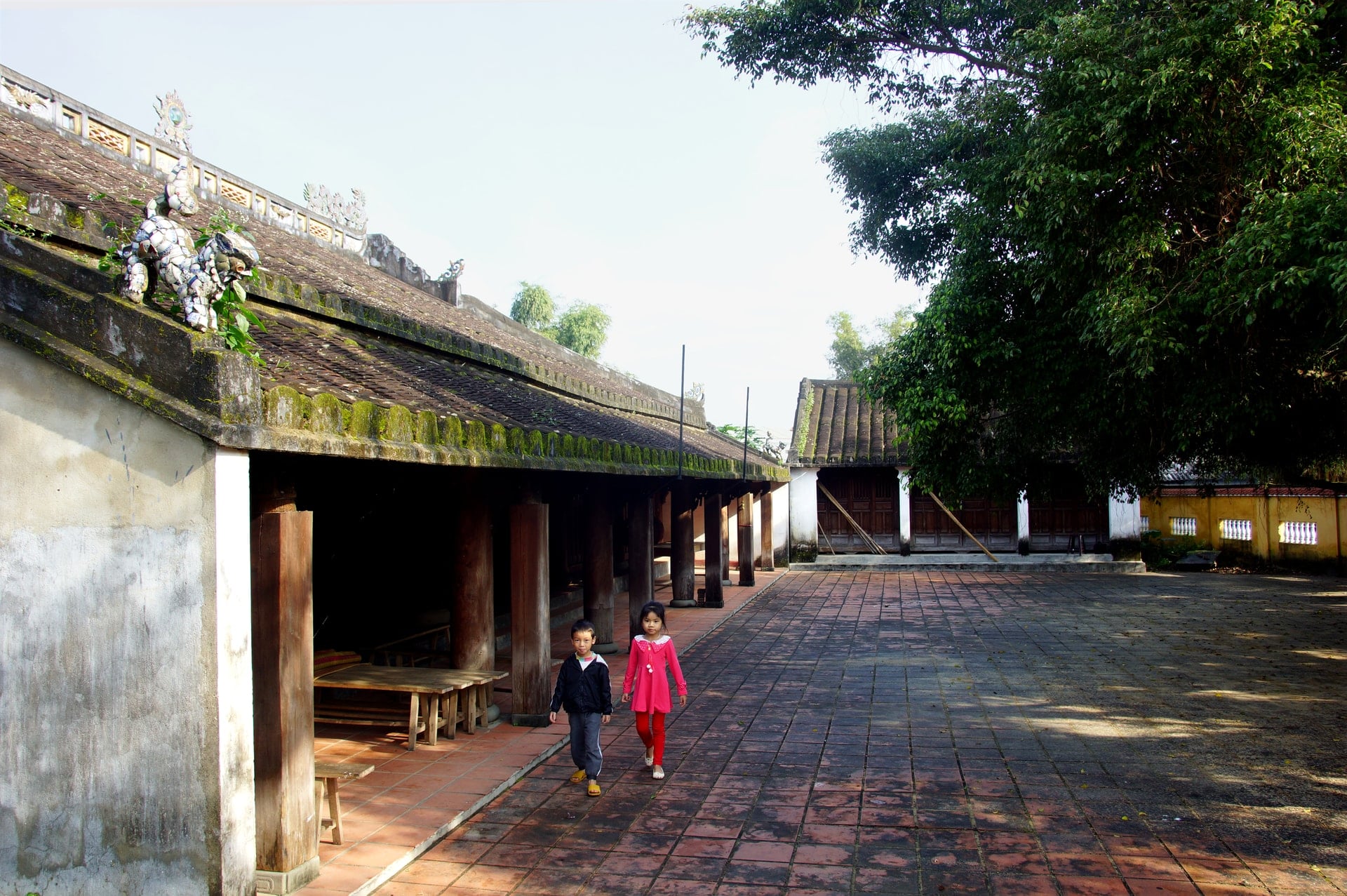
Characteristic village names
The names of villages and communes in Quang Nam province were given in various ways. They might have incorporated or retained a word element from the names of the ancestors' homelands in the North who settled in the new land, as in the case of Thanh Chiem, a village named after Vietnamese migrants from Thanh Hoa (Hoa province).
Village names are chosen based on geographical features and landscapes, such as coastal areas using the word "Hai" (sea), riverside areas using "Ha," "Giang," or "Xuyen" (river); mountainous areas using "Lam," "Son," or "Lang" (forest), areas with streams using "Khe" (stream), areas with ponds using "Tri" (pond), sandy areas using "Sa" (sand), or areas with salt resources using "Diem" (salt)...
Naming villages according to aspirations for a peaceful and happy life often involves using words like An/Yen, Phuc/Phuoc, etc. Based on the total of 1,046 village names in Quang Nam province during the Gia Long era, listed in the Nguyen Dynasty Land Registry Research Project (Quang Nam Province section) by researcher Nguyen Dinh Dau, there are 262 village names containing the words An/Yen (accounting for 25%), 73 village names containing Phuc/Phuoc (7.6%); and 99 village names containing Phu (9.4%).
Ethnic minority communities commonly name their villages after rivers, streams, or features of mountains and forests. For example, the Ca Dong people in Nam Tra My commune often name their villages after the word "Tak" (water), such as Tak Po, Tak Nam, Tak To. Similarly, in Dong Giang commune, the Co Tu people's village of Prao means "Chò tree" because there is an ancient Chò forest at the headwaters of the stream.
Most of the old village names have existed for quite a long time, from the time they were first named until 1945. During that period of over 600 years, village names only changed when the population grew and the area expanded, leading to the division into new villages, often incorporating words representing directions (East, West, South, North, Central, Upper, Lower); or when names were changed from vernacular names with impolite connotations to Sino-Vietnamese names; or due to taboos under the feudal system.
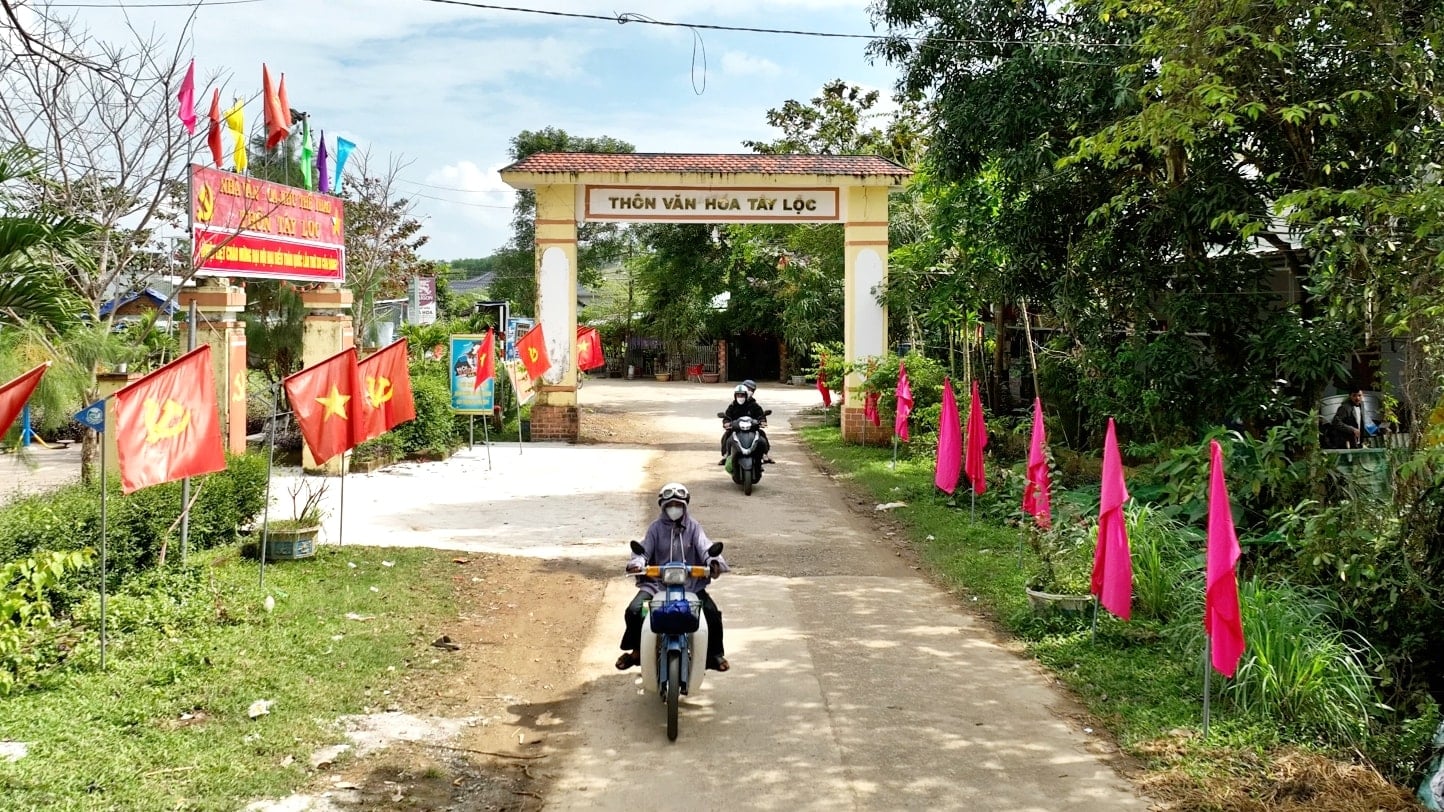
Consider carefully when choosing a new name.
Because village names carry so much meaning, naming new hamlets and residential areas today requires careful consideration. It's crucial to take into account historical factors, traditions, culture, and the aspirations of the community. Avoid erasing all old village names and refrain from simply mechanically combining new names, especially those based on numbers. Therefore, priority should be given to using one of the old village names with significant historical and cultural value. For hamlets where the name of an old village has already been used for a new commune (such as Thạnh Bình village, which has been used for Thạnh Bình commune), consider choosing the name of another village for the new hamlet.
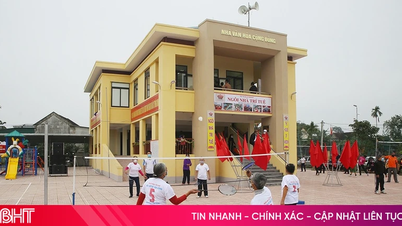
Furthermore, preserving the names of old villages that should not be used for new hamlets, residential areas, or communes can be achieved by encouraging the local communities to build village gates to mark the boundaries of their former villages; it is also possible to allow the villagers to renovate or rebuild the village communal house as a religious and cultural institution, if the community so desires. In addition, when compiling the history of a commune, it is essential to fully record the names of the old villages and communes and the process of their merger into new administrative units.
When naming new villages and residential areas, it is necessary to avoid hastily proposing a name scheme that is merely a forced combination or purely based on the larger population or area of another village. Alternatively, rushing into a name scheme without proper explanation can lead to misunderstandings among residents and a lack of genuine consensus.
I believe that, first and foremost, we should consult with local intellectuals and elders. It would be even better to consult with cultural and historical researchers to uncover the cultural roots of the old village names, their historical significance, and the cultural, historical, and development aspirations, as well as the economic implications, of choosing these village names for new hamlets and residential areas.
After gaining the approval and support of respected community leaders, a proposal should be developed, providing sound justification to gain the consensus and approval of the entire community. Alongside this, effective communication and encouragement of the new village/neighborhood community is necessary to preserve the remaining village/commune names, viewing them as cultural heritage in the current development of the village/commune.
Source: https://baodanang.vn/sap-nhap-thon-to-dan-pho-gang-giu-ten-lang-xa-xua-3338499.html

![[Image] Pleasant weather helps students enter the 10th grade entrance exam with confidence.](https://vphoto.vietnam.vn/thumb/1200x675/vietnam/resource/IMAGE/2026/05/29/1780034401612_ngay-1-thi-lop-10-minh-duy-8-5009-jpg.webp)
![[Photo] Ba Lang An Lighthouse - the "eye of the sea" amidst the "rock museum" of Quang Ngai province.](https://vphoto.vietnam.vn/thumb/1200x675/vietnam/resource/IMAGE/2026/05/29/1780038698840_anh-man-hinh-2026-05-29-luc-14-10-42.png)



































































































Comment (0)