

The Climate Prediction Center (CPC) of the U.S. National Oceanic and Atmospheric Administration (NOAA) predicts a 65% chance of El Niño occurring between October 2026 and February 2027. Michelle L'Heureux, a scientist in charge of El Niño and La Niña forecasting at the CPC, said a strong El Niño is more likely to occur if atmospheric changes continue to synchronize with changes in the tropical Pacific Ocean during the summer, for example, weakening near-equatorial winds at the same time as rising ocean temperatures.
"The likelihood of the biggest El Niño event since the 1870s is clearly increasing," Paul Roundy, professor of environmental and atmospheric science at the University of Albany, wrote on X.
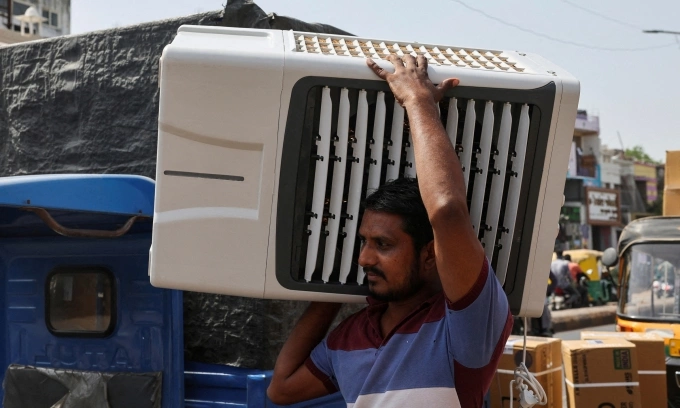
According to Live Science, the strongest El Niño ever recorded occurred in 1877, contributing to the global famine of 1876-1878, which claimed the lives of over 50 million people, equivalent to 3% of the world's population at the time.
Deepti Singh, director of the Extreme Climate and Impact Lab at Washington State University, argues that while the social, political , and economic context is now significantly different, the upcoming event could still seriously threaten global food security, water resources, and the economy. "The difference is that the atmosphere and oceans are now considerably warmer than they were in the 1870s, meaning the accompanying extreme events could be more severe," Singh told the Washington Post.
A more recent example illustrating the threat posed by a super El Niño event is the one that occurred in 1997-1998, resulting in estimated global economic losses of $32-96 billion.
Nathaniel Johnson, an ENSO forecasting expert at NOAA, said that the super El Niño will affect fisheries and crops, while also increasing the risk of wildfires and storms in some parts of the world.
"Many people are currently living in poverty, and if crop yields fall due to droughts or floods caused by El Niño, prices will rise even higher. We are facing the risk of very significant humanitarian impacts this year, especially if the Middle East conflict continues," Liz Stephens, a climate professor at the University of Reading (UK), told the BBC.
El Niño is the warm phase of El Niño-Southern Oscillation (ENSO), a natural climate cycle driven by fluctuations in ocean temperature and atmospheric pressure in the central and eastern tropical Pacific. ENSO causes ripple effects across the globe, impacting everything from rainfall and droughts to storms and heatwaves. ENSO typically produces a warm El Niño followed by a cold La Niña phase every 2-7 years.
El Niño is confirmed when the average ocean surface temperature rises by at least 0.5°C for five or more consecutive months above the long-term average. The term "super El Niño" usually refers to a very strong event, with ocean surface temperatures rising by at least 2°C above average. According to CNN, events of this magnitude have occurred in the periods of 1982-1983, 1997-1998, and 2015-2016.
The last time Earth experienced El Niño was from May 2023 to March 2024. While not reaching "super" intensity, this event contributed to record-breaking heatwaves in 2023 and 2024, with 2024 currently holding the record for the hottest year on record. If this phenomenon recurs, this year will be warmer, but it will be difficult to surpass the 2024 record because the beginning of the year will still be affected by the La Niña cold phase.
( According to vnexpress.net )
Source: https://baodongthap.vn/sieu-el-nino-manh-nhat-co-the-dien-ra-nam-nay-a241048.html




![[Photo] Ba Lang An Lighthouse - the "eye of the sea" amidst the "rock museum" of Quang Ngai province.](https://vphoto.vietnam.vn/thumb/1200x675/vietnam/resource/IMAGE/2026/05/29/1780038698840_anh-man-hinh-2026-05-29-luc-14-10-42.png)
![[Image] Pleasant weather helps students enter the 10th grade entrance exam with confidence.](https://vphoto.vietnam.vn/thumb/1200x675/vietnam/resource/IMAGE/2026/05/29/1780034401612_ngay-1-thi-lop-10-minh-duy-8-5009-jpg.webp)

























































































Comment (0)