

My father is 54 years old and had kidney stones surgically removed 5 years ago. Recently, he has been experiencing symptoms similar to those before the surgery.
My father's symptoms include back pain, difficulty urinating, burning sensation, frequent urination, and occasional blood in the urine. I'm worried whether his kidney stones have recurred or if it's due to some other condition, because I've always thought that kidney stones, once surgically treated, were completely cured. ( Hoang Mai, Long An )
Reply:
To determine your father's exact condition, you should arrange for him to see a doctor soon. The symptoms you described suggest a possible recurrence of an old illness, or possibly a lower urinary tract disorder. Kidney stones are formed when minerals in the urine crystallize, such as calcium, salts, uric acid, and oxalate. If there isn't enough water to flush these minerals out, they will concentrate over time and form kidney stones.
Kidney stones are a common urinary tract disease and are very prone to recurrence due to various causes, including both subjective and objective factors. If a patient has had surgery to remove the stones once, but does not make positive lifestyle changes or due to underlying medical conditions or other contributing factors, kidney stones may return.
Kidney stones can form and recur due to lifestyle and dietary habits such as consuming large amounts of meat, especially red meat and animal protein – proteins high in purines. These substances, after metabolism, produce urea, a waste product excreted in urine, which, when deposited in the kidneys, forms stones. Animal fats increase uric acid levels while reducing essential chemicals that prevent mineral crystallization. Eating too much salt but drinking too little water (less than 2 liters per day) means the body doesn't have enough water to flush out toxins and waste products.
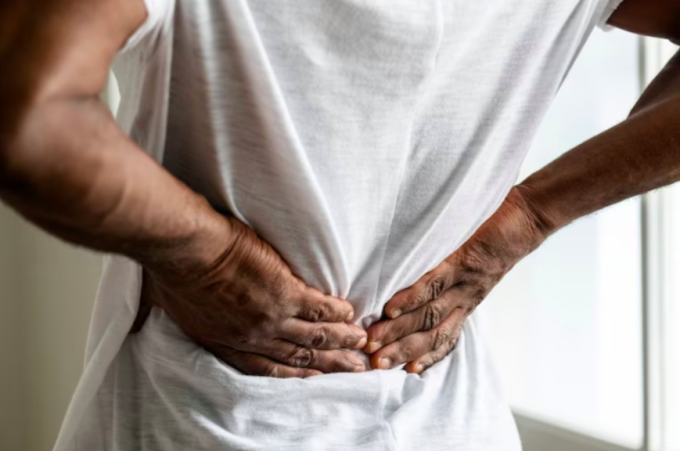
People who have previously had kidney stones may experience a recurrence with symptoms such as back pain and difficulty urinating. (Image: Freepik)
The deposition of waste products in the kidneys can also result from unexpected habits such as skipping breakfast (because bile remains in the gallbladder for too long, forming kidney stones); and a sedentary lifestyle that leads to poor metabolism, preventing toxins from being regularly eliminated through sweat.
In addition, self-medicating with calcium supplements without a doctor's prescription is also a cause of kidney stones. When there is excess calcium in the body, it is excreted; however, if it is not completely excreted, it will accumulate in the kidneys, eventually forming kidney stones.
Besides subjective causes related to lifestyle, kidney stones can also form due to objective factors such as poor absorption and difficulty in absorbing minerals, which are then excreted through urine. However, poor excretion is a cause of kidney stone formation.
The formation of kidney stones can also be caused by abnormalities in the ureter, such as inflammation or obstruction, which easily leads to ureteral infection, resulting in inflammation and edema of the renal pelvis mucosa, easily leading to functional renal fibrosis and kidney stone formation. Individuals with underlying conditions such as thyroid disease, obesity, diabetes, etc., which cause excess uric acid and calcium deposition in the kidney area, have an increased risk of recurrent kidney stones.
Therefore, to prevent recurrence after kidney stone surgery, patients should adopt a healthy lifestyle, avoid the risk factors mentioned above, reduce sodium intake, drink plenty of water, eat lots of fruits and vegetables, and prioritize plant-based protein. Patients should also develop a habit of exercising for at least 30 minutes a day (5 times a week) and have regular health checkups every 3-6 months to help screen for, detect, and treat the disease early.
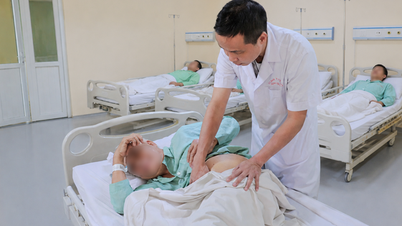
If kidney stones are detected early, when the stones are still small, lifestyle adjustments, a balanced diet, adequate water intake, and regular exercise can help the body naturally eliminate the stones through urination without surgery. Your father should see a doctor soon to determine the diagnosis and receive appropriate treatment.
Dr. Chau Minh Duy
Center for Urology and Nephrology, Tam Anh General Hospital, Ho Chi Minh City
Source link


![[Photo] Standing Committee member of the Party Central Committee Tran Cam Tu working with the Central Inspection Committee](https://vphoto.vietnam.vn/thumb/1200x675/vietnam/resource/IMAGE/2026/05/28/1779969579668_ndo_br_bnd-2495-jpg.webp)


























































































Comment (0)