

According to the recommendations of the U.S. National Institutes of Health (NIH), an adult needs 7 to 9 hours of sleep per night to maintain mental and physical health. However, in modern life, few people maintain this recommended number of hours. One of the main reasons is the habit of excessive screen time, especially on smartphones.
Studies show that up to two-thirds of adults spend most of their day looking at phone screens. This has many negative consequences, the most harmful of which is its impact on sleep. This is due to the blue light emitted from screens, which can "trick" the circadian rhythm – the mechanism that helps the brain determine when to rest. When exposed to blue light at night, the brain thinks it is still daytime, making it harder for users to fall asleep.
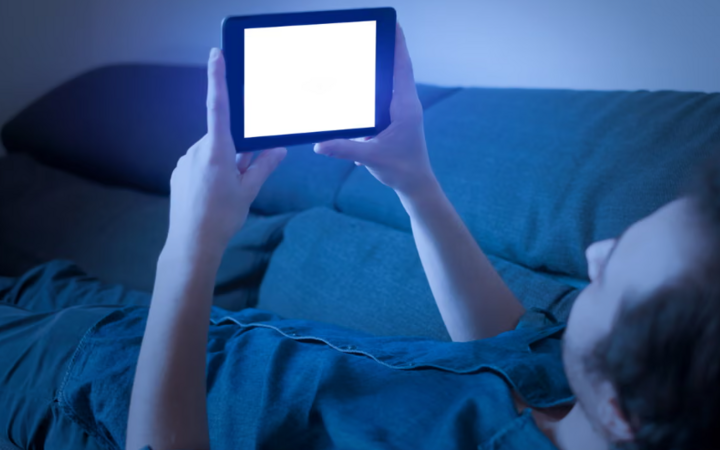
Technology companies are offering various solutions to address the harmful effects of blue light from screens. (Image: The Guardian)
To mitigate this problem, technology companies have developed various solutions. Windows has a Night Light feature, while Apple has integrated Night Shift into iPhones since iOS 9.3. When this mode is enabled, the screen automatically switches to a warmer tone, reducing the negative effects of blue light and helping the body easily recognize when it's time to sleep.
However, blue light isn't the only hazard. Glare and strong light from the screen can also cause symptoms like eye strain, blurred vision, watery eyes, or headaches, even with Night Shift enabled. Therefore, Apple introduced Dark Mode in 2019 with iOS 13. This mode changes the entire iPhone interface to a dark tone: white text on a black background, instead of black on a white background. This reduces eye strain when viewing the screen in low light conditions.
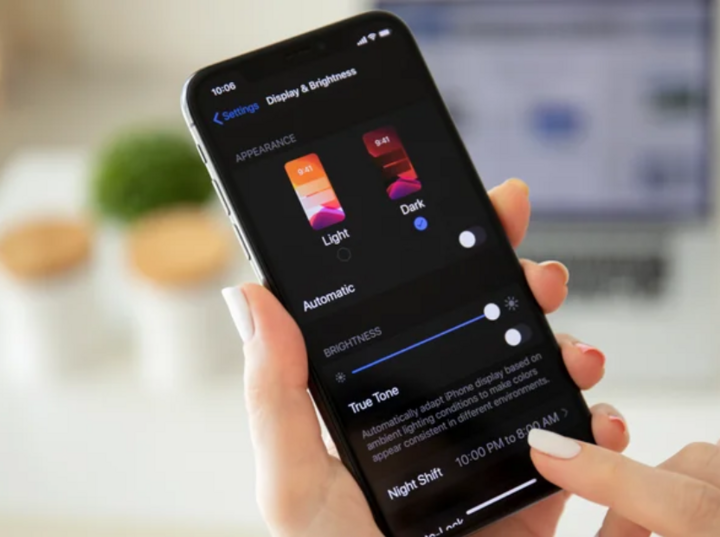
Night Shift helps the body recognize when it's time to sleep by adjusting the screen's color tone, while Dark Mode protects the eyes from glare. (Image: Slashgear)
Both Night Shift and Dark Mode aim to reduce eye strain, but each addresses a different issue. Night Shift focuses on sleep and circadian rhythms, while Dark Mode aims to reduce glare and protect the eyes. By combining the use of both, users can both sleep better and limit the long-term impact of screen light on their eyesight.
Source: https://vtcnews.vn/su-khac-differences-between-night-shift-and-dark-mode-on-iphone-ar966792.html






























































































Comment (0)