

Timely legalization of reform policies.
- Sir, why did the Ministry of Agriculture and Environment propose drafting a Law amending and supplementing a number of articles of 10 laws related to administrative procedures and investment and business conditions in the fields of agriculture and environment (hereinafter referred to as the draft Law) using a simplified procedure?
But This proposal stems from the urgent need to improve the institutional framework as well as the progress in fulfilling the tasks assigned by the National Assembly and the Government.
According to Resolution No. 206/2025/QH15 of the National Assembly on the special mechanism for handling difficulties and obstacles caused by legal regulations and Resolution No. 66.19/2026/NQ-CP of the Government on reducing, decentralizing, and simplifying administrative procedures and business conditions under the management of the Ministry of Agriculture and Environment, the Government is responsible for submitting to the National Assembly amendments to relevant regulations in 13 current laws and ensuring they take effect before March 1, 2027.
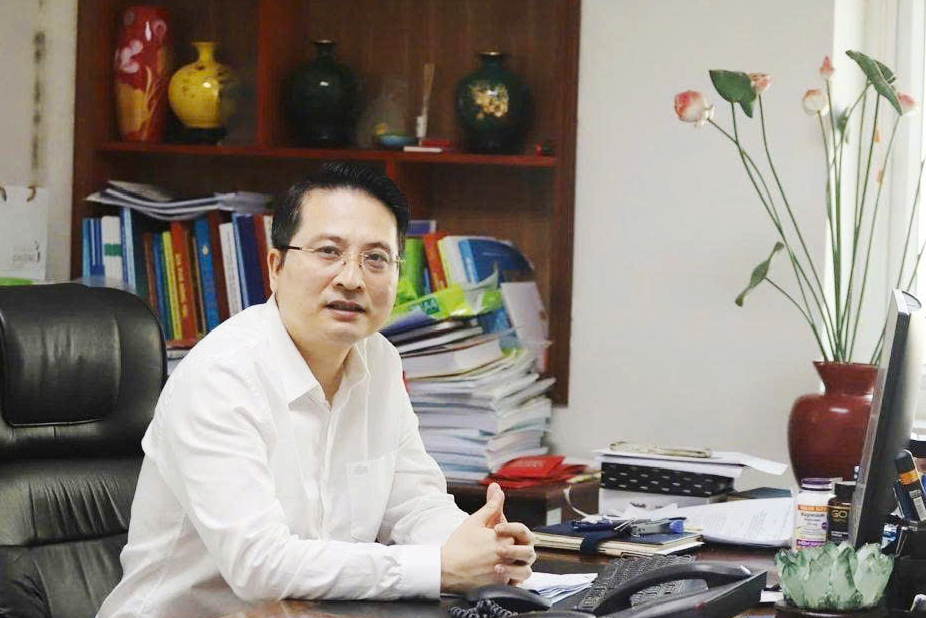
To date, three laws, including the Land Law, the Environmental Protection Law, and the Law on Marine and Island Resources and Environment, have been separated into individual draft laws for submission to the National Assembly for consideration.
For the remaining 10 laws, the time remaining until their enactment is very short. Developing them as 10 separate draft laws would make it very difficult to ensure timely completion. Furthermore, many laws only amend or supplement certain provisions related to administrative procedures or investment and business conditions. Developing individual draft laws in this case is not truly necessary and would only add to the bureaucratic process.
Therefore, the option of drafting a law amending and supplementing several articles of 10 laws is the most appropriate solution, promptly institutionalizing the reform policies of the Central Committee, the National Assembly, and the Government, while ensuring both progress and consistency in institutional reform.
Streamlining procedures and unlocking resources for development.
- One of the major goals of the draft law is to reduce administrative procedures and business conditions. What benefits will these changes bring to businesses and citizens, sir?
- It can be said that the overarching goal of the draft Law is to unlock resources for development by reducing compliance costs and creating a more favorable investment and business environment, contributing to double-digit growth. We propose abolishing 31 administrative procedures and 14 outdated business conditions, and simplifying many procedures in areas under the Ministry's management.
In the field of animal husbandry and veterinary medicine, many procedures related to importing animal breeds, publishing information on animal feed products, or renewing certificates of eligibility for large-scale animal husbandry are proposed to be abolished. Some business conditions for animal breed testing and animal feed testing are also being reviewed with a view to reducing them.
For the fisheries sector, procedures related to breeding trials, aquaculture feed trials, or certificates of eligibility for building or modifying fishing vessels are also proposed to be eliminated or simplified.
For the water resources sector, the draft abolishes three administrative procedures related to groundwater exploration permits and two business conditions related to services supporting water resource regulation, distribution, and reservoir operation. At the same time, it simplifies two procedures related to adjusting the operation process of interconnected reservoirs…
The general trend is to shift strongly from pre-approval to post-approval, from licensing-based management to management based on standards, regulations, and the responsibilities of market participants. Procedures that are no longer relevant to current practices or can be replaced by more effective management methods will be considered for abolition.
- The draft law also proposes greater decentralization of power to local authorities; how is this direction reflected, sir?
But Decentralization and delegation of authority are key aspects of this round of revisions, closely adhering to the Central Committee and Government's policy on building a streamlined, effective, and efficient state management apparatus.
According to the draft, the Ministry proposes delegating 24 powers currently under the Minister of Agriculture and Environment to the Chairpersons of Provincial People's Committees in several areas such as crop cultivation and plant protection, livestock and veterinary medicine, geology and minerals.
For example, in the field of plant protection, the authority to conduct state inspections of the quality of imported pesticides will be assigned to local authorities. In the field of geology and mineral resources, local authorities will be given additional authority related to handling certain procedures concerning exploration, exploitation, and management of mineral activities.
The goal is to bring problem-solving closer to reality, reduce intermediate layers, shorten processing times, and increase local autonomy. When decisions are made directly at the source of production and business activities, the efficiency of management as well as the quality of service to citizens and businesses will be improved.
Of course, decentralization does not mean loosening control. Decentralization always comes with clear mechanisms for inspection, supervision, and accountability to ensure the unity, transparency, and effectiveness of state management.
Streamline procedures without compromising policy quality.
- The draft law was developed using a streamlined process and procedure. What preparations has the Ministry of Agriculture and Environment made to ensure both the quality of the policy and the immediate implementation of the law upon its enactment, sir?
- The application of simplified procedures has been authorized by the National Assembly in Resolution No. 206/2025/QH15 to ensure that reform contents are legalized on schedule. However, simplifying procedures does not mean reducing the quality requirements of policies. The goal is to shorten the processing time in terms of procedures while still ensuring all requirements regarding impact assessment, consultation, and appraisal as stipulated.
This draft law is built upon many contents that have been thoroughly researched, reviewed, and initially implemented in practice. At the same time, the Ministry is widely soliciting opinions from ministries, sectors, localities, associations, and the business community to further refine the draft, ensuring its feasibility and suitability to practical realities.
During the drafting process of the Law, the Ministry simultaneously prepared decrees and circulars guiding its implementation as directed by the Prime Minister. The goal is that when the Law is passed by the National Assembly and comes into effect, expected from January 1, 2027, the system of guiding documents will also be issued synchronously, avoiding legal gaps and facilitating the implementation process.
We expect that the draft law will contribute to removing institutional bottlenecks, unlocking resources, and creating further impetus for agricultural and environmental development in the coming period.
Thank you, sir!
Source: https://daibieunhandan.vn/sua-10-luat-de-khoi-thong-nguon-luc-phat-trien-10419078.html

![[Photo] General Secretary and President To Lam presides over a meeting with the Central Organizing Committee.](https://vphoto.vietnam.vn/thumb/1200x675/vietnam/resource/IMAGE/2026/06/03/1780482764658_a1-bnd-4741-3342-jpg.webp)

![[Photo] First session of the 14th Congress of the Vietnam Trade Union](https://vphoto.vietnam.vn/thumb/1200x675/vietnam/resource/IMAGE/2026/06/03/1780465947883_ndo_br_img-3852-jpg.webp)
![[Photo] Secretary of the National Assembly Party Committee, Chairman of the National Assembly presides over the meeting of the Standing Committee and Executive Committee of the National Assembly Party Committee.](https://vphoto.vietnam.vn/thumb/1200x675/vietnam/resource/IMAGE/2026/06/03/1780480353201_ndo_br_bnd-2585-jpg.webp)













































![[Video] Sunset at Lap An Lagoon – Where the sun sets over the fishing nets](https://vphoto.vietnam.vn/thumb/1200x675/vietnam/resource/IMAGE/2026/05/31/1780192137701_beach-landscape-sea-water-nature-grass-745871-pxhere-com.jpeg)




























Comment (0)