

(Continued and concluded)

Along with developing OCOP products, maintaining and upgrading OCOP product rankings plays a crucial role in sustainable development.
Strengthen and develop
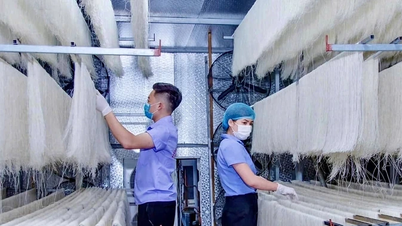
Instead of simply "taking the OCOP label and leaving it at that," since participating in the OCOP program, many businesses in the province have shown a clear change in their production mindset. Previously, products were mainly made based on experience and sold on a small scale. Now, cooperatives, businesses, and individual producers are paying more attention to production processes, quality, packaging, traceability, and brand building.

At the Lang Thi Tho household business in Na Sam commune, the company's honey-glazed pork product has consistently maintained a 3-star OCOP certification for many years. To date, the facility has invested in drying machines, ovens, and vacuum packaging machines, selling an average of 50 kg of finished product per month, with estimated revenue reaching 30 million VND.
Ms. Lang Thi Tho, the owner of the facility, said: "Maintaining the brand is not easy because OCOP has many criteria, and the needs and market are constantly changing. Right after being recognized as an OCOP product, we realized that maintaining the ranking is even more difficult than achieving it. Therefore, the facility has focused on expanding production scale, improving food safety and quality, and upgrading packaging, machinery, and equipment to increase productivity and product quality. Every year, the unit reviews the entire production process to meet the requirements of OCOP products and market demands."
Alongside technological advancements, digital transformation is considered key to ensuring the sustainable effectiveness of OCOP products. The application of QR codes for traceability, electronic labels, and livestreaming sales techniques has enabled Lang Son agricultural products to be widely consumed in the market or included in major supermarket chains and e-commerce platforms.
For example, the business of Nguyen Thi Hong Xiem in Dong Kinh ward. Ms. Nguyen Thi Hong Xiem stated: Currently, her establishment has two products recognized as OCOP 3-star: soy sauce-marinated duck and salt-marinated chicken with peppercorns. After the products received OCOP recognition, the establishment focused on applying technology in production and business activities, such as designing traceability labels using QR codes, and promoting products on social media platforms and e-commerce sites. At the same time, the establishment regularly improves packaging and designs, and updates product information to facilitate customer searching and ordering. As a result, the products not only have stable sales within the province but have also expanded to many provinces and cities nationwide. In 2025 alone, the establishment sold over 10,000 soy sauce-marinated duck and salt-marinated chicken products, generating revenue of approximately 3 billion VND.
Along with the proactive efforts of stakeholders, specialized agencies have also strengthened management and supervision to contribute to maintaining and improving the quality of OCOP products. Accordingly, in the period 2021-2025, specialized units coordinated to conduct inspections and post-inspections of over 367 establishments producing, processing, and trading agricultural, forestry, and aquatic products in the province, including many establishments producing OCOP products. Through these inspection and post-inspection activities, functional agencies have promptly guided the rectification of shortcomings in food safety and labeling, ensuring the reputation of the province's OCOP brand in the market.
Thanks to the proactive efforts of the businesses and the close attention of specialized agencies, the province currently has 179 OCOP products with valid certification, including 4 products that have been upgraded from 3 stars to 4 stars. After being recognized as meeting OCOP standards, the products have basically maintained the initial criteria regarding quality, design, and production process. Most products have seen increased sales volume year after year, receiving positive feedback from consumers. Notably, many OCOP products have gradually expanded their markets, appearing in supermarkets and shopping malls inside and outside the province; some products have even been exported to foreign markets, such as black jelly powder and anise essential oil.
Looking towards the future
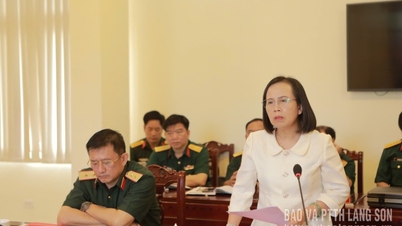
Mr. Nguyen Huu Chien, Director of the Department of Agriculture and Environment, stated: The goal of the OCOP program for the period 2026-2030 is to develop OCOP products to unleash the potential and advantages of rural areas to increase people's income, contribute to restructuring the agricultural sector, promote sustainable rural economic development, based on strengthening the application of digital transformation and circular economy, preserving cultural values, managing resources, conserving biodiversity, landscapes and rural environment, contributing to building new rural areas in a more in-depth, effective and sustainable way. At the same time, the department will continue to promote its role in state management by guiding entities to standardize production processes, strengthen the application of science and technology, digital transformation, traceability, etc. In addition, we will continue to strengthen support for businesses in trade promotion, improving packaging and labeling, applying digital technology in product promotion and consumption, and enhancing inspection and supervision to ensure the maintenance of quality after OCOP certification.
Specifically, the specialized agency has developed a draft plan for implementing the One Commune One Product (OCOP) program in 2026, striving to have an additional 20 products achieving 3 stars or higher, and continuing to support and advise on dossiers with the goal of having one product submitted to the Ministry of Agriculture and Environment for evaluation and classification as a 5-star OCOP product.

To ensure the OCOP program goes deeper and connects agricultural development with other economic sectors, while in the initial phase relevant levels, sectors, organizations, and individuals focused on developing the quantity of products, the current focus is on implementing solutions to improve quality, build sustainable brands, and expand markets. Accordingly, all levels and sectors are strengthening communication efforts and continuously raising awareness through mass media, thoroughly instilling the importance and significance of the program. Emphasis is placed on raising awareness and changing mindsets among rural economic organizations, state management agencies, distribution units, and consumers through OCOP program implementation conferences; diversifying communication methods through electronic portals, social networks, newsletters, and special features.
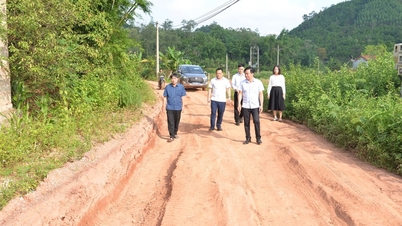
In particular, the province continues to implement support mechanisms and policies. This includes focusing on reviewing and issuing content, adjusting the level of support for the OCOP program according to each star rating as needed; prioritizing support for entities developing products, providing guidance, and building product dossiers; developing local raw material areas; building value chains; supporting production infrastructure, machinery, and processing equipment for small and medium-sized enterprises suitable to local conditions; and rewarding OCOP products...
Specifically, on February 26, 2026, the Provincial People's Council issued Resolution No. 02 on a number of policies to support investment in agriculture in Lang Son province for the period 2026-2030, which includes interest rate subsidies for credit, support for agricultural and forestry product processing facilities, and rewards for OCOP products. This creates incentives for businesses to improve product quality and participate in the program.
In addition, the province will continue to support businesses in applying information technology and building a more professional product image in the digital environment; promoting the application of solutions for protecting and effectively exploiting the value of intellectual property assets (geographical indications, collective trademarks, certification marks). This is considered an important solution to help OCOP products expand their consumer market, especially to reach customers outside the province and aim for export.
Furthermore, developing OCOP (One Commune One Product) in conjunction with rural tourism is also identified as a promising direction. In recent years, many community tourism destinations in the province have combined the introduction, experience, and sale of OCOP products to tourists. This not only contributes to increased revenue but also effectively promotes local culture, specialties, and traditional products.
Mr. Trinh Minh Tuan, Chairman of the People's Committee of Bac Son commune, said: Currently, the commune has 3 OCOP products with valid certification. In particular, the Quynh Son community tourism village in the commune was honored by the United Nations Tourism Organization as the "Best Tourism Village of 2025," attracting an increasing number of tourists to visit and experience. This is also a favorable condition for the commune to link the development of OCOP products with rural tourism. In 2025, with the support of the Department of Industry and Trade, a point for introducing and selling OCOP products will be opened in the village to display OCOP products and local specialty agricultural products. Continuing to leverage this advantage, in 2026, the commune's Party Committee and government will orient the development of diverse OCOP product groups linked to the strengths of community tourism, focusing on completing the dossier to build the Quynh Son community tourism village into an OCOP product to create more distinctive products and contribute to the development of the local economy.
Besides developing OCOP products associated with rural tourism, it is expected that in 2026, the relevant authorities will continue to guide Duc Quy Import-Export Production and Investment Co., Ltd. (Tan Tien commune) in completing the dossier to submit to the competent authority for evaluation and classification of the powdered black jelly product as a 5-star OCOP product. Mr. Ha Viet Quy, Director of the company, said: To gradually build a 5-star OCOP product, the company continues to maintain activities in developing raw material areas, production, and consumption, while completing procedures related to land matters. Through this, they strive to complete the necessary steps soon so that the powdered black jelly product can be recognized as a 5-star OCOP product.
The OCOP program not only creates products with local brands but also contributes to changing the production mindset of the people. From small-scale production to linkages, from focusing on quantity to improving quality; from traditional sales to the application of digital technology… all are opening up new directions for the development of the rural economy.
We believe that with the support of all levels and sectors and the proactive efforts of producers, the OCOP program is expected to continue to be a driving force for rural economic development. Products with strong local characteristics will not only remain within the province but will gradually expand further, contributing to increasing the value of agricultural products and promoting the sustainable development of new rural areas in Lang Son.
Source: https://baolangson.vn/chia-khoa-ocop-ky-3-phat-trien-ben-vung-5092781.html
![[Photo] First session of the 14th Congress of the Vietnam Trade Union](https://vphoto.vietnam.vn/thumb/1200x675/vietnam/resource/IMAGE/2026/06/03/1780465947883_ndo_br_img-3852-jpg.webp)





















![[Photo] Delegation attending the 14th Congress of the Vietnam Trade Union visits the Mausoleum of President Ho Chi Minh.](https://vphoto.vietnam.vn/thumb/1200x675/vietnam/resource/IMAGE/2026/06/03/1780451842301_ndo_br_img-3824-jpg.webp)

























































Comment (0)