

 |
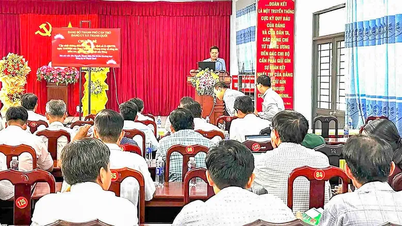
| Ta Thiet Base has become a "red address," a place where many activities related to the historical roots are organized for today's young generation. Photo: Thu Ha |
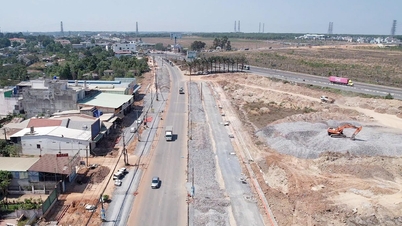
Building upon that revolutionary tradition, Loc Thanh is changing day by day. New roads are being opened, economic models are gradually becoming effective, digital transformation and administrative reform are being accelerated… all of which are creating a new face for this border region rich in revolutionary traditions.
A glorious legacy at the " Government Forest"
Loc Thanh commune was established by reorganizing the entire natural area and population of the former Loc Thinh and Loc Thanh communes. This border commune has a unique location, bordered to the west by Tay Ninh province and the Kingdom of Cambodia, to the east by Loc Hung commune, to the south by An Loc ward, and to the north by Loc Ninh ward.
When visiting Loc Thanh commune, one cannot fail to mention Ta Thiet Base. After the liberation of Loc Ninh (April 7, 1972), the Regional Command was moved from Duong Minh Chau War Zone (Tay Ninh) to Ta Thiet. Amidst the vast forests of the Southeast region, this place became the nerve center of the Southern revolution, proudly known by many as the "Government Forest." From this base in the deep forest, many important strategic decisions were made, contributing to the victory of the historic Ho Chi Minh Campaign in the spring of 1975, completely liberating the South and unifying the country.
Major General, Professor, Doctor, People's Teacher Nguyen Van Tai, former Deputy Director of the Political Academy of the Ministry of National Defense, said: During the war, Ta Thiet Base was the workplace of many high-ranking leaders such as General Le Duc Anh, Lieutenant General Tran Van Tra, female general Nguyen Thi Dinh, along with key agencies of the Regional Command.
Amidst intense bombing, the base was still built on a large scale with a system of shelters, meeting halls, Hoang Cam kitchens, barracks, trenches, etc., ensuring command and combat operations. In particular, it served as a major assembly point for troops from the North heading south before the Ho Chi Minh Campaign to completely liberate the South.
“Although it only existed for a short period from 1973-1975, Ta Thiet Base played a particularly important role and held a crucial position in the final stage of the resistance war against the US. It was here that General Secretary Le Duan's telegram was received, agreeing to rename the Saigon-Gia Dinh Liberation Campaign to the Ho Chi Minh Campaign; and it was also where the Ho Chi Minh Campaign Command was established,” emphasized Major General, Professor, Doctor, and People's Teacher Nguyen Van Tai.
After liberation, many parts of the base were restored to almost their original state. In 1988, Ta Thiet Base was recognized as a National Historical Monument, and in 2015, it was classified as a Special National Monument by the Prime Minister.


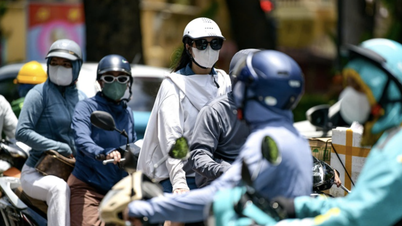
![[Image] Hanoi's urban life under the challenge of a "scorching hot" environment](https://vphoto.vietnam.vn/thumb/1200x675/vietnam/resource/IMAGE/2026/05/25/1779706979265_nang-nong-t5-2026-minh-duy-7-4636-jpg.webp)

![[Image] Close-up view of the interchange connecting the two expressways and Long Thanh Airport.](https://vphoto.vietnam.vn/thumb/1200x675/vietnam/resource/IMAGE/2026/05/25/1779703378210_ndo_br_z7863716673926-224453a31600126cce10622af6290afd-4549-jpg.webp)





































































Comment (0)