

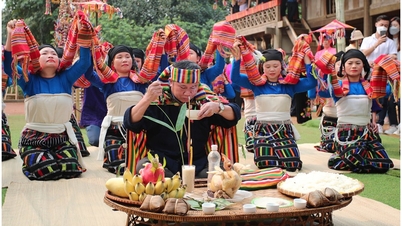
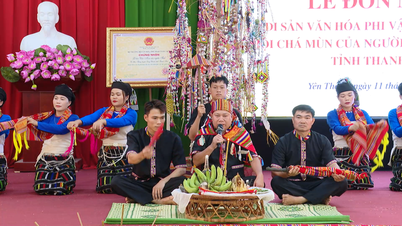
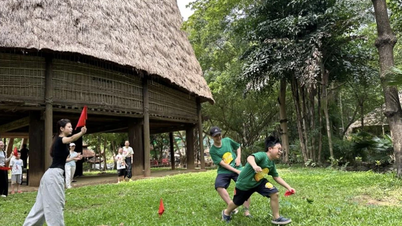
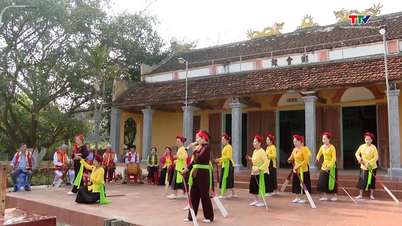
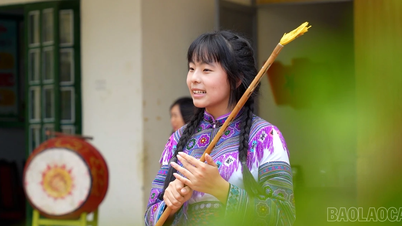
As part of the January activities themed "Village Tet," on January 25th, at the Vietnam Ethnic Culture and Tourism Village (Dong Mo, Son Tay, Hanoi), a reenactment of the Cha Mun ceremony – a National Intangible Cultural Heritage of the Thai ethnic group – will take place.
The Chá Mùn Festival is one of the most distinctive and representative folk religious festivals of the Black Thai ethnic group in Thanh Hoa.
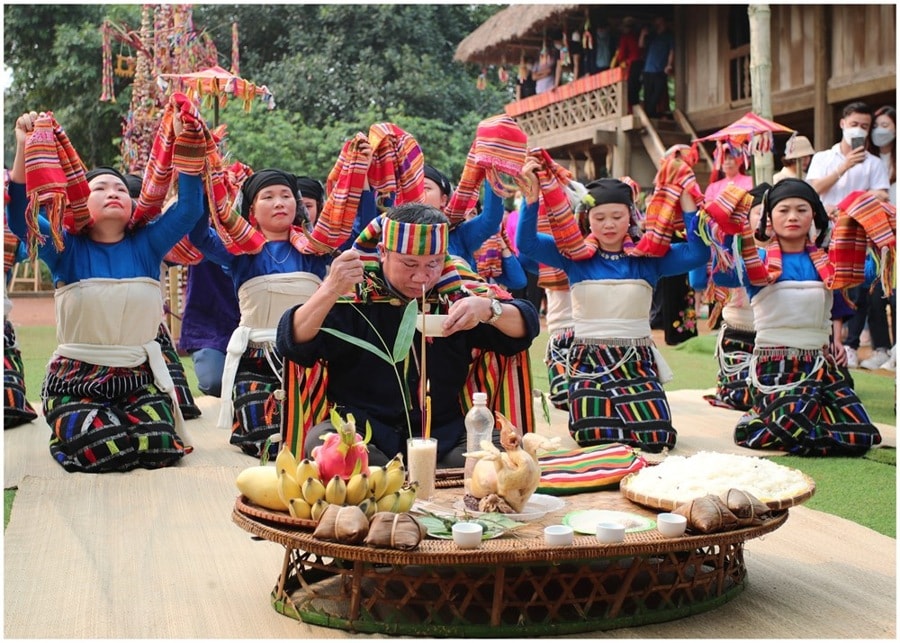
According to legend, long ago, people on Earth (Muong Lum) were frequently afflicted with epidemics and illnesses, for which there was no cure. To help the villagers, the Black Thai ethnic group sent people to Heaven to seek assistance.
Pó Then, the ruler of Mường Trời, possessed the full power to create land, water, and all living things, including humankind. The plea for help from the people of Mường Lúm moved Pó Then, and he ordered the gates of heaven opened, allowing soldiers and divine healers to descend to earth to cure the sick and save the people.
After being saved by Pó Then, the ancestors of the Black Thai people sent shaman Mùn to the heavenly realm to express their gratitude and ask to learn the secret of healing. After shaman Mùn learned the remedies, Pó Then demanded that if he cured 120 people, he must hold a thanksgiving ceremony.
Remembering the instructions, every year the shaman Mun organizes the Cha Mun festival to give thanks to Po Then and pray for the health of the people in the region, a bountiful harvest, and happiness for all families.
The Chá Mùn festival is held in the ninth or tenth month of the lunar calendar. The chief shaman chooses the most auspicious day and sends someone to the house of Lúc May (a patient cured by the Mùn shamans) to announce the news.
Out of reverence and gratitude to the person who saved her from illness, Luc May prepared offerings and, together with the family of the shaman, organized a festival. To conduct the rituals, the shaman invited 4-6 Mùn shamans to help him organize them.
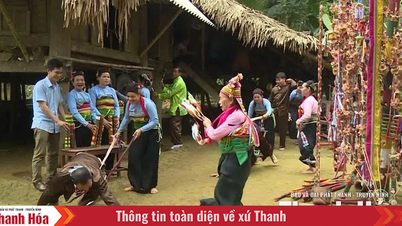
The Chá Mùn festival includes rituals to invite Pó Then and the spirits of deceased Mùn shamans, to summon the souls of the sick to participate; welcoming local officials and guests; organizing games and performances. Finally, it involves bidding farewell to Pó Then and the spirits of the Mùn shamans as they return to the heavenly realm, saying goodbye and promising to meet again in the next festival season.
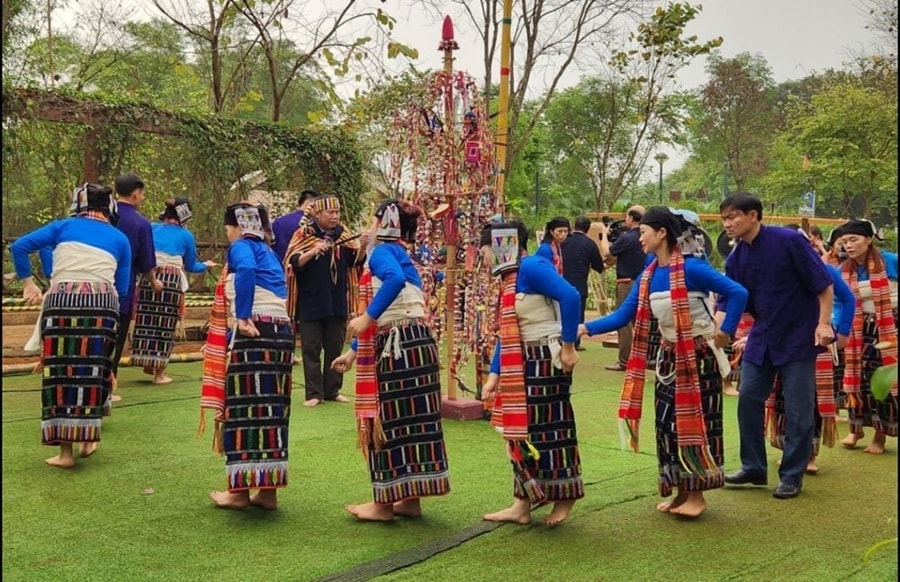
Due to historical events, the Chá Mùn festival was forgotten after 1945. In 2017, the Thanh Hóa Provincial Department of Culture successfully revived the festival. Currently, the festival has been modified to suit the present reality but still retains its original essence.
With its profound humanistic values, in August 2024, the Chá Mùn festival was included by the Ministry of Culture, Sports and Tourism in the list of National Intangible Cultural Heritage, under the category of traditional festivals, social customs and beliefs.
Source: https://congluan.vn/tai-hien-le-hoi-cha-mun-cua-dan-toc-thai-tai-lang-van-hoa-10327982.html
![[Image] Hanoi Police officially crowned champions of V-League 2025/2026](https://vphoto.vietnam.vn/thumb/1200x675/vietnam/resource/IMAGE/2026/05/31/1780244769054_ndo_br_039d561b692be875b13a-jpg.webp)
![[Photo] Solemn bathing ceremony and Buddha procession in Hue](https://vphoto.vietnam.vn/thumb/1200x675/vietnam/resource/IMAGE/2026/05/31/1780228263543_1-jpg.webp)
![[Photo] Admire the coral "masterpiece" amidst the million-year-old heritage of Dak Lak province.](https://vphoto.vietnam.vn/thumb/1200x675/vietnam/resource/IMAGE/2026/05/31/1780221235105_anh-man-hinh-2026-05-31-luc-16-53-27.png)
![[Photo] The General Secretary, President and his wife begin their state visit to the Philippines.](https://vphoto.vietnam.vn/thumb/1200x675/vietnam/resource/IMAGE/2026/05/31/1780230559452_anh-man-hinh-2026-05-31-luc-19-28-11.png)
















![[Video] Sunset at Lap An Lagoon – Where the sun sets over the fishing nets](https://vphoto.vietnam.vn/thumb/340x192/vietnam/resource/IMAGE/2026/05/31/1780192137701_beach-landscape-sea-water-nature-grass-745871-pxhere-com.jpeg)



























![[Photo] Admire the coral "masterpiece" amidst the million-year-old heritage of Dak Lak province.](https://vphoto.vietnam.vn/thumb/402x226/vietnam/resource/IMAGE/2026/05/31/1780221235105_anh-man-hinh-2026-05-31-luc-16-53-27.png)
























Comment (0)