

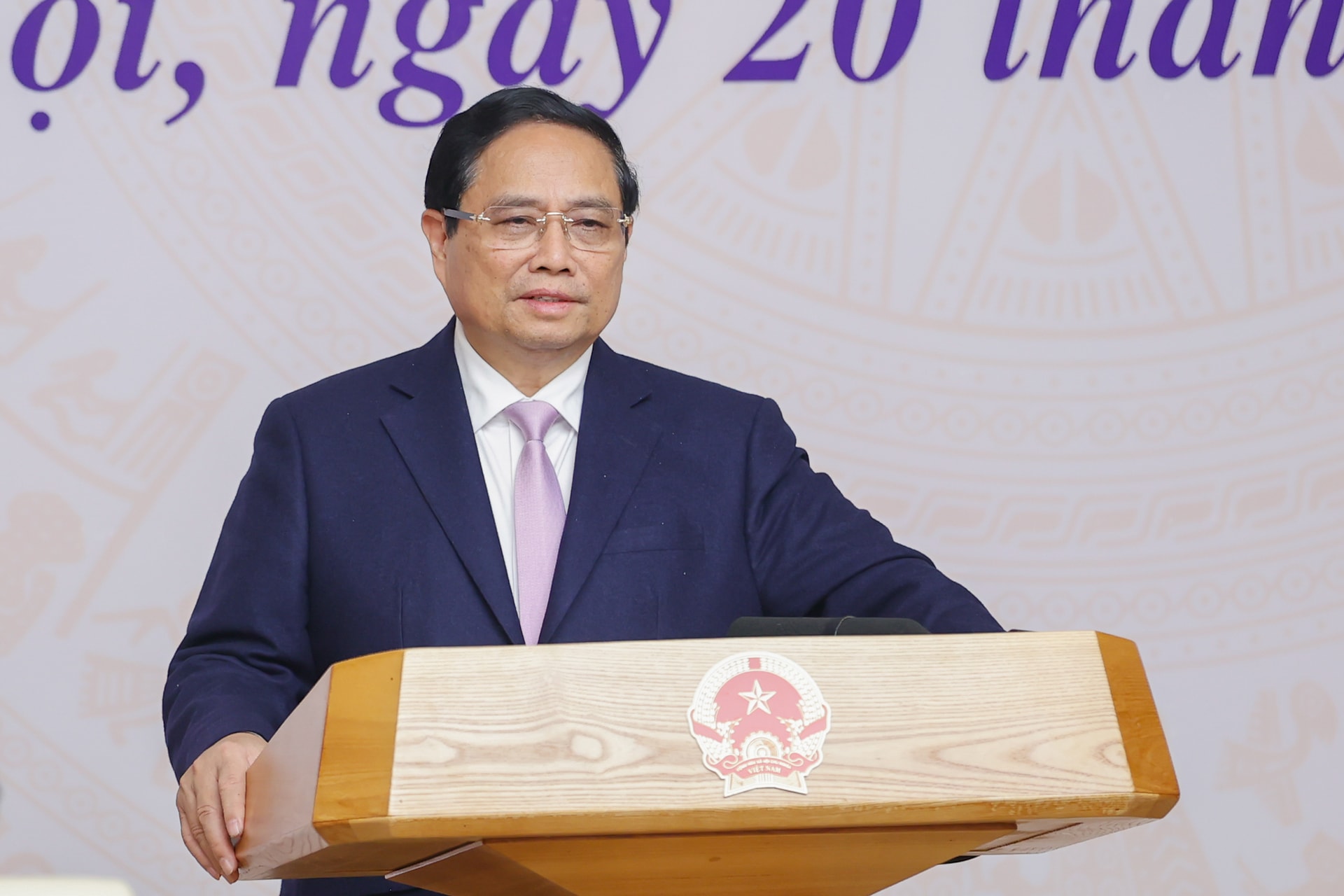
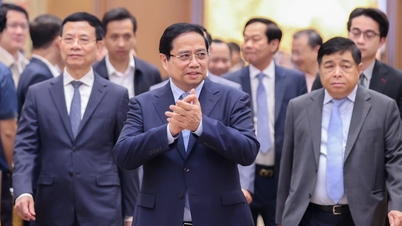
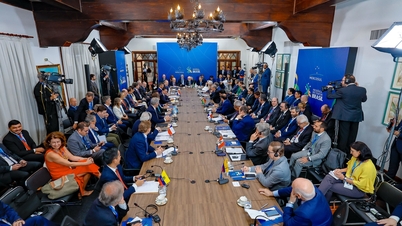
On the evening of December 20th, Prime Minister Pham Minh Chinh chaired a meeting with Ambassadors and Heads of Vietnamese representative offices abroad to summarize economic diplomacy work in 2024 and implement key tasks for 2025 to create momentum for breakthrough growth.
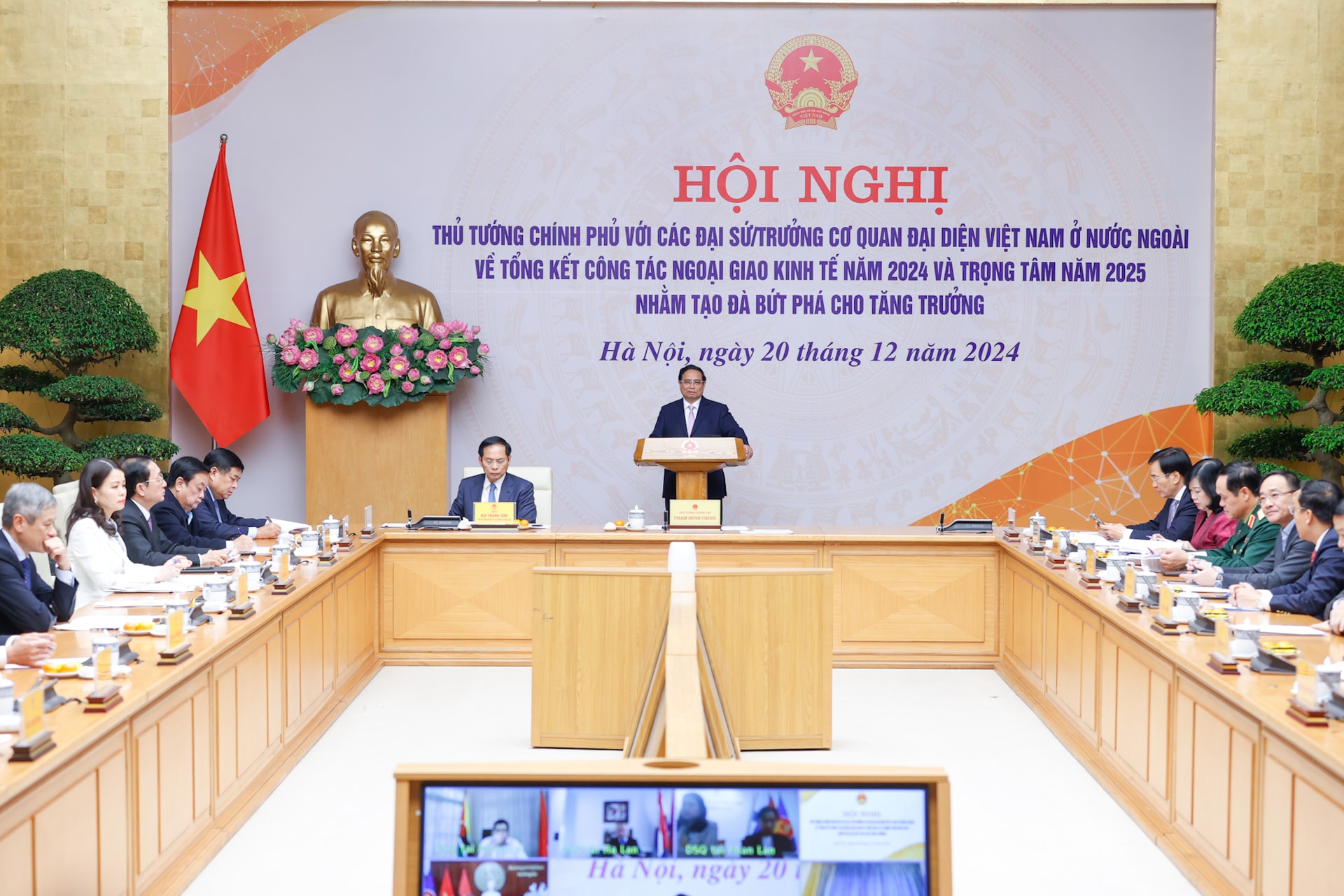
The conference was held in a hybrid format, combining in-person and online participation, with the Government Headquarters connecting to 94 Vietnamese representative offices abroad and 63 People's Committees of provinces and centrally-administered cities.
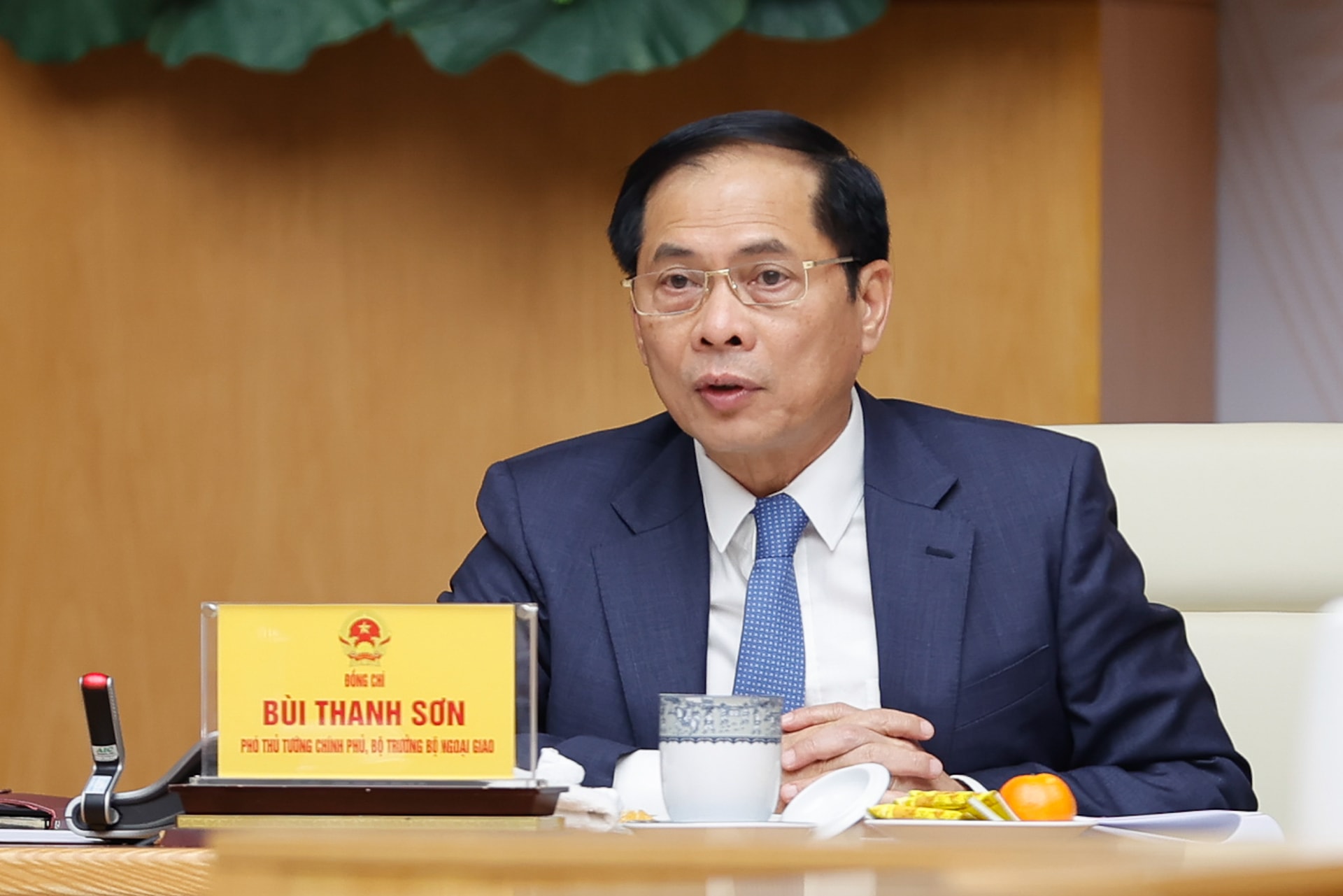
Attending the conference were Deputy Prime Minister and Minister of Foreign Affairs Bui Thanh Son; Ministers, heads of ministerial-level agencies and government agencies; leaders of ministries, branches, and central agencies; Chairmen of People's Committees and leaders of provinces and centrally-administered cities; leaders of business associations, industry associations, and Vietnamese representative offices abroad.
According to the Ministry of Foreign Affairs, economic diplomacy has made a positive contribution to implementing the Government and Prime Minister's directives on renewing traditional growth drivers and promoting new growth drivers.
In nearly 60 foreign affairs activities of key Party and State leaders in 2024, economic issues became the focus, yielding concrete and substantive results. Notable examples include visits by the Prime Minister to India, Australia, New Zealand, South Korea, the UAE, Qatar, Saudi Arabia, Hungary, Romania, and Dominica; and working visits to China and Russia. More than 170 cooperation agreements were signed during these high-level activities.
Vietnam's foreign relations continue to expand, improve, and be upgraded. Vietnam has promoted the renewal of traditional growth drivers in trade, investment, tourism, and labor with major markets and key investment partners, especially in Northeast Asia; the Americas, India, and the Middle East; and particularly with China, South Korea, and Japan. Economic diplomacy, especially technology diplomacy, semiconductor diplomacy, and innovation diplomacy, has been promoted with key partners and large corporations.
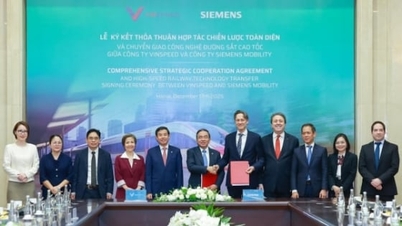
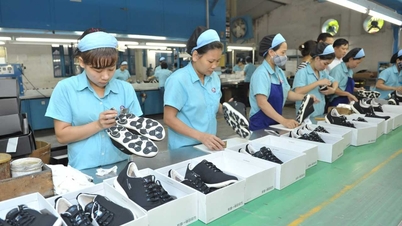
Among them, corporations such as Apple, Intel, Google, NVIDIA, Samsung, LG, Cadence, Qorvo, Marvell, Siemens… have invested, expanded their investments, and collaborated with Vietnam. To date, Apple has completed the relocation of 11 factories producing audio-visual equipment to Vietnam. Intel is expanding phase 2 of its chip testing plant in Ho Chi Minh City. Google is expanding skills training in Vietnam to strengthen cooperation in AI. NVIDIA has signed an agreement with the Vietnamese government to establish an NVIDIA Artificial Intelligence (AI) Research and Development Center and an AI Data Center in Vietnam. Following Samsung's R&D center, LG also plans to open its third R&D center in Vietnam…
With markets still offering significant potential such as Latin America, the Middle East and Africa, and Central and Eastern Europe, Vietnam has promoted economic diplomacy with key partners like Chile, Argentina, Peru, Hungary, Romania, UAE, and Qatar... to advance new directions such as developing the Halal industry…
Vietnam has increased the total number of signed and participating FTAs to 17; accelerated the implementation of signed FTAs, actively removed market barriers, thereby contributing to the recovery and growth of exports; focused on resolving technical obstacles in the implementation of the EVFTA, lobbied EU members on the Investment Protection Agreement (EVIPA), lifted the IUU yellow card against Vietnamese seafood, and lobbied the US to remove Vietnam from the D1-D3 group and soon recognize Vietnam as a market economy.
Trade with many traditional markets and potential markets in the Middle East and Latin America is growing positively, including the promotion of negotiations for FTAs with the Southern Common Market (MERCOSUR), the European Free Trade Association, and the ASEAN-Canada FTA…
However, economic diplomacy still has limitations such as: not effectively and fully utilizing the opportunities to upgrade relations with partners; economic cooperation with some strategic regions is not commensurate with the cooperation framework; the implementation of commitments and agreements is sometimes slow in some places; research, forecasting, and advisory work in some cases lacks proactiveness and does not keep pace with developments…
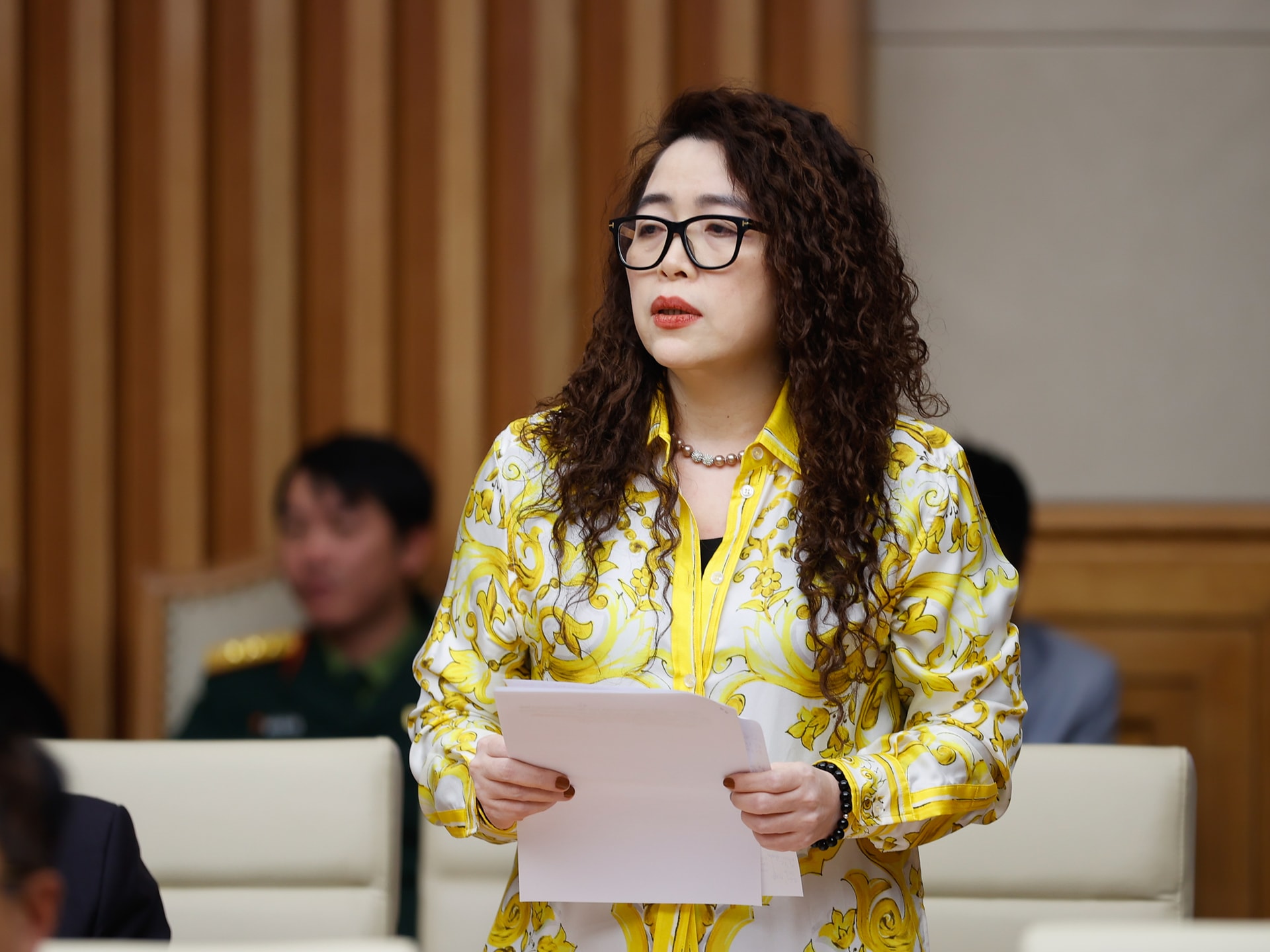
At the conference, delegates discussed and assessed the situation; analyzed the causes; lessons learned; and proposed breakthrough solutions to promote trade and investment cooperation, aiming to accelerate investment attraction into Vietnam, expand import and export markets, and increase trade turnover; promote technology transfer and experience in institutional improvement, attracting human resources, and management science… In particular, delegates proposed the need to connect and encourage Vietnamese businesses to invest abroad, so that Vietnamese businesses and brands can reach further into the world.
Delegates proposed strengthening the economic diplomacy aspect in high-level diplomatic activities; establishing mechanisms to accelerate the implementation of high-level commitments and agreements; creating breakthroughs in economic, trade, investment, and labor relations; and developing new growth drivers such as science and technology, innovation, green economy, and digital economy, especially emerging sectors like artificial intelligence, semiconductors, the Internet of Things, and cloud computing.

Economic diplomacy is a new and important driving force.
Concluding the conference, Prime Minister Pham Minh Chinh welcomed the positive results in economic diplomacy, a highlight in foreign affairs, and a significant contribution to the country's socio-economic development achievements in 2024, with 15 out of 15 targets met or exceeded. These include growth of over 7%, FDI attraction in the first 11 months increasing by 12.4% to reach US$31.4 billion, with disbursements reaching US$21.7 billion, the highest in many years; and import-export turnover of around US$800 billion…
Economic diplomacy has truly become a key component in all foreign affairs activities, especially high-level diplomacy; there has been a shift in thinking and methods towards a more positive, substantive, and effective direction; it has effectively contributed to the implementation of strategic breakthroughs; economic diplomacy has been institutionalized and systematized in a systematic manner and has gained the consensus and participation of the entire political system, as well as close coordination among ministries, sectors, and localities.
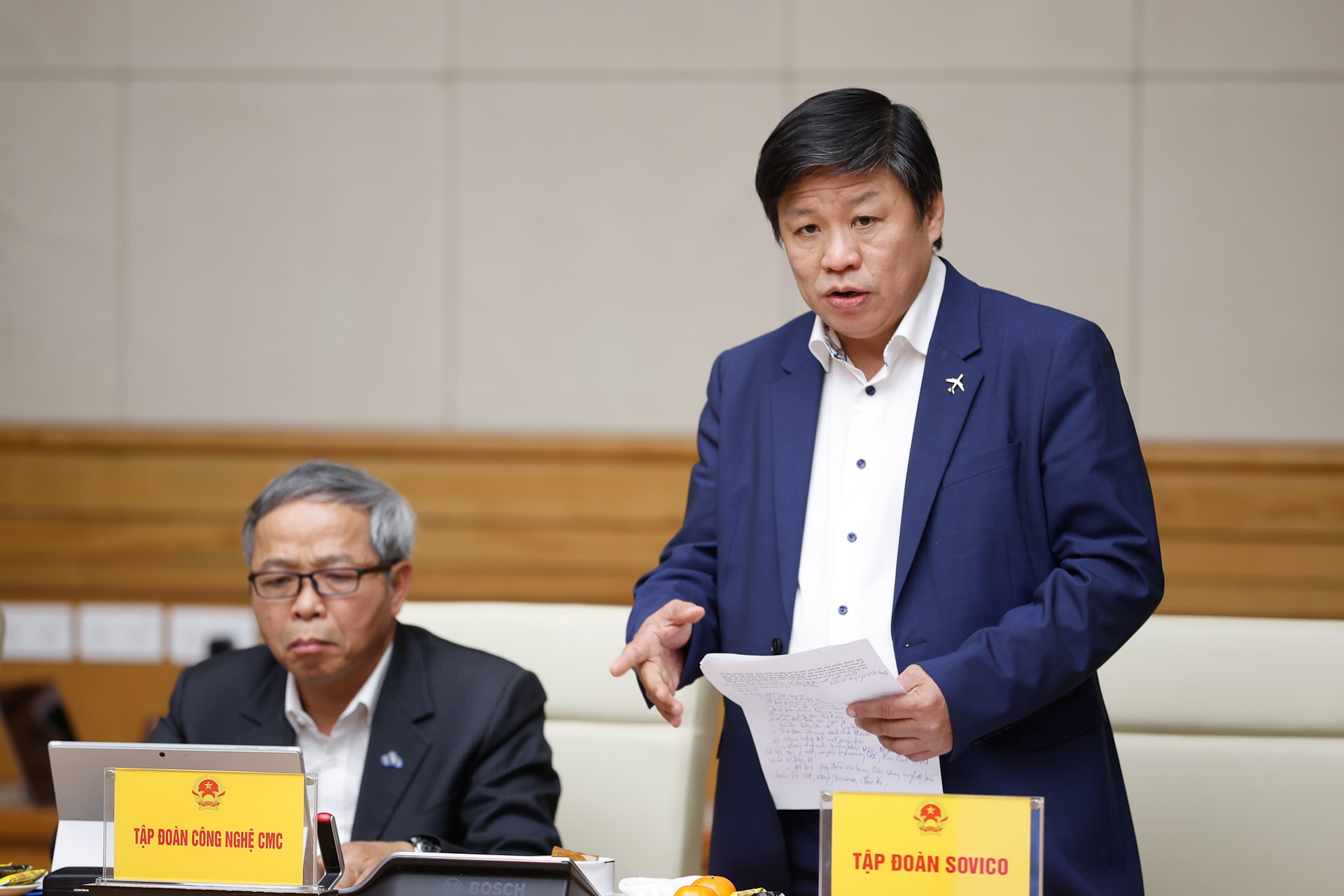
Reviewing the 700 economic diplomacy, trade promotion, investment, and tourism activities implemented at Vietnamese representative offices abroad, and more than 400 trade and investment promotion activities in localities both domestically and internationally, with diverse, rich, and flexible forms, the Prime Minister affirmed that economic diplomacy is becoming more substantive and systematic, with "three clear" results: clear outcomes, clear products, and clear contributions to the country's socio-economic development.
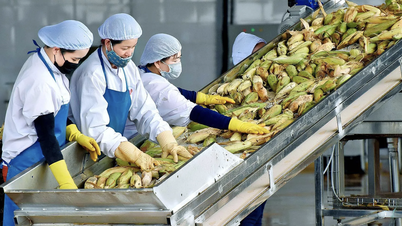
Some concrete, quantifiable results include: attracting chip manufacturing corporations and companies to Vietnam, especially NVIDIA; expanding agricultural export markets, with record-high export turnover; strong tourism development, leading to the growth of the aviation industry; and a large trade surplus. Partner confidence has increased; and the impetus for cooperation from high-level visits has been more effectively utilized by ministries, sectors, and businesses. Many new markets have been explored, such as the Middle East, the Halal market, and South America.
While commending the relevant parties, the Prime Minister also pointed out some limitations, especially the "disease" of focusing on achievements, formalism, and superficiality in some places and at some times. He also emphasized several important lessons learned: Valuing opportunities, time, intelligence, adapting flexibly, and making timely decisions are decisive factors in economic diplomacy; closely monitoring domestic and international needs to implement economic diplomacy appropriately, effectively, comprehensively, and profoundly, avoiding formalism; close coordination between representative agencies, businesses, and localities, treating the work as one's own; a spirit of dedication, patriotism, commitment, and responsibility; and showing sincerity and trustworthiness towards partners, promoting Vietnamese cultural identity. Only when partners perceive this will they share, respect, and cooperate.
According to the Prime Minister, in the coming period, the international situation will become increasingly complex, with intertwined opportunities and challenges, with challenges remaining prominent. Therefore, high determination, great effort, decisive action, and focused, targeted efforts are needed to create breakthroughs in economic diplomacy.
In particular, 2025 is a year of accelerated progress, completing the development goals of the 2021-2025 period; actively reorganizing the organizational structure and conducting important national anniversaries; and preparing well for the Party Congresses at all levels, leading up to the 14th National Party Congress, ushering in a new era, an era of national progress.
To achieve the goal of upper-middle income for its people by 2030 and high income by 2045, Vietnam's economic growth rate must reach 8% in 2025 and achieve double-digit growth in the coming development period.
The Prime Minister emphasized that economic diplomacy needs to contribute more to achieving this goal; all ministries, sectors, localities, and agencies must strive harder, and those who have already made a commitment must be even more determined, more persistent, and more resolute. "The Party has directed, the Government has agreed, the National Assembly has concurred, the people support, and the nation expects, so we should only discuss action, not retreat."
The Prime Minister requested that in the coming period, economic diplomacy should focus on promoting the signing of legal frameworks such as FTAs, IPAs, CEPAs, etc.; assessing the unique potential, outstanding opportunities, and competitive advantages of Vietnam and its partners to identify areas for cooperation, complementarity, and competition; and promoting connections between Vietnamese businesses and businesses in other countries.
Highlighting economic diplomacy as a new and important driving force, the Prime Minister requested the renewal of traditional growth drivers such as exports, investment, and consumption; the promotion of new growth drivers such as the green economy, digital economy, circular economy, knowledge economy, sharing economy, and night-time economy; focusing on building brands for Vietnamese products and services; promoting trade and investment in a more substantive and effective manner; developing a sustainable competitive market; and diversifying products, markets, and supply chains.
Accordingly, the Prime Minister emphasized the need to strengthen diplomacy in various fields, continuing to promote technology diplomacy, tea diplomacy, shrimp diplomacy, etc.; especially expanding cooperation in technology, particularly technology transfer such as semiconductor chips and artificial intelligence; and cooperation in the exploration of outer space, maritime space, and subsurface space. At the same time, the Prime Minister noted the need to continue reforming visa policies to facilitate investment and tourism attraction.
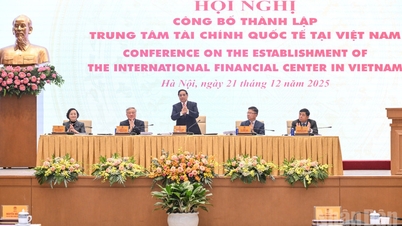
The Prime Minister assigned specific tasks to Vietnamese Ambassadors and Heads of Missions Abroad, including: lobbying the United States to remove Vietnam from the list of countries restricted from exporting technology and to recognize Vietnam as a market economy as soon as possible; promoting cooperation with China in developing border trade, transportation connectivity, especially railway connections; cooperating with Middle Eastern countries to build an International Financial Center in Ho Chi Minh City, and lifting the EC's yellow card for IUU (Illegal, Unreported, and Unregulated) fishing…
Emphasizing the principle of "what has been said must be done, what has been committed must be fulfilled, and what has been done must yield concrete results," and assigning "clear objectives, clear responsibilities, clear tasks, clear timelines, clear accountability, clear outputs, and clear outcomes," Prime Minister Pham Minh Chinh expressed confidence that with the joint efforts, solidarity, and unity of ministries, departments, localities, associations, and businesses, especially the proactive and positive role played by the diplomatic sector and overseas representative offices, economic diplomacy will continue to be implemented more strongly, comprehensively, and creatively, achieving better and more breakthrough results each year, contributing to socio-economic development, successfully achieving the goals of the 2021-2025 period; and consolidating the foundation for the country to enter a new era, an era of national progress.
Source: https://baotainguyenmoitruong.vn/thu-tuong-tao-dot-pha-ve-ngoai-giao-kinh-te-de-gop-phan-tang-truong-2-con-so-384815.html


![[Photo] Prime Minister Pham Minh Chinh presides over a meeting on private sector economic development.](/_next/image?url=https%3A%2F%2Fvphoto.vietnam.vn%2Fthumb%2F1200x675%2Fvietnam%2Fresource%2FIMAGE%2F2025%2F12%2F20%2F1766237501876_thiet-ke-chua-co-ten-40-png.webp&w=3840&q=75)

























































Comment (0)