

The National Assembly has passed the Law on Geology and Minerals. With 12 chapters and 111 articles, as well as 12 new points, the Law on Geology and Minerals will create a synchronized and unified legal framework for the management and exploitation of geological and mineral resources...
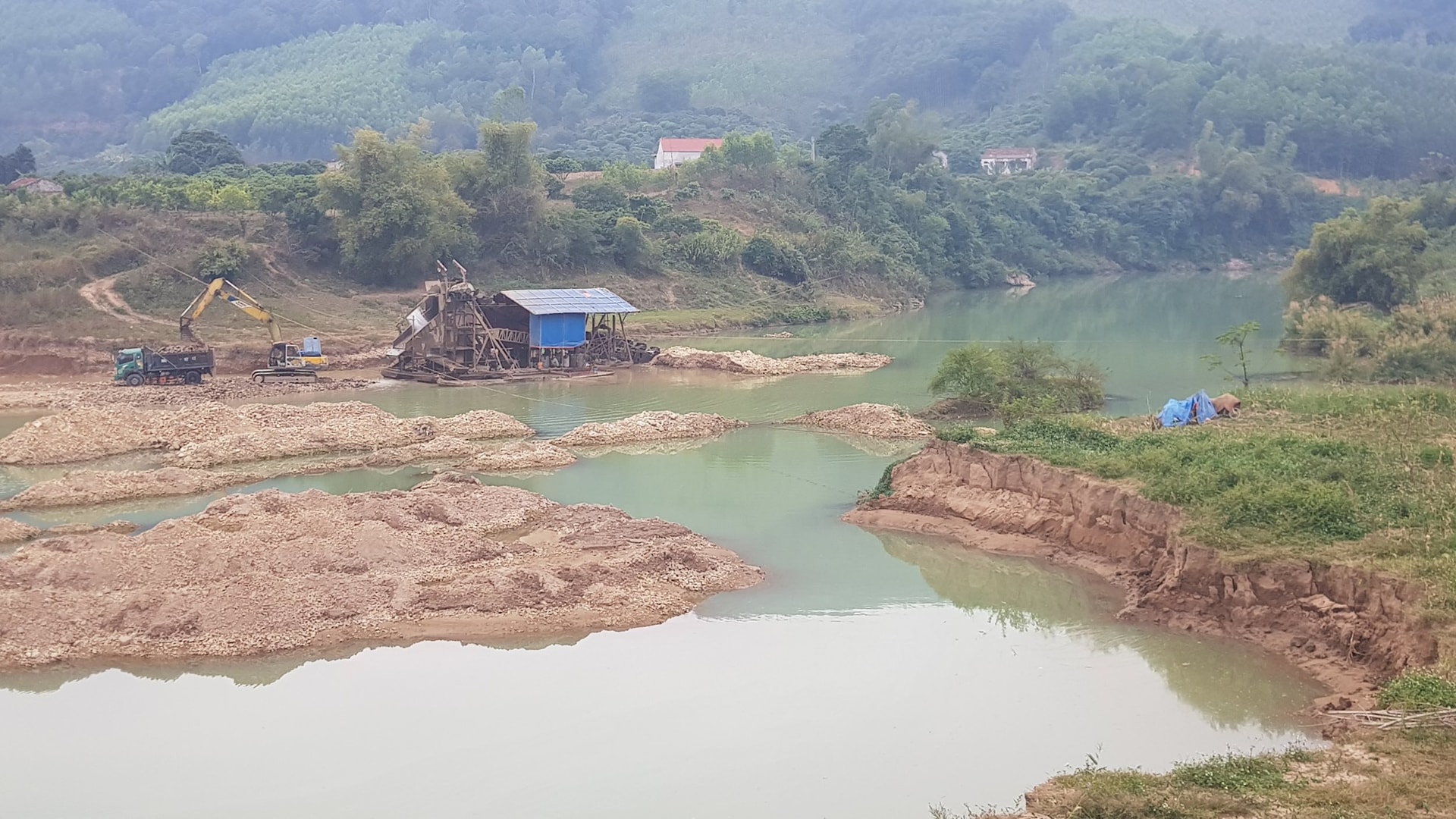
Mineral mining projects shall not exceed 30 years.
The Law on Geology and Minerals provides detailed regulations on basic geological surveys, geological and mineral surveys, protection of unexploited mineral resources, mineral exploitation, mineral processing, finance in the field of geology and minerals, as well as state management within the mainland, islands, inland waters, territorial sea, contiguous zone, exclusive economic zone and continental shelf of Vietnam.
A key point in the Law on Geology and Minerals is the prohibition of trading in minerals without a legitimate origin. Prohibited acts include exploiting geological and mineral exploration activities to infringe upon the interests of the State, harm organizations, individuals, or communities, or intentionally destroying valuable geological and mineral specimens. In particular, the Law on Geology and Minerals strictly prohibits mineral exploitation activities without approval or licensing from the competent state management agency. Regarding the duration of mineral exploitation, the Law on Geology and Minerals stipulates that mineral exploitation investment projects must have an exploitation period of no more than 30 years. If necessary, extensions may be granted, but the total exploitation period must not exceed 50 years.
It is known that, prior to the National Assembly's approval, during discussions, many opinions suggested adjusting the regulations on the duration of mineral exploitation licenses to 50 years and the renewal period to 15 years. However, according to Le Quang Huy, Chairman of the National Assembly's Committee on Science , Technology and Environment, minerals are public assets, therefore, the granting of exploitation licenses must be carefully considered to avoid negative impacts on socio-economic development. In fact, international experience shows that the duration of mineral exploitation licenses usually lasts a maximum of 30 years and can be renewed multiple times, but the total renewal period does not exceed 20 years. The Law on Geology and Minerals stipulates that mineral exploitation licenses have a term of no more than 30 years and can be renewed multiple times, but the total renewal period does not exceed 20 years, with a maximum total exploitation period of 50 years.
Remove obstacles caused by leveling materials.
With the newly passed regulations, the Law on Geology and Minerals will help strengthen state management of mineral resources, while protecting national resources and contributing to the sustainable and efficient development of the mineral industry. The National Assembly also requested the Government to continue reviewing and adjusting regulations to ensure that the granting and renewal of licenses are carried out smoothly and quickly, helping mineral mining enterprises comply with the law.
The Law on Geology and Minerals, passed by the National Assembly, also promptly addresses difficulties and obstacles in the practical exploitation of minerals for leveling materials. Specifically, the Law on Geology and Minerals clearly categorizes minerals according to their use and management purposes: Group I minerals include metallic minerals; energy minerals; precious and semi-precious stones; and industrial minerals. Group II minerals are those used as materials in the construction industry for the production of cement, tiles, sanitary ware, building glass, paving stones, handicrafts, industrial lime, and refractory materials.
Group III minerals include common building materials, peat, mineral mud, natural mineral water, and natural hot springs. Group IV minerals include minerals suitable only for use as leveling materials, foundation filling, construction of irrigation works, and disaster prevention and control, including: clay, hill soil, soil with other names; soil mixed with rocks, sand, pebbles or gravel; sand (excluding sand and gravel from riverbeds, lakebeds and sea areas).
To promptly address difficulties and obstacles in the practical exploitation of mineral resources to supply leveling materials for socio-economic development investment projects, according to Le Quang Huy, Chairman of the National Assembly's Committee on Science, Technology and Environment, the Law has revised the general regulations for the exploitation of Group IV minerals. The exploitation of Group IV minerals to serve projects, works, and project components, or to implement emergency mobilization measures, does not require the procedures of submitting to competent state agencies for decision or approval of investment policies, investment project approval, appraisal and approval of environmental impact assessment reports, environmental permits, or environmental registration. However, a plan for the exploitation of Group IV minerals must be prepared and submitted to the competent state management agency for consideration and issuance of a mineral exploitation license in accordance with this law.
Source: https://daidoanket.vn/nhung-diem-moi-cua-luat-dia-chat-va-khoang-san-tao-hanh-lang-phap-ly-dong-bo-va-thong-nhat-10295810.html

![[Photo] Prime Minister Pham Minh Chinh attends the Conference on the Implementation of Tasks for 2026 of the Industry and Trade Sector](/_next/image?url=https%3A%2F%2Fvphoto.vietnam.vn%2Fthumb%2F1200x675%2Fvietnam%2Fresource%2FIMAGE%2F2025%2F12%2F19%2F1766159500458_ndo_br_shared31-jpg.webp&w=3840&q=75)

























































































Comment (0)