

According to Associate Professor Dr. Ngo Tri Long, an economic expert, in 2025, Vietnam – a country with strong export capabilities – will face many opportunities and challenges arising from exchange rate fluctuations.
Exchange rates continue to fluctuate.
2025 marks a crucial period for the global economy, as many countries gradually recover from the COVID-19 pandemic and ensure sustainable development. In this context, Vietnam – a country with strong export potential – faces numerous opportunities and challenges in maintaining economic growth. Currency exchange rates, one of the major influencing factors, are a top concern.
According to Associate Professor Dr. Ngo Tri Long, an economic expert, 2025 is predicted to be a year of significant exchange rate fluctuations due to the influence of several factors: US monetary policy and the volatility of the US dollar are expected to continue to strongly impact global financial markets, especially emerging economies like Vietnam. In 2025, the US Federal Reserve (FED) is expected to slow the pace of interest rate cuts due to concerns about persistently high inflation and other potential policy changes.
Forecasts indicate that in 2025, the US dollar will continue to maintain its strong position, putting pressure on currencies in emerging markets. "The USD/VND exchange rate is expected to continue fluctuating upwards in 2025," the expert predicted.
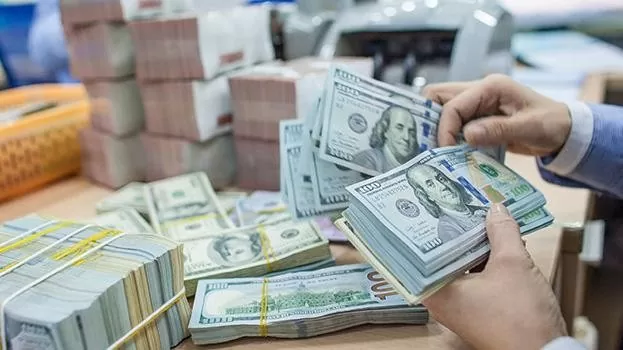 |
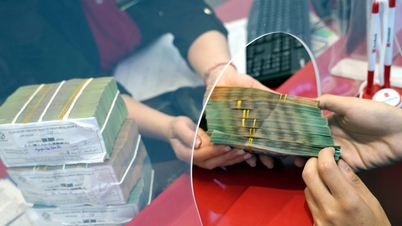
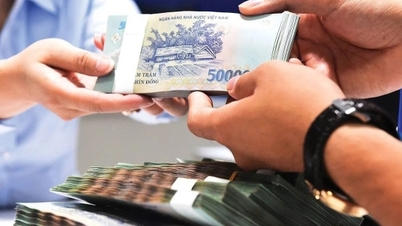
| Forecasts indicate that the USD/VND exchange rate will continue to fluctuate upwards in 2025. Photo: Duy Minh |
The expert also cited international banks such as UOB Bank, which forecasts the exchange rate will reach 25,800 VND/USD in the first quarter, increase to 26,000 VND/USD in the second quarter, peak at 26,200 VND/USD in the third quarter, and slightly decrease to 26,000 VND/USD in the fourth quarter of 2025.
In addition, the global economy is projected to maintain stable growth. The International Monetary Fund (IMF) forecasts global economic growth of 3.1% in 2025 thanks to loose monetary policies from major central banks such as the Fed and the European Central Bank (ECB).
“This recovery is driven by loose monetary policies from major central banks, which could affect the VND/USD exchange rate, thereby impacting Vietnam's exports. The Fed's interest rate cuts could weaken the USD in the short term. However, the US administration's trade policies, especially if protectionist, could increase the value of the USD, putting pressure on the VND/USD exchange rate,” Associate Professor Ngo Tri Long commented.
Given these predicted developments, the economic expert believes that the State Bank of Vietnam 's policies should continue to manage interest rates flexibly, control credit growth, and stabilize the exchange rate to support exports.
Opportunities and challenges for import and export.
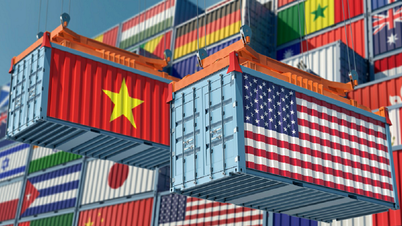
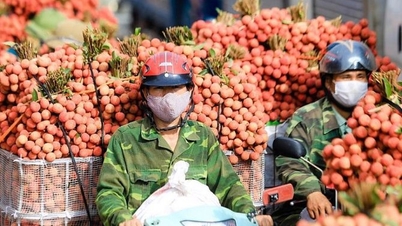
According to the expert, Vietnam's import and export sector will gain a competitive advantage when the VND depreciates slightly against the USD. Vietnamese goods will become more competitive because they are cheaper, making Vietnamese products more attractive in international markets. "Vietnamese businesses can compete better on price compared to countries with less volatile exchange rates or stronger currencies. This will positively impact Vietnam's key export sectors such as textiles, footwear, and electronics," Mr. Long affirmed.
Furthermore, a lower exchange rate offers a significant advantage when exporting to markets such as the US and the EU. Because Vietnamese goods are priced lower in USD, foreign consumers and businesses tend to import more. "This is especially true given that major competitors like China, Thailand, and India have unfavorable exchange rates," he said.
Above all, a stable exchange rate instills confidence in investors, attracting long-term capital flows. Investors often prioritize countries with stable exchange rate policies because they consider not only production costs but also potential fluctuations in profits due to the depreciation of the domestic currency. “The policy of maintaining a stable VND/USD exchange rate over the years has helped Vietnam become a top destination for manufacturing investors in the textile, electronics, and food processing industries,” emphasized Associate Professor Dr. Ngo Tri Long; he further affirmed that a stable exchange rate plays a crucial role in attracting foreign investment into export industries, thereby expanding export opportunities through improved production capacity and product quality. To achieve this, macroeconomic policies need to be synchronized, ensuring a stable and transparent investment environment.
According to the expert, exchange rates also impact the exploitation of Free Trade Agreements (FTAs). Currently, Vietnam has signed many FTAs such as CPTPP, EVFTA, RCEP... These agreements help reduce or eliminate tariffs, bringing a competitive advantage to export goods. “When the exchange rate is stable, businesses can more flexibly assess costs, creating confidence with foreign partners; a stable exchange rate reflects economic stability, helping to build credibility and trust with import partners. Tariff preferences from FTAs are maximized when combined with exchange rate stability, increasing the competitiveness of Vietnamese goods compared to other countries,” he said.
In particular, a stable or slightly depreciating exchange rate is a crucial supporting factor for Vietnamese businesses to optimally utilize FTAs, thereby enhancing their competitiveness and expanding export opportunities in international markets.
According to Associate Professor Dr. Ngo Tri Long, although a stable or slightly decreasing exchange rate brings many benefits, there are still challenges such as the risk of losing price advantage. If competing countries, for example Thailand and Indonesia, proactively devalue their currencies, Vietnamese goods may lose their competitive edge. Increased import costs for some input materials imported in foreign currency, when the exchange rate is unfavorable or fluctuates in the opposite direction, can increase production costs.
Furthermore, Vietnam's import and export sector faces numerous challenges from exchange rate fluctuations, such as increased import costs for raw materials. Rising exchange rates have a strong impact on the economy and export businesses, especially in Vietnam, where a large portion of input materials depend on imports. Increased input costs arise when the USD appreciates and the VND depreciates, leading to higher import costs from countries using USD or pegging their value to USD, such as China, South Korea, and Japan. Businesses with low profit margins face significant pressure on their competitiveness, and higher production costs mean export businesses need to maintain competitive prices to attract international customers. "Export businesses often have to sign long-term contracts with fixed prices, making it difficult to adjust prices to compensate for increased raw material costs. And when they raise prices to maintain profitability, they risk losing customers to competitors," the expert analyzed.
Furthermore, Vietnam's import and export activities also face the risk of cost-push inflation. When import costs increase, businesses are forced to raise selling prices, contributing to cost-push inflation. This not only reduces purchasing power but also negatively impacts the entire supply chain and the domestic market. Rising exchange rates pose a significant challenge for Vietnamese export businesses, especially regarding the cost of imported raw materials. However, Vietnamese businesses cannot rely solely on the advantage of exchange rates; they need to consider other factors such as productivity, product quality, and cost efficiency. To maintain and enhance competitive advantage, efficient production is key; simultaneously, appropriate strategies and leveraging opportunities from FTAs can help mitigate risks and increase long-term competitiveness.
"Strategies to address challenges in improving labor productivity require strengthening human resource training, digital transformation, and investment in high technology. Reducing dependence on imports and boosting domestic production are necessary to cope with fluctuations in imported raw materials. To maximize the advantages of FTAs, businesses should utilize all favorable tariff conditions to increase competitiveness," the expert recommended.
| Associate Professor Dr. Ngo Tri Long - economic expert: 2025 marks a crucial turning point for Vietnam in exploiting its export potential amidst volatile exchange rates. Despite facing numerous challenges such as rising import costs, inflation risks, and regional competition, Vietnam also has significant opportunities thanks to its competitive pricing, stable FDI inflows, and Free Trade Agreements (FTAs). To maximize opportunities and minimize risks, a combination of flexible strategies such as improving labor productivity, reducing dependence on imported raw materials, and fully exploiting the benefits of FTAs will be key to success. In the long term, the adaptability and innovation of export businesses will determine Vietnam's role on the global economic map. |
Source: https://congthuong.vn/thach-thuc-tu-bien-dong-ty-gia-voi-xuat-nhap-khau-372209.html
![[Image] Nearly 125,000 Hanoi students completed the Literature exam for the 10th grade entrance exam.](https://vphoto.vietnam.vn/thumb/1200x675/vietnam/resource/IMAGE/2026/05/30/1780117233041_ndo_br_thiet-ke-chua-co-ten-2-png.webp)
























![[Photo] Admire the coral "masterpiece" amidst the million-year-old heritage of Dak Lak province.](https://vphoto.vietnam.vn/thumb/1200x675/vietnam/resource/IMAGE/2026/05/30/1780107638639_y25-jpg.webp)





































































Comment (0)