

Growth rate ranks fourth nationwide.
Each stage of development requires new driving forces. For Thanh Hoa , the 2020-2025 term marks a crucial turning point as the province persistently implements the three strategic breakthroughs identified by the Party, considering them the "key" to unlocking resources and creating room for long-term development.
 |
| The Nghi Son Economic Zone continues to affirm its role as the leading growth engine of Thanh Hoa province. Photo: MINH HIEU |
Of the three strategic breakthroughs, administrative reform and improving the investment environment are considered the pioneering steps. While previously Thanh Hoa province was often in the middle group in terms of governance indicators, in recent years it has risen to the top group nationwide in many important indicators such as: Provincial Public Administration Performance Index (PAPI), Satisfaction of citizens and organizations (SIPAS), and Public Administration Reform Index (PAR INDEX). What is noteworthy is not only the improvement in ranking but also the change in management thinking, shifting from management to service, placing citizens and businesses at the center. As a result, the investment and business environment has become increasingly open and attractive. During the 2021-2025 period, the province attracted 485 direct investment projects, including 68 foreign direct investment (FDI) projects with a total registered capital of nearly 77,000 billion VND and over 1.3 billion USD. To date, Thanh Hoa province has 190 active FDI projects with a total registered capital of approximately US$15.94 billion, ranking 8th nationwide. In the first five months of 2026 alone, the province attracted 47 projects (including 9 FDI projects) with a total registered capital of nearly VND 10,500 billion and over US$107 million, representing a 17.5% increase in the number of projects and a 36.6% increase in registered capital compared to the same period last year.
 |
| The Nghi Son deep-water port in the Nghi Son Economic Zone (Thanh Hoa province) plays a key role as an international trade gateway and a major logistics center in the North Central region. Photo: MINH HIEU |
The achievements are clearly reflected in the development indicators: The average growth rate of the Gross Regional Domestic Product (GRDP) for the period 2021-2025 is estimated at 9.05%, ranking fourth nationwide and third among the top 10 provinces and cities with the largest economies. Total state budget revenue in the area reached VND 247,242 billion, 2.2 times higher than the 2016-2020 period; total social investment reached over VND 700,000 billion; export turnover reached over USD 30.2 billion, more than double the 2016-2020 period. With 18,187 newly established businesses, the total number of operating businesses in the area is expected to reach approximately 21,500 by 2025.
Continue to remove bottlenecks.
Alongside the positive results, practical experience also reveals limitations in the implementation of strategic breakthroughs that need to be frankly acknowledged. These include: the quality of administrative reform among localities and units within the province is not truly uniform; in some places, there is still a tendency to avoid responsibility, a fear of making mistakes, and a fear of conflict in handling work; decentralization and delegation of power, although promoted, have not yet fully achieved their effectiveness; the investment and business environment, although improved, has not yet created a superior competitive advantage compared to many localities in the region; some projects have been delayed for a long time without being definitively resolved, reducing the efficiency of resource utilization; infrastructure and connectivity between regions within the province, especially between mountainous areas and coastal dynamic areas, still have limitations; logistics infrastructure, digital infrastructure, and infrastructure serving the marine economy do not fully meet the development requirements of the new phase. Human resources continue to be a major bottleneck... The realities of development are demanding that Thanh Hoa continue to persevere with the three strategic breakthroughs, but with new thinking, new determination, and new approaches.
First and foremost, administrative reform must aim to build a development-oriented administration, using the satisfaction of citizens and businesses as a measure of the effectiveness of the system. At the same time, it is necessary to continue improving mechanisms to protect officials who dare to think, dare to act, and dare to take responsibility for the common good; overcoming the mentality of avoiding and shirking responsibility. In infrastructure development, priority should be given to projects that connect regions and inter-regions; developing transportation, logistics, digital, and marine economic infrastructure in a synchronized manner. Along with promoting the leading role of the Nghi Son Economic Zone, new impetus should be created for the Western region and other disadvantaged areas to narrow the development gap.
Regarding human resources, this should be considered a breakthrough of all breakthroughs, building a team of officials that meets the requirements of local governments at both levels; at the same time, strengthening the link between training institutions and businesses, developing digital human resources, science and technology human resources, and innovation.
 |
| Tho Xuan Airport connects Thanh Hoa province with major economic centers across the country. Photo: MINH HIEU |
When institutions are reformed, infrastructure is invested in comprehensively, and human resources are placed at the center of development, unique potentials and advantages will be transformed into substantial growth resources. Entering a new phase of development, the requirement is not only to maintain a high growth rate but also to improve the quality of growth, building a more resilient and competitive economy. As bottlenecks in institutions, infrastructure, and human resources continue to be removed, coupled with the impetus from science and technology, innovation, and digital transformation, Thanh Hoa will have a stronger foundation to affirm its role as a growth pole among the North Central provinces.
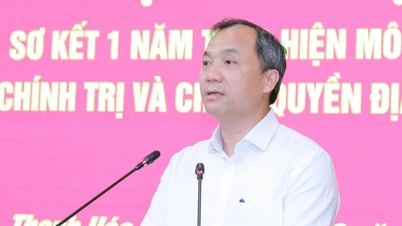
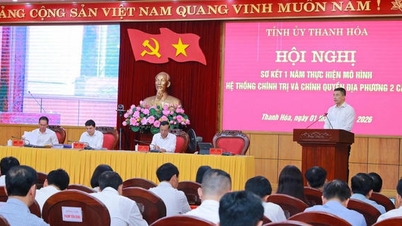
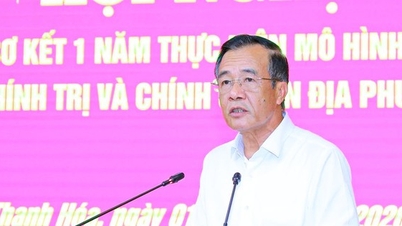
At the conference summarizing one year of operation of the two-tiered local government model (held on June 1st), Comrade Le Duc Thai, Member of the Central Committee of the Party and Secretary of the Thanh Hoa Provincial Party Committee, requested that all levels and sectors continue to review and reorganize the administrative apparatus towards a streamlined, modern, and efficient structure; perfect the functions and tasks of each agency and unit; and promote decentralization and delegation of power while clearly defining the responsibilities of each organization and individual. In particular, there is a need for a strong shift in the thinking and operating methods of the government at all levels from "administrative management" to "service and development creation." All activities of the apparatus must aim for the highest goal: better serving the people and businesses.
Source: https://www.qdnd.vn/kinh-te/cac-van-de/thanh-hoa-kien-tao-dong-luc-phat-trien-moi-1042322

































































































Comment (0)