

Off-season dragon fruit is priced at 33,000-43,000 VND per kilogram, but farmers have none to sell because cultivation yields have been halved after a prolonged period of losses.
Towards the end of November, the period marking the end of the main dragon fruit season and the beginning of the off-season for artificial lighting, many warehouses in Chau Thanh district (Long An province) are buying grade 1 to grade 3 red-fleshed dragon fruit at prices ranging from 33,000 to 43,000 VND per kilogram.
However, in contrast to the bustling harvest scenes of previous years, this year most of the dragon fruit orchards are in a state of reduced production.
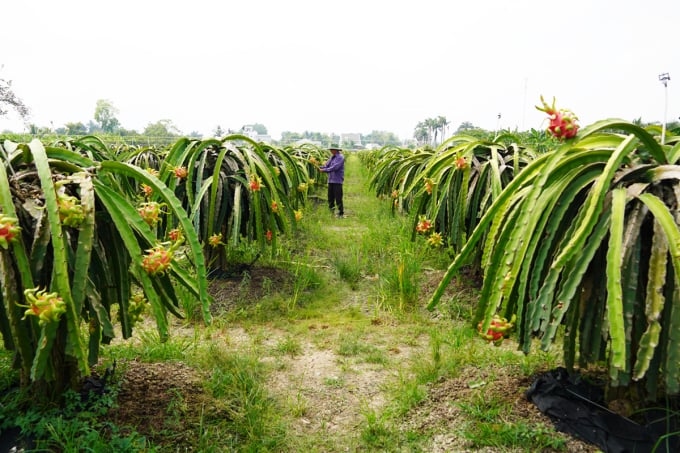
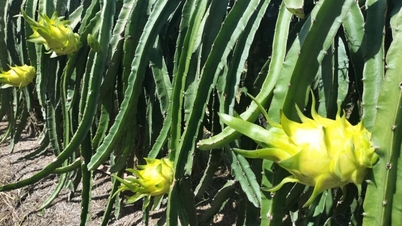
Farmers tend to their dragon fruit crops using artificial lighting in mid-November in Tan An City (Long An province). Photo: Hoang Nam
Mr. Nguyen Van Phuc, 40 years old, from Thanh Phu Long commune, Chau Thanh district, has 3,000 square meters of land planted with red-fleshed dragon fruit. When dragon fruit prices exceed 30,000 VND per kilogram, his family harvests about 6 tons or more of fruit per year with 2-3 artificial lighting cycles, earning at least 100 million VND in profit annually.
Since the pandemic, dragon fruit exports have plummeted, causing prolonged losses for Mr. Phuc and many other farmers. Some farmers couldn't afford the cost of fertilizers and pesticides and had to uproot their dragon fruit plants and switch to other crops. Mr. Phuc's family still tried to maintain their dragon fruit acreage, but instead of using artificial lighting, they opted for a natural planting season. The price might be lower, but it reduced the risk of losses.
"Since the beginning of the year, we've only harvested about 2 tons of fruit, which is only one-third of what we harvested in previous years. Considering the costs of fertilizer, pesticides, and labor, there's no profit," Phuc shared.
Mr. Truong Van An in Tan An City has 1.5 hectares of red-fleshed dragon fruit trees that are preparing for harvest after being artificially lit. The purchase price of dragon fruit at the warehouse is currently quite high, but according to Mr. An, this season, most farmers only provide minimal care, not enough nutrients, so the fruit usually only meets the standards of grades 3 and 4.
"In addition, many fruit crops were affected by disease and had to be sold at a low price of 7,000-8,000 VND per kilogram, so this season farmers only made a small profit or suffered losses," Mr. An said.
Long An province has approximately 12,000 hectares of dragon fruit, mainly concentrated in Chau Thanh district, with a total annual production of nearly 300,000 tons. After years of prolonged losses due to disease outbreaks, many farmers have collectively removed dragon fruit plants and switched to other crops; currently, the planted area is only about 9,000 hectares.
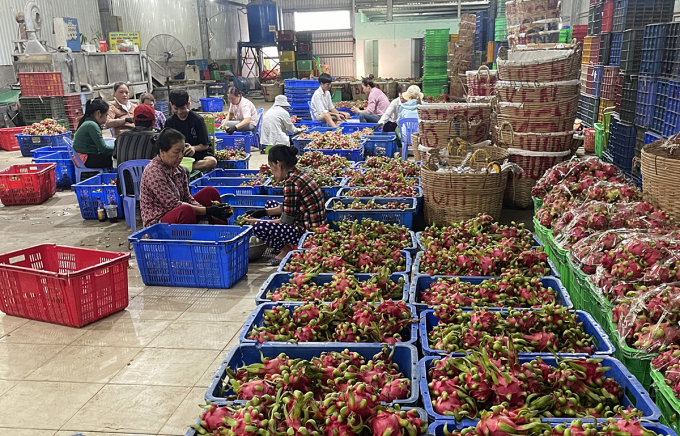
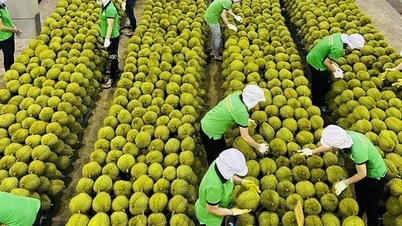
Workers sort and pack dragon fruit at a warehouse in Chau Thanh district (Long An province) on November 21. Photo: Hoang Nam
Mr. Nguyen Quoc Trinh, Chairman of the Long An Dragon Fruit Association, said that dragon fruit prices this season are the highest so far this year. However, only about 200-300 tons of fruit remain to be harvested.
"After suffering losses due to the pandemic, many dragon fruit orchards were neglected, lacking fertilizer and pesticides, and the plants were infected. As a result, fruit yield was reduced by half," Mr. Trinh said.
Currently, warehouses are only purchasing a maximum of about 2 or 3 tons of dragon fruit per day, and many warehouses have had to close down due to lack of supply.
Along with Long An, Tien Giang is a province with a large area of dragon fruit cultivation in the Mekong Delta, approximately 10,000 hectares. However, in the last two years, the area of dragon fruit cultivation has also decreased sharply, currently only 8,900 hectares, with a total annual production of about 200,000 tons.
"Similar to the situation with Thai jackfruit trees over the past few years, when the yield is low, the price is high, so in reality, dragon fruit growers are still facing many difficulties," Mr. Men said.
Hoang Nam
Source link
![[Image] Pleasant weather helps students enter the 10th grade entrance exam with confidence.](https://vphoto.vietnam.vn/thumb/1200x675/vietnam/resource/IMAGE/2026/05/29/1780034401612_ngay-1-thi-lop-10-minh-duy-8-5009-jpg.webp)
![[Photo] Ba Lang An Lighthouse - the "eye of the sea" amidst the "rock museum" of Quang Ngai province.](https://vphoto.vietnam.vn/thumb/1200x675/vietnam/resource/IMAGE/2026/05/29/1780038698840_anh-man-hinh-2026-05-29-luc-14-10-42.png)
















































































Comment (0)