

However, these programs are limited in terms of objectives and learning pathways; they lack standardized learning outcomes and diploma recognition; the facilities and teachers do not meet the requirements for integrating general education and vocational training; and there is a lack of participation from businesses… therefore, they are ineffective and are gradually being phased out.
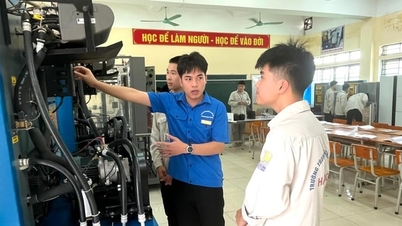
The vocational training program, which accepts students who have graduated from junior high school, also reveals many limitations. The training duration is 1-2 years, and graduates are 16-17 years old, not yet mature enough to work, practice, or intern in businesses, making it difficult for them to proactively seek employment and participate in the workforce. They also lack sufficient general education knowledge to study and adapt to the science and technology of the new industrial revolution, and face difficulties in pursuing higher education…
Therefore, most vocational school students currently simultaneously study the continuing education program at the high school level and participate in the High School Graduation Examination. Studying for two degrees at the same time creates academic pressure, causing many students to become discouraged, leading to limited training quality and ineffective, superficial implementation of the streaming policy.
Resolution No. 71-NQ/TW on breakthroughs in education and training development requires: "Reforming the vocational education model, adding a vocational secondary school level equivalent to the high school level."
The proposed vocational high school model will have a training duration of 3 years, with entry requirements for students graduating from lower secondary school. This will replace the intermediate-level model with the same entry requirements, aiming to overcome existing shortcomings and limitations, meet the human resource development needs of the country's new era, and integrate with international educational classification standards. With the emergence of vocational high schools, the intermediate-level program in vocational education will only be available to students graduating from upper secondary school.
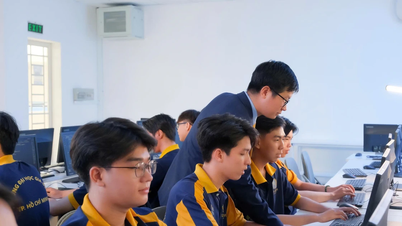
According to the amended Vocational Education Law, the vocational high school education program is designed to integrate core knowledge from the high school curriculum with vocational specialization. The program aims to help learners complete their general education while equipping them with the skills to perform and solve tasks in stable conditions and familiar environments related to their chosen industry or profession; enabling them to apply modern techniques and technologies to their work, work independently, and work in teams.
The addition of vocational high school models in the current context is necessary and has significant importance in educational streaming after lower secondary school. However, lessons from the past show that to successfully implement this model, it is necessary to design a suitable curriculum, clearly define the learning goals and pathways for students; clearly define output standards and diploma recognition mechanisms; ensure openness and interconnectedness; have a clear implementation roadmap; and ensure resources and conditions for implementation, especially in terms of staff and facilities.
Furthermore, strong communication is needed to show parents and students that vocational high school is a valuable option, offering good job opportunities and income, and not a "last resort" path. Only when all the above conditions are met, especially when societal perceptions of vocational high school are changed as a promising educational option, can this type of school develop sustainably.
Source: https://giaoducthoidai.vn/thay-doi-nhan-thuc-ve-trung-hoc-nghe-post762038.html
![[Image] Close-up view of the interchange connecting the two expressways and Long Thanh Airport.](https://vphoto.vietnam.vn/thumb/1200x675/vietnam/resource/IMAGE/2026/05/25/1779703378210_ndo_br_z7863716673926-224453a31600126cce10622af6290afd-4549-jpg.webp)
![[Image] Hanoi's urban life under the challenge of a "scorching hot" environment](https://vphoto.vietnam.vn/thumb/1200x675/vietnam/resource/IMAGE/2026/05/25/1779706979265_nang-nong-t5-2026-minh-duy-7-4636-jpg.webp)






















































Comment (0)