

To achieve this, Ho Chi Minh City needs decisive action, drawing on diverse international experiences from East Asian and European countries such as South Korea, Singapore, and Germany; while simultaneously overcoming local limitations, with the core element being the increase in total factor productivity (TFP). Like South Korea, during its "miracle" development period from 1960 to 1990, TFP contributed to GDP growth at an average rate of over 8% per year thanks to technological innovation, business expansion, and the shift of labor from agriculture to industry. Similarly, Singapore, during the period from 1960 to 1990, achieved stable TFP growth, contributing to GDP growth at an average rate of 7%-8% per year, focusing on innovation and high-tech integration.
In Germany, Total Factor Productivity (TFP) played a significant role in post-World War II growth, contributing up to 1.59% per year between 1954 and 2017, thanks to its efficient production system and investment in research and development (R&D). Ho Chi Minh City is currently in a similar position, with an estimated GRDP per capita of around US$11,000 by 2025. To improve TFP, the city needs to accelerate digital transformation and the green economy , focusing on high-end services, finance, and technology.
In 2025, the service sector will contribute 62% of GRDP, with a growth rate of 8.5%, but will still be dependent on traditional trade. To achieve this goal, support is needed for the Vietnam International Finance Centre in Ho Chi Minh City (VIFC-HCMC), the urban railway, and the free trade zone (FTZ). If implemented effectively, these new pillars could contribute an additional 2-3 percentage points to growth, helping to reach the target of 10%-11%.
Secondly, the development of the private sector must be the main driving force, as this sector is fragmented and lacks competitiveness, reducing overall city productivity. Lessons from South Korea, where chaebols (large conglomerates) have boosted TFP and growth by expanding their scale and investing in R&D, leading to double-digit economic growth for decades, are relevant. In Singapore, policies supporting private enterprises through investment funds and administrative reforms have improved efficiency, contributing to stable TFP. Private sector labor accounts for approximately 80% of Ho Chi Minh City's workforce, with hundreds of thousands of small and micro-enterprises, but only contributes 40%-45% of GRDP due to cumbersome administrative procedures.
In 2025, the city is expected to have over 50,000 newly registered businesses, a 15% increase compared to the previous year, but the bankruptcy rate will also remain high. To improve these sectors, priorities need to be prioritized: large enterprises (encouraging R&D and linkages with small and medium-sized enterprises - SMEs), SMEs (project consulting and access to capital), and the informal sector (transformation through simplified procedures). Improving the business environment will help businesses grow stronger, expand their scale, and participate in global supply chains, boosting labor productivity by 9%-10% per year, contributing to double-digit growth.
Thirdly, developing high-quality human resources is a decisive factor in supporting structural transformation. Experience from Germany shows that the dual education system has enhanced TFP by equipping workers with practical skills, contributing to stable growth of 1.59% per year, like solid bricks building a sturdy structure.
In South Korea, investment in education has driven labor mobility, supporting TFP growth. With a young population and a workforce of approximately 5 million people, Ho Chi Minh City faces a quality challenge: only 30% of the workforce has professional certifications. To achieve its goals, it needs to train high-quality basic skills for the high-tech, finance, and logistics industries, including digital skills, English, and cultural etiquette.
Vocational training programs in the High-Tech Park and the Science and Technology City of the North will help shift the workforce from the informal to the formal sector, increasing the proportion of skilled workers to 50% by 2030, and supporting sustainable growth.
Finally, reforming the markets for factors of production, especially capital and land, will ensure resources flow to high-productivity sectors. Singapore has succeeded with a transparent capital market, supporting SMEs and boosting TFP, while SMEs in Ho Chi Minh City often struggle to access capital at high interest rates. Reforms based on international experience, such as establishing a specialized SME bank and certifying consultants, will boost investment. This is where we need to recognize: Reform is not just about policy, but about a shift in mindset so that resources truly serve the future.
Source: https://www.sggp.org.vn/thay-doi-tu-duy-de-tang-truong-2-con-so-post839967.html


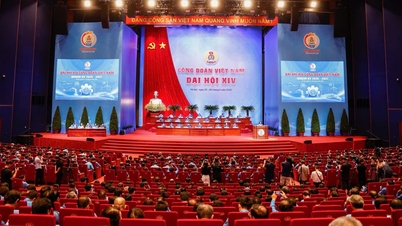
![[Photo] First session of the 14th Congress of the Vietnam Trade Union](https://vphoto.vietnam.vn/thumb/1200x675/vietnam/resource/IMAGE/2026/06/03/1780465947883_ndo_br_img-3852-jpg.webp)
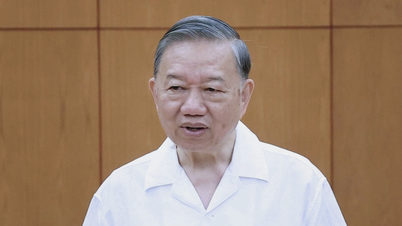
![[Photo] General Secretary and President To Lam presides over a meeting with the Central Organizing Committee.](https://vphoto.vietnam.vn/thumb/1200x675/vietnam/resource/IMAGE/2026/06/03/1780482764658_a1-bnd-4741-3342-jpg.webp)

![[Photo] Secretary of the National Assembly Party Committee, Chairman of the National Assembly presides over the meeting of the Standing Committee and Executive Committee of the National Assembly Party Committee.](https://vphoto.vietnam.vn/thumb/1200x675/vietnam/resource/IMAGE/2026/06/03/1780480353201_ndo_br_bnd-2585-jpg.webp)






















































![[Video] Sunset at Lap An Lagoon – Where the sun sets over the fishing nets](https://vphoto.vietnam.vn/thumb/1200x675/vietnam/resource/IMAGE/2026/05/31/1780192137701_beach-landscape-sea-water-nature-grass-745871-pxhere-com.jpeg)
































Comment (0)