


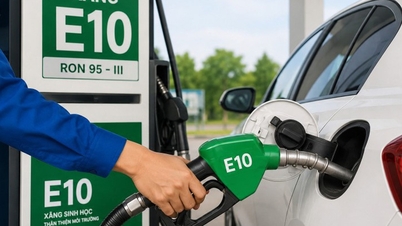
The United States and Brazil are two pioneering countries. The United States, in particular, is the world's largest consumer of ethanol. E10 gasoline became the default standard at US gas stations from the 1980s to the 1990s. Almost 100% of passenger car gasoline in the US is now E10. They are even gradually popularizing E15 (15% ethanol) for newer vehicles.
Brazil has a highly developed sugar industry, which has allowed it to go a long way in the field of biofuels. Standard gasoline in Brazil has a very high mandatory blending ratio, ranging from E20 to E27. They also commonly use E85 gasoline or 100% ethanol for vehicles equipped with "Flex-fuel" engines.
In Europe, countries like France, Germany, Belgium, and the Netherlands have long introduced E10 to gradually replace E5 gasoline in order to meet stringent carbon emission reduction targets. According to European Union regulations, medium and large-scale gas stations are required to have E10 pumps. Meanwhile, in the UK, E10 has officially become the standard unleaded gasoline at stations across the country since September 2021.
In Southeast Asia and Asia, Thailand is a regional leader in biofuels thanks to its abundant agricultural resources. They have not only used E10 for a long time but have also widely commercialized E20 and E85 at major gas stations.
The Philippines has also mandated a minimum E10 blending ratio for its entire gasoline market for many years. The E10 gasoline market in the Philippines is one of the most well-developed and legally binding biofuel transition models in Southeast Asia.
The Biofuels Act (RA 9367): Passed in 2006, this act mandates the market's adoption of biofuels.
Implementation roadmap: The Philippines began mandating 5% ethanol (E5) blending in 2009, and officially raised the mandatory level to E10 nationwide in 2013. This means that all regular commercial gasoline sold at gas stations in the Philippines must have a minimum ethanol content of 10%.
The Philippine gasoline market is experiencing strong growth driven by high demand for personal vehicles (sales growth of approximately 9% annually). Total bioethanol consumption for road use in the Philippines is estimated at around 840 million liters.
The Philippines places a high priority on the use of domestically produced ethanol. Currently, the country has approximately 14 licensed bioethanol production plants with a total designed capacity of about 508 million liters per year. However, due to a shortage of raw materials, the plants only operate at approximately 400 million liters per year.
Domestic supply currently only meets about 50% of the E10 market demand. The remaining 50% must be imported, with the US being the largest supplier (accounting for up to 85% of the Philippines' imported ethanol) due to its much more competitive corn-ethanol prices.
Unlike the US (which uses corn) or Brazil (which uses sugarcane directly), the Philippines' ethanol industry relies heavily on molasses and, to some extent, on sugarcane.
Due to the shrinking area of sugarcane cultivation in the Philippines and the rising price of molasses, the cost of domestic ethanol production has become expensive. This is why the country's petroleum companies are constantly requesting import quotas for ethanol to compensate for the shortfall and maintain the mandatory E10 ratio.
In Australia, E10 petrol is extremely popular and cost-effective, making it a common choice for people driving regular vehicles.
Are motorcycles and cars that use E10 safe?
This is the biggest question consumers have when switching to biofuels. The answer from automotive associations and major manufacturers (Toyota, Honda, Hyundai, Ford, etc.) is: It is absolutely safe for most modern vehicles. Owner's manuals from manufacturers since 2000 all clearly state that fuel systems are fully compatible with gasoline containing up to 10% ethanol (E10).
For cars, almost all gasoline-powered cars manufactured after 2000 (especially those from 2011 onwards) are designed with piping and rubber gasket materials that can withstand the mild corrosive properties of 10% ethanol.
For motorcycles: Newer motorcycle models, especially those using electronic fuel injection systems, operate perfectly normally with E10.
Exceptions apply only to classic cars (manufactured before 1990–1995), vehicles using older carburetors, or a few high-performance, specialized motorcycle models. It's crucial to check the owner's manual and consider using pure mineral gasoline (such as unleaded Super gasoline) to protect old metal parts and rubber seals.
Does using E10 gasoline increase fuel consumption?
From a technical standpoint, E10 gasoline theoretically consumes slightly more fuel than regular mineral gasoline (such as RON 95 or RON 92). However, this increase is very small and difficult to notice under actual daily operating conditions.
According to experimental studies from the US Environmental Protection Agency (EPA) and the Society of Automotive Engineers International (SAE International): When switching from conventional gasoline to E10 gasoline, the driving range per liter (fuel consumption) of a vehicle will decrease by approximately 3% - 4%.
For example: Normally, a full tank of gasoline in your car allows you to travel 100 km. However, when you switch to E10 gasoline, with the same amount of fuel, your car will only travel about 96-97 km (a decrease of about 3-4 km).
What are the advantages of E10 gasoline?
Technical documents from AFDC (Alternative Fuel Data Center of the U.S. Department of Energy - DOE) confirm that ethanol has a naturally high octane rating (around 108). When refiners blend ethanol into low-octane base gasoline, it acts as a natural octane booster to achieve commercial octane standards (such as 87 in the U.S. or RON 92, RON 95 in other countries). The IEA AMF (International Energy Agency's Advanced Fuels Cooperation Program) also has fuel chemistry and physics reports indicating that the blending octane rating (RON) of ethanol reaches 120–135. This good compressibility helps the E10 mixture burn more completely in the combustion chamber, reducing engine knocking (premature detonation) and optimizing thermal efficiency.
The OECD and FAO ( Food and Agriculture Organization of the United Nations) Agricultural Outlook report, specifically the chapter on global biofuels, indicates that since the 2000s, the biofuel market has been largely shaped by government policy in three forms: mandatory blending ratio regulations (mandates), excise/environmental tax exemptions for biofuels, and credit support for biofuel producers. This has made the retail price of biofuels at pumps more competitive than pure gasoline.
Trend: Shifting towards E15 and E20
Although E10 remains the backbone of the Philippine fuel market, the country is taking strong steps to increase blending rates in order to reduce its reliance on imported refined petroleum products (currently, the Philippines imports up to 70% of its petroleum):
Voluntary E20 Program: The Philippine Department of Energy (DOE) has approved and allowed gasoline retailers to deploy E20 gasoline (20% ethanol blend) on a voluntary basis. This helps increase competition and lower gasoline prices at gas stations for consumers.
Pressure to raise standards to E15: The Philippine Agricultural Commission and the Ethanol Producers Association are actively pushing the government to raise the mandatory standard from E10 to E15. This solution is expected to rescue the domestic sugar industry by creating a large market for molasses byproducts, while also curbing the impact of rising global oil prices on the domestic market.
In summary, the E10 market in the Philippines is one where demand exceeds domestic supply, operating stably thanks to strict regulations, but facing pressure to expand to E15/E20 to address energy security and support domestic agriculture.
Source: https://danviet.vn/the-gioi-co-dung-xang-e10-khong-d1431122.html

![[Photo] The General Secretary, President and his wife begin their state visit to the Philippines.](https://vphoto.vietnam.vn/thumb/1200x675/vietnam/resource/IMAGE/2026/05/31/1780230559452_anh-man-hinh-2026-05-31-luc-19-28-11.png)

![[Photo] Admire the coral "masterpiece" amidst the million-year-old heritage of Dak Lak province.](https://vphoto.vietnam.vn/thumb/1200x675/vietnam/resource/IMAGE/2026/05/31/1780221235105_anh-man-hinh-2026-05-31-luc-16-53-27.png)
![[Photo] Solemn bathing ceremony and Buddha procession in Hue](https://vphoto.vietnam.vn/thumb/1200x675/vietnam/resource/IMAGE/2026/05/31/1780228263543_1-jpg.webp)


















![[Video] Sunset at Lap An Lagoon – Where the sun sets over the fishing nets](https://vphoto.vietnam.vn/thumb/340x192/vietnam/resource/IMAGE/2026/05/31/1780192137701_beach-landscape-sea-water-nature-grass-745871-pxhere-com.jpeg)









































![[Photo] Admire the coral "masterpiece" amidst the million-year-old heritage of Dak Lak province.](https://vphoto.vietnam.vn/thumb/402x226/vietnam/resource/IMAGE/2026/05/31/1780221235105_anh-man-hinh-2026-05-31-luc-16-53-27.png)



























Comment (0)