

Alarming anomalies on cruise ships and the African continent.
In recent weeks, the global pandemic map has been flashing dangerous signals from two completely different epicenters: one in the vast ocean and one in the heart of Africa.
First came the health crisis on the MV Hondius cruise ship, where a Hantavirus outbreak infected at least 13 people and killed 3. Soon after, the African continent was rocked by a new Ebola outbreak of terrifying scale: over 900 cases and around 220 deaths.
To the public, these numbers represent a dangerous wave of disease. But for scientists, what's even more frightening lies in two words: Abnormality . Both viruses are exhibiting unusual biological characteristics, defying all the rules that medicine has painstakingly studied.
Typically, Hantavirus is a virus transmitted from rodents to humans through inhalation of dust containing dried urine or saliva from infected rats. However, what happened on the MV Hondius suggests a worse scenario, with the virus appearing to have found a way to spread directly from person to person.
Meanwhile, in Africa, the world, which had been confident in the vaccines and antiviral drugs that had previously suppressed Ebola outbreaks, suddenly realized that these "weapons" were almost ineffective against the new virus strain.
"This is a prime example of why taxonomy is so important. Is one thing the same as or different from another? If it's different, then what we know about the former won't apply to the latter," said Jens Kuhn , a virologist at the International Committee on Taxonomy of Viruses (ICTV).
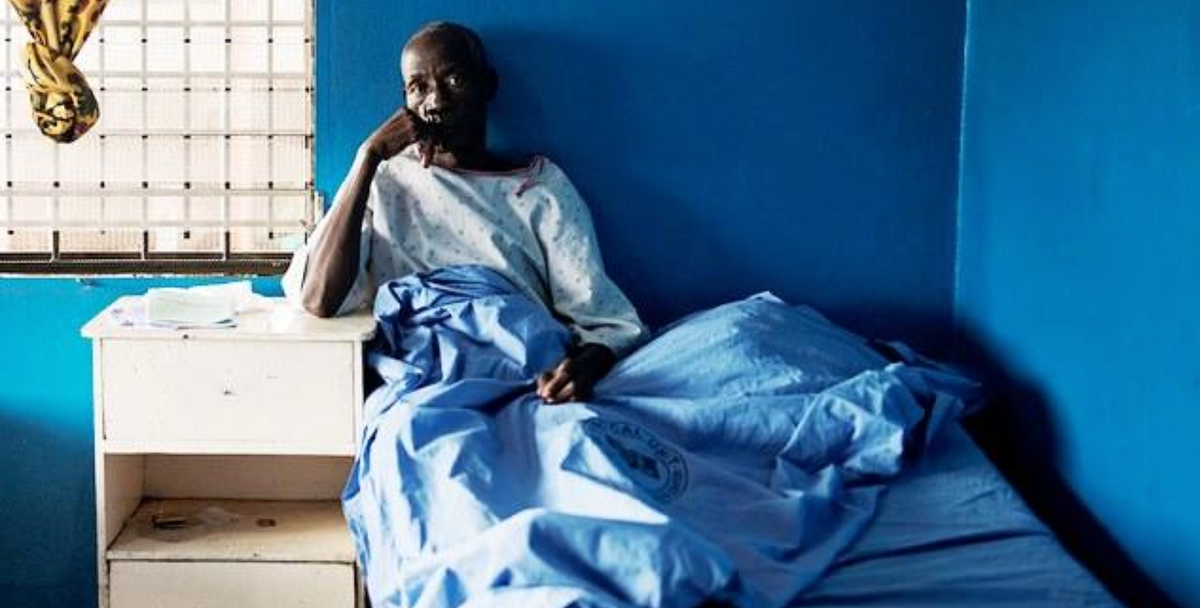
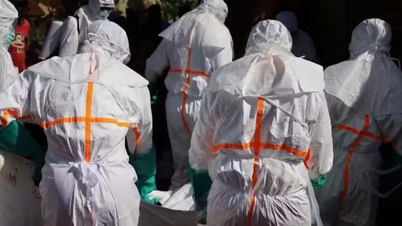
This virus, which is causing the outbreak, is very different from the Ebola strains previously studied. Photo: USAID
Ebola: When the "familiar face" dons a new suit of armor.
To understand why modern medical measures are ineffective, we need to go back in history to 1976, when the Ebola virus was first discovered near the Ebola River (in the former Zaire, now the Democratic Republic of Congo). That same year, another deadly hemorrhagic fever outbreak occurred in Sudan. Although patients in both locations exhibited identical clinical symptoms, genetic sequencing revealed they were two completely separate species: Orthoebolavirus zairense (Zaire strain) and Orthoebolavirus sudanense (Sudan strain).
Half a century has passed, and the world of viruses continues to thrive. In 2007, in Bundibugyo district (Uganda), a new strain of Ebola emerged, infecting 149 people. This strain differed genetically by more than 30% from its two predecessors and was named Orthoebolavirus bundibugyoense (Bundibugyo strain).
After a long period of dormancy, this same Bundibugyo strain has returned and caused a pandemic with over 900 infections this month.
The crux of the matter is that all the expensive vaccines and antibody therapies developed worldwide over the years are only effective against the Zaire strain. Against a Bundibugyo strain with a genetic structure that is more than 30% different, these artificial immune barriers are completely "blind." Public health officials realize they are facing an old enemy, but one with a completely new armor.

Microscopic image of a hantavirus known as Sin Nombre virus, which caused an epidemic in the West in 1993. Photo: Science Source
Hantavirus and its "breakthrough" mutations
The concerns don't stop in Africa. On the other side of the globe, Hantavirus—named after the Hantan River in South Korea since 1978—is also demonstrating its unpredictable ability to mutate.
In nature, Hantavirus has a level of biodiversity far exceeding that of Ebola. While only six species of Ebola relatives are recognized, Hantavirus has evolved into at least 38 different species belonging to the genus Orthohantavirus , lurking in rodents worldwide. Some species attack the kidneys, others destroy the heart and lungs. Its danger spares no one. Last year, Betsy Arakawa (wife of legendary actor Gene Hackman) died in New Mexico after contracting a strain of Hantavirus called Sin Nombre . Hackman himself died a few days later.
Regarding the outbreak on the MV Hondius cruise ship, in-depth testing identified the culprit as a variant of the Andes virus (belonging to the Orthohantavirus andesense species). This is the only "rebellious child" in the Hantavirus family capable of direct human-to-human transmission.

Earlier this month, scientists captured rats in Ushuaia, Argentina, to determine if the hantavirus had spread to the area. Photo: AFP/Getty Images
"It appears that certain specific genetic mutations, under certain conditions, have allowed the Andes virus to break through species boundaries and spread from person to person. But at the moment, no one knows exactly what those mutations are," Jens Kuhn told The New York Times.
Immediately after the incident on the MV Hondius, scientists in Argentina and Chile launched an emergency operation, trapping wild rats in the southernmost Ushuaia region to sequence their genes, in order to find out how far this dangerous variant had spread in the wild.
A warning from the invisible world.
The simultaneous appearance of these two distinct outbreaks is a harsh blow to human complacency. Jens Kuhn cites the example of the Tai Forest virus , a strain of Ebola that recorded only one case in 1994 when a scientist dissected it and identified it as wild. Since then, the virus has never reappeared.
"I'm certain that virus is still lurking somewhere deep in the jungle, but nobody's paying attention because it's only caused one case so far. That's a huge mistake," Kuhn warned. The virus classification system isn't a game of naming by academics; it's a life-or-death map for humanity to locate its enemy.
This virologist also offered some blunt advice to the media and public health agencies: Stop calling the current outbreak generally "the Ebola virus outbreak." Instead, call it precisely "the Bundibugyo virus."
"If people equate the Bundibugyo virus with ordinary Ebola, they will become complacent and think: 'Oh, we already have drugs and vaccines, there's nothing to fear.' But the reality is we don't have anything yet," Jens Kuhn emphasized.

Microscopic image of Ebola virus particles. Six Ebola-like viruses are known. Photo: Science Source
The world of viruses around us is a vast ocean with millions, even trillions, of undiscovered species. What humans know is only the tip of the iceberg. As climate change, urbanization, and global trade narrow the gap between humans and wildlife, viral "breakthroughs" will become increasingly frequent.
The Hantavirus outbreak on the MV Hondius and the Ebola Bundibugyo strain in Africa serve as a stark reminder. Without expanding global epidemiological surveillance and investing more deeply in studying viral evolution, we will forever lag behind pathogens. And that one step could cost thousands of lives.
Source: https://phunuvietnam.vn/the-gioi-virus-dang-bien-doi-kho-luong-238260529130940586.htm
![[Image] Hanoi Police officially crowned champions of V-League 2025/2026](https://vphoto.vietnam.vn/thumb/1200x675/vietnam/resource/IMAGE/2026/05/31/1780244769054_ndo_br_039d561b692be875b13a-jpg.webp)
![[Photo] Solemn bathing ceremony and Buddha procession in Hue](https://vphoto.vietnam.vn/thumb/1200x675/vietnam/resource/IMAGE/2026/05/31/1780228263543_1-jpg.webp)
![[Photo] Admire the coral "masterpiece" amidst the million-year-old heritage of Dak Lak province.](https://vphoto.vietnam.vn/thumb/1200x675/vietnam/resource/IMAGE/2026/05/31/1780221235105_anh-man-hinh-2026-05-31-luc-16-53-27.png)


![[Photo] The General Secretary, President and his wife begin their state visit to the Philippines.](https://vphoto.vietnam.vn/thumb/1200x675/vietnam/resource/IMAGE/2026/05/31/1780230559452_anh-man-hinh-2026-05-31-luc-19-28-11.png)



















![[Video] Sunset at Lap An Lagoon – Where the sun sets over the fishing nets](https://vphoto.vietnam.vn/thumb/340x192/vietnam/resource/IMAGE/2026/05/31/1780192137701_beach-landscape-sea-water-nature-grass-745871-pxhere-com.jpeg)



































![[Photo] Admire the coral "masterpiece" amidst the million-year-old heritage of Dak Lak province.](https://vphoto.vietnam.vn/thumb/402x226/vietnam/resource/IMAGE/2026/05/31/1780221235105_anh-man-hinh-2026-05-31-luc-16-53-27.png)































Comment (0)