

On March 14, the Politburo met and agreed on the policy of rearranging and reorganizing administrative units at all levels and building a two-tiered model of local government organization, including a plan to merge some provinces, abolish the district level, and merge many communes.
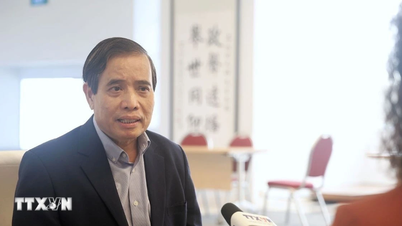
Regarding this issue, Dr. Tran Anh Tuan, President of the Vietnam Association of Administrative Sciences; Member of the Presidium of the Central Committee of the Vietnam Fatherland Front; former Deputy Minister of the Ministry of Interior , had an exchange with Dai Doan Ket newspaper.
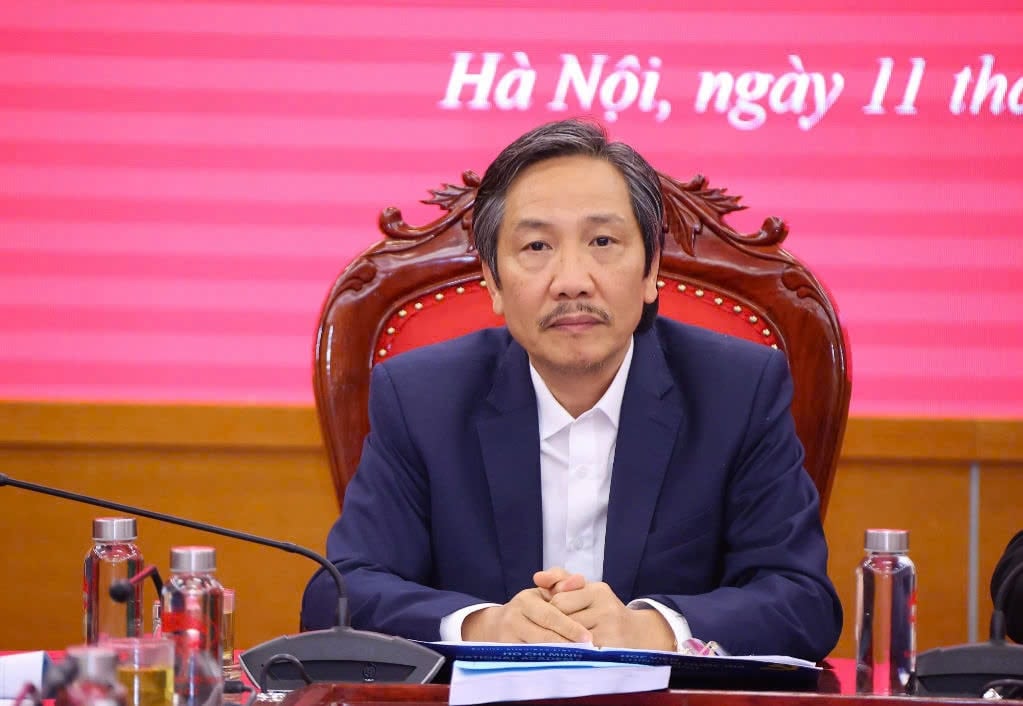
PV: Sir, how do you assess Conclusion 127-KL/TW (Conclusion 127) of the Politburo and the Secretariat on merging provinces and abolishing intermediate levels?
Dr. Tran Anh Tuan: The issue of merging provinces and reducing the number of local government levels was identified by our Party several years ago and included in Resolution 27 (6th Central Committee Meeting, 13th Congress, November 9, 2022) on continuing to build and perfect the socialist rule of law in Vietnam in the new period. In the current revolution to streamline the organizational structure, merging provinces and eliminating intermediate levels, implementing a two-tiered local government system, is the correct implementation of the tasks and solutions set forth in Resolution 27, aiming to ensure the arrangement and restructuring of agencies and organizations throughout the political system according to the goal of "Small - Compact - Strong - Efficient - Effective - Effective".
The contents of Conclusion 127 of the Politburo and the Secretariat on the merger of provinces and the abolition of intermediate levels demonstrate a spirit of speed, efficiency, decisiveness, and effectiveness, with specific and clear objectives, requirements, content, and implementation timelines, linking tasks with the responsibilities of each Party committee, agency, and unit. The abolition of intermediate levels is not only implemented within the state apparatus and local governments but also within the agencies of the Vietnam Fatherland Front, political and social organizations, and mass organizations assigned tasks by the Party and the State after the mergers and consolidations. Experience from many countries around the world, as well as in Vietnam during the 1976 period, shows that mergers and consolidations aim to streamline the apparatus, improve the efficiency of national governance, and serve the development needs of the country.
Therefore, it can be affirmed that Conclusion 127 of the Politburo and the Secretariat is a very correct and timely directive, serving as the basis and foundation for unifying will and action, resolving obstacles or remaining concerns about merging provinces and eliminating intermediate levels in the revolution to streamline the organizational structure.
With many years of experience working at the Ministry of Interior, what kind of merger do you think would increase efficiency?
- I believe that for the merger to be effective, much work needs to be done, but there are several fundamental issues that need attention. First, we must adhere to the Party's directives; the Central Committee needs a Resolution on the provincial merger, and the National Assembly needs to issue a Resolution to implement it; we must promote the role and responsibility of Party committees at all levels, ensuring unity in understanding and action for the goal of development. Second, there must be close coordination among the agencies and organizations assigned tasks when developing the merger plan. Third, we must unify the name and "capital" of the merged provincial-level administrative unit. Fourth, we must build a streamlined organizational structure for the agencies and organizations of the political system (Party, government, Vietnam Fatherland Front, socio-political organizations, etc.). Fifth, we must evaluate and classify the staff of officials and civil servants to select and assign them to the new apparatus and implement policies for those who will no longer work due to the provincial merger. Sixth, there must be a plan for the use and management of equipment, assets, offices, public property, etc., to prevent waste after the merger. These are very important issues related to the political foundation, legal basis, awareness, unity, and the tasks that need to be done. In short, only with unity of purpose, strength, and determination will the merger achieve good results. When the locality develops and the country prospers in the new era, that is the success of the provincial merger.
Sir, could the merger of provinces reduce or alter the structure of socio-economic regions?
- Politburo member, Secretary of the Central Committee of the Communist Party of Vietnam, and Chairman of the Central Committee of the Vietnam Fatherland Front, Do Van Chien, emphasized at a social critique conference on the draft National Master Plan for the period 2021-2030 with a vision to 2050 that: The National Master Plan is the highest-level plan in Vietnam's planning system. The National Master Plan for the period 2021-2030, with a vision to 2050, is an extremely important document, completing the overall spatial and sectoral aspects of the country with a long-term vision. This is an important basis for planning the country's development in the coming years, ensuring efficiency and sustainability. Therefore, it can be seen that the merger of provinces must be carefully studied and linked to the master plan, regional plan, etc. Only then can the ultimate goal of merging provinces to create development space be ensured. Through mergers, new prerequisites are created, such as promoting decentralization and delegation of power; streamlining the administrative apparatus; Improving the quality of the staff and civil servants; opening up opportunities for the application of digital technology and artificial intelligence in the operations of state agencies. This will enhance the efficiency of local government operations, and promote socio-economic development at the local, regional, and national levels, in line with development strategies and planning until 2030, with a vision to 2050. Therefore, mergers cannot be said to reduce or alter the structure of approved socio-economic regions. On the contrary, merging provinces creates additional impetus to promote the effective implementation of development strategies according to overall planning and regional planning…
Thank you very much, sir!
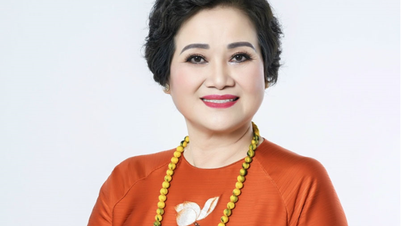
Associate Professor Bui Hoai Son - Member of the National Assembly, full-time member of the Culture and Education Committee of the 15th National Assembly:
The name must both ensure historical continuity and reflect the spirit of development.

The reuse of old names like Ha Bac, Hai Hung, Nam Ha, etc., during the provincial merger is a worthwhile option, as these names are deeply intertwined with the history, people, and memories of many generations. Hearing these names evokes memories of a period of development, cultural and social milestones of each locality. Restoring these names would create a sense of familiarity and closeness, making them more readily accepted by the people compared to completely new names. However, the question also needs to be asked: Are these old names still appropriate for the present and future? Society has changed significantly; each province and city, after separation, has developed its own distinct economy, culture, and even brand identity. Returning to the old names might create nostalgia, and would it truly reflect the identity of the new region?
Furthermore, if old names are reused, a clear explanation of their meaning is necessary. It shouldn't be simply a matter of restoring them out of familiarity, but rather ensuring that the name retains its historical and cultural value and can represent the entire merged locality. Many place names in Vietnam are linked to long-standing traditions, reflecting geographical features, customs, or spiritual values formed over generations. When choosing a new name, consideration should be given to whether it continues this heritage. Naming based on ancient names or place names that existed previously can be a reasonable approach, provided it remains relevant to current development. In addition, in my opinion, naming new provinces or cities in Vietnam in the future should adhere to principles that both ensure historical continuity and reflect the spirit of development in the new era.
H. Mai (recorded)
Mr. Nguyen Tien Dinh - former Deputy Minister of the Ministry of Interior, Vice Chairman of the Economic Advisory Council (Central Committee of the Vietnam Fatherland Front):
Enhancing the conditions for communes to accomplish multiple tasks.

When merging, it is necessary to ensure that mechanisms and policies for training and development, as well as other mechanisms and policies, are in place to motivate commune-level officials to meet the numerous demands and tasks in the coming period. Furthermore, in addition to decentralization and delegation of power, it is necessary to increase investment in the conditions for commune-level officials to effectively perform their assigned functions and tasks, such as: financial resources, budget, operating conditions, office space, machinery, equipment for digitalization, and other factors to meet the requirements.
T.Nhung (recorded)
Source: https://daidoanket.vn/chu-truong-sap-nhap-tinh-bo-cap-trung-gian-the-hien-tinh-than-nhanh-quyet-liet-va-hieu-qua-10301590.html
![[Image] Pleasant weather helps students enter the 10th grade entrance exam with confidence.](https://vphoto.vietnam.vn/thumb/1200x675/vietnam/resource/IMAGE/2026/05/29/1780034401612_ngay-1-thi-lop-10-minh-duy-8-5009-jpg.webp)
![[Photo] Ba Lang An Lighthouse - the "eye of the sea" amidst the "rock museum" of Quang Ngai province.](https://vphoto.vietnam.vn/thumb/1200x675/vietnam/resource/IMAGE/2026/05/29/1780038698840_anh-man-hinh-2026-05-29-luc-14-10-42.png)





































































Comment (0)