

 |
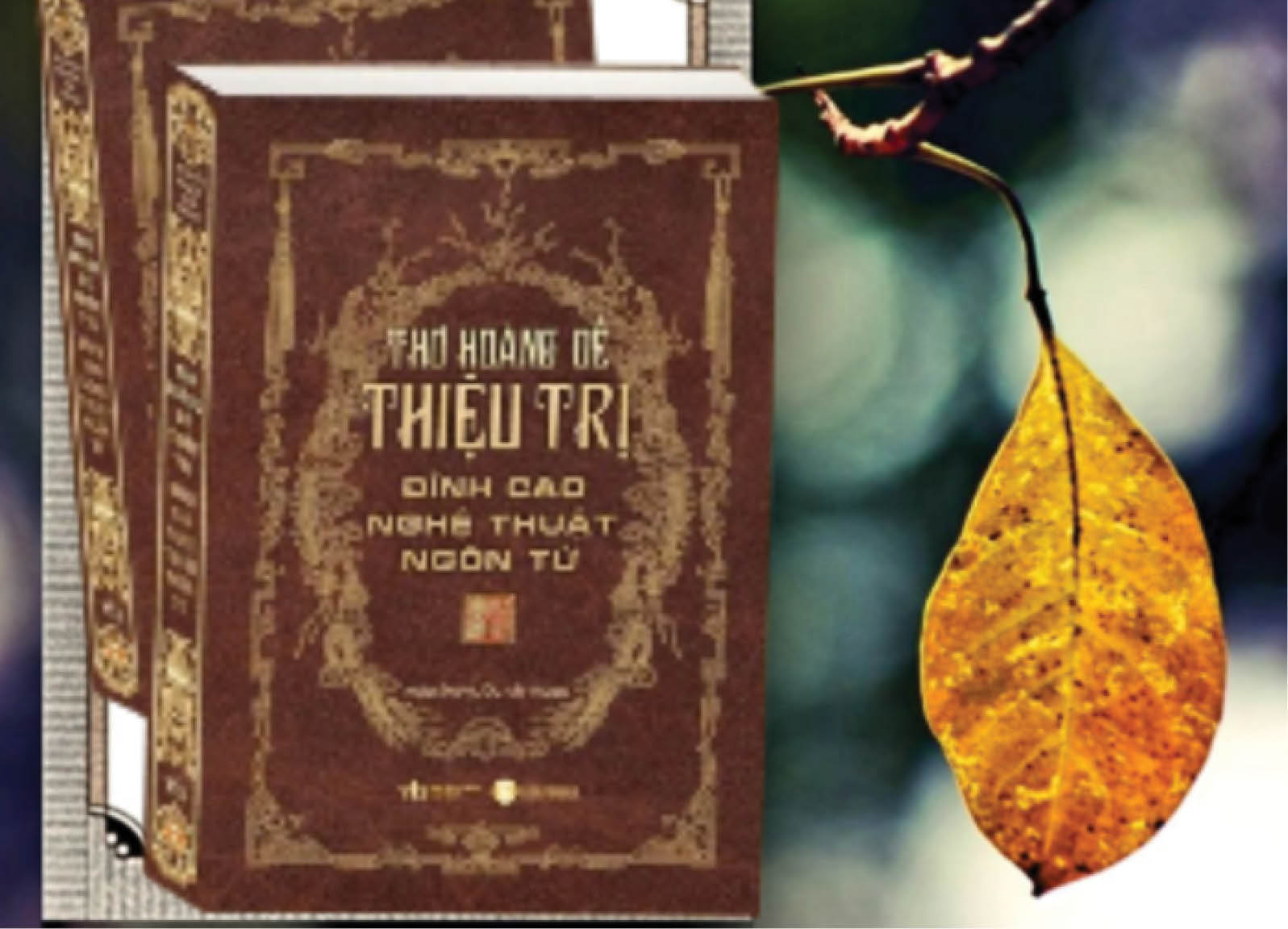
| The book "Emperor Thieu Tri's Poetry: The Pinnacle of Verbal Art" by author Nguyen Phuoc Hai Trung. Photo: Bao Phuoc |
He is the most prolific poet in Vietnam to date; the most creative and versatile in applying poetic forms during the medieval period; the one who loves poetry more than many other "lovable" things; the one who has explored the most themes in his works; the one who has pondered and reflected the most on poetic creation… and much more.
Notably, King Thieu Tri repeatedly expressed his viewpoint: “Poetry is to express aspirations, primarily to cultivate people's character […] Poetry is in the heart, it is the aspiration; it is expressed through words; it is breath used to describe character, it is the essence of education, it is the heart of heaven and earth […] All poems are written by me, reflecting on events as I think of them; I put pen to paper and the poems are completed. They are all reminders, admonitions, respectful encouragements, and sincere wishes, from the home to the nation, both officials and people, teaching and practicing, hoping for the prosperity of the country.”
After quoting verbatim several passages from the king's "self-reflections," Nguyen Phuoc Hai Trung offered a "general assessment of King Thieu Tri's conception of poetry" in five points: Poetry is a tool for education and self-cultivation…; Poetry is closely linked to the principles of governance and patriotism…; Poetry is a combination of emotion and responsibility…; Poetry must possess both emotion and technique…; Poetry is a form of cultivating diligence…
Furthermore, Nguyen Phuoc Hai Trung argues that King Thieu Tri was "a literary critic and researcher with profound thinking [...] he did not blindly believe books, but wanted to distinguish between 'genuine intellectuals' and 'legends/myths'. This viewpoint shows that he was a rare emperor with the capacity for textual criticism, ahead of his time..."
During the book launch of "Emperor Thieu Tri's Poetry: The Pinnacle of Verbal Art" at the Hue Book and Culture Club last September, poet Nguyen Khoa Diem, like many other speakers, highly praised the meticulous research of Nguyen Phuoc Hai Trung. I was particularly interested to hear the poet – former Head of the Central Committee's Ideology and Culture Department – mention "Sound Quality" as one of the 28 "virtues" that King Thieu Tri demonstrated when writing the collection of poems "On the Twenty-Eight Chapters of Virtues."
According to Nguyen Phuoc Hai Trung, this is "a collection of poems with profound meaning about human morality and character..."; the 28 "virtues" are: Sage - Virtuous - Kind - Righteous - Polite - Intelligent - Honest - Filial - Loyal - Harmonious - Forgiving - Fair - Upright - Talented - Skillful - Incorruptible - Valiant - Careful - Thrifty - Diligent - Intelligent - Eruditionful - Humble - Respectful - Resolute - Gentle - Noble - Integrity. Perhaps no one has ever outlined such a complete set of "virtues," and it would take a poetic talent like King Thieu Tri to express those 28 "standards" in poetry. As I understand it, the poet Nguyen Khoa Diem focused on "Gentle" because this aspect is still less considered – other virtues, such as integrity and thrift, have been discussed by many.
According to Nguyen Phuoc Hai Trung, "subtlety" should be understood as "a quiet, discreet, yet profound quality, reflecting a strong inner self and continuous growth." And although the collection of poems appeared about 180 years ago, it still "retains its universal meaning and value, relevant to any era…".
Also at the book launch, Hue researcher Nguyen Dac Xuan suggested: With such immense value and volume of poetry, could cultural agencies prepare a dossier to propose that UNESCO recognize the poetry of King Thieu Tri as a cultural heritage?
Personally, I think that before going out into the world , the important thing is to find a way to bring the values of the more than 3,000 poems of the king, which are virtually unknown and even fewer have read in their original form, to the public, primarily tourists visiting Hue and interested in the cultural heritage of the Nguyen Dynasty...
Let's try a small initiative: Display and sell this research at historical sites such as the Imperial Citadel and the Tomb of Emperor Thieu Tri. To make this promotion effective, in this digital age, I think a video should be created, similar to the beautifully crafted one Nguyen Phuoc Hai Trung produced for the book launch. Although very few people can read the poems in classical Chinese, the way they were displayed as beautifully written texts, and the poet's guidance on the emperor's artistic techniques using lighting, made this "academic" work more accessible to the public.
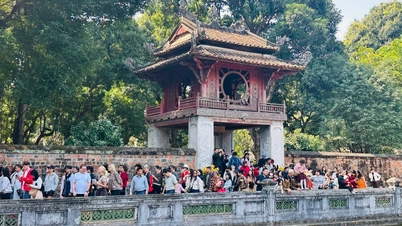
It is known that, thanks to this modern promotional method, the presentation of the poetry of King Thieu Tri on September 14, 2025, organized by the Hue City Association in Hanoi and the Hue Culture Club in collaboration with the Van Mieu National University Cultural and Scientific Activities Center and Thaihabook, was very successful… Incidentally, I would like to raise the question: Why can't such a presentation be held at the Vietnam Literature Museum – a cultural destination that has recently attracted many visitors? And if I'm not mistaken, the Vietnam Literature Museum has ample space to respectfully present the works of Nguyen Trai, Nguyen Du, Ho Xuan Huong, Ho Chi Minh, To Huu… but it lacks the poetry of King Thieu Tri.
Source: https://huengaynay.vn/van-hoa-nghe-thuat/tho-vua-thieu-tri-nhung-gia-tri-chua-phai-ai-cung-biet-161831.html
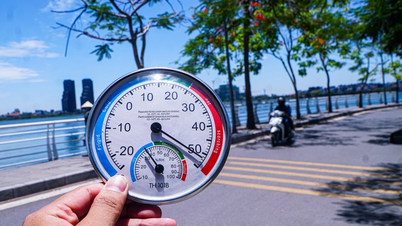
![[Image] Hanoi's urban life under the challenge of a "scorching hot" environment](https://vphoto.vietnam.vn/thumb/1200x675/vietnam/resource/IMAGE/2026/05/25/1779706979265_nang-nong-t5-2026-minh-duy-7-4636-jpg.webp)
































































Comment (0)