

Harsh weather conditions, months without rain, and a scarcity of irrigation water have caused tea plants in some areas of Thai Nguyen province to wither and die, making recovery impossible. In tea-growing regions with reliable irrigation, farmers followed proper care techniques, but yields and production also decreased compared to previous years.
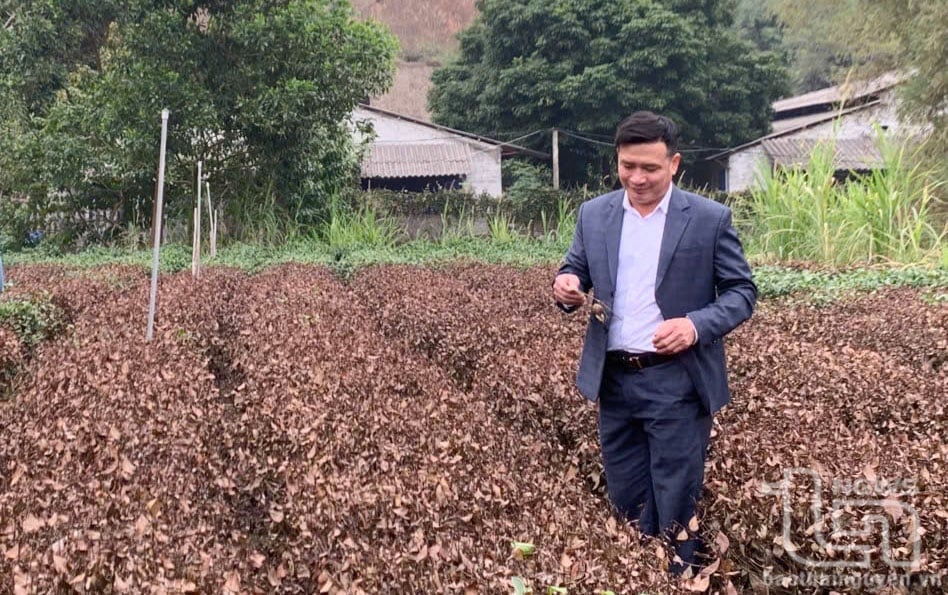 |
| A tea plantation in Cau Gang hamlet, Van Yen commune, Dai Tu district, has withered and died due to lack of water. |
Walking along the Cai stream in Van Yen commune (Dai Tu district), it wasn't difficult for us to come across tea plantations that were completely withered or scorched. Mrs. Nguyen Thi Tan, from Cau Gang hamlet, lamented: "I've watered them many times, but it's no use. More than half of my two acres of tea have died. This year's drought is terrible; I've never seen tea plants die like this before."
It is known that Van Yen commune has over 130 hectares of land planted with tea. This is the main crop, providing the primary source of income for more than 50% of households in the entire commune. In recent years, Van Yen has focused on many solutions to improve the quality of tea, especially encouraging people to form cooperatives and production groups, and cultivate tea according to VietGAP standards with an organic orientation. However, this year's harsh weather has caused a sharp decrease in tea yield and production in the area, resulting in losses for many farmers.
According to preliminary statistics, Van Yen district has about 1.5 hectares of tea plants that have completely withered or been scattered in the Nui, Giua 1, and Bau hamlets. According to Mr. Vu Van Thu, Chairman of the Farmers' Association of the commune: These tea gardens were originally alluvial land, located along the Cai stream, with fertile soil on top and many rocks underneath. If the weather had been favorable with rain like in previous years, the tea would have thrived, but the prolonged drought this year has made it very difficult for the tea plants to survive.
According to Mr. Vu Van Cau, head of Cau Gang hamlet, the area of dead tea plants is concentrated in households that are not specialized in tea cultivation and still practice entirely traditional methods such as spraying pesticides and applying inorganic fertilizers directly to the tea plants.
In response to this situation, the commune's Farmers' Association, in coordination with agricultural extension officers, reviewed the situation and guided households to continue spraying water and supplementing nutrients for the plants, waiting for favorable weather conditions to replant tea...
The last months of 2024 and the beginning of 2025 were difficult for tea growers due to the impact of Typhoon No. 3 and the subsequent long period without rain. In the context of harsh weather, many families, especially cooperatives specializing in tea cultivation and caring for tea plants according to VietGAP and organic standards, made efforts to adapt by proactively securing irrigation water sources and enhancing plant nutrition with fertilizers and microbial products. As a result, the tea growing area remained stable and continued to develop, but yields and production were significantly lower than in previous years.
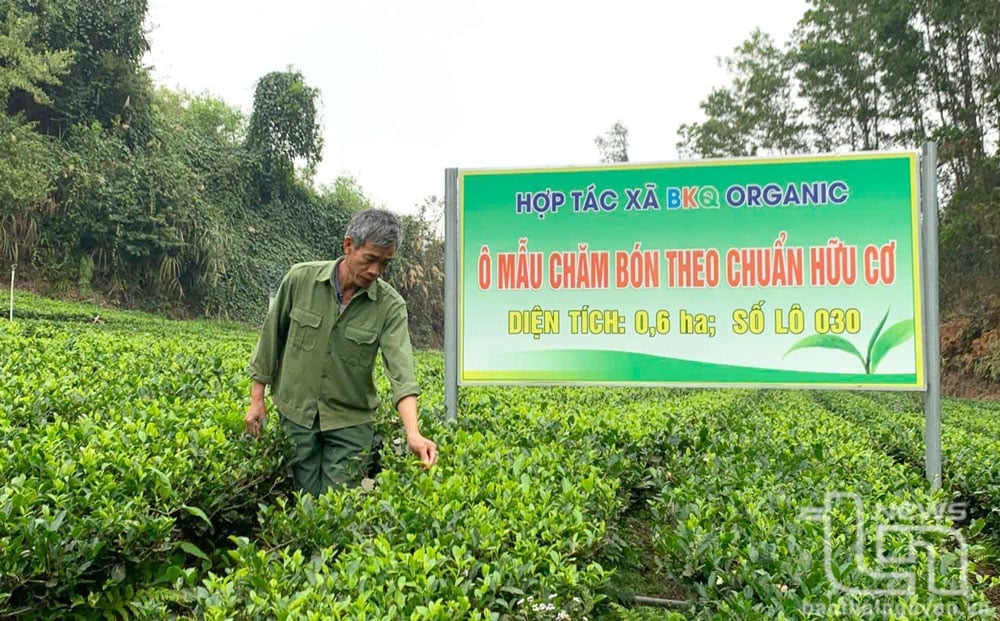 |
| Thanks to proactive irrigation, consistent moisture retention, and the application of organic microbial fertilizers, the tea garden of Mr. Nguyen Xuan Khu's family (Khe Mo commune, Dong Hy district) continues to thrive, although the yield has decreased by 40% compared to the previous year. |
Mr. Hoang Van Tuan, Director of Phu Do Safe Tea Cooperative (Phu Luong), informed: The cooperative is currently cultivating tea on an area of 15 hectares. Because the tea is regularly irrigated and fertilized with self-composted organic fertilizer made from biochar, manure, and agricultural by-products, it is still thriving. However, in previous years, the spring tea crop was good at this time, with the LPD1 hybrid tea variety having thick buds and higher yields than the main crop. But this year, the tea is growing slowly, the bud density is low, and the yield has decreased by 60-70%. For his family's 7,000m2 plot, the yield has decreased by 250-300kg of fresh tea leaves. However, the more difficult the situation, the more we must find ways to overcome it because we have chosen to dedicate ourselves to tea cultivation," Mr. Tuan shared.
Meanwhile, at Thuy Thuat Tea Cooperative in Phuc Triu commune (Thai Nguyen City), the tea hills, which were fertilized and pruned before Tet, still look exactly as they did when they were first pruned. Ms. Pham Thi Thuy, Director of the Cooperative, said: "If it rains in the coming days, the tea will be ready for harvest soon, but I predict the yield will decrease by more than 50% compared to last year."
Thai Nguyen province has 260,000 farmer members, of which more than 91,000 households are involved in tea cultivation, production, and processing. In 2024, the province developed a tea production area of 22,200 hectares; the output of fresh tea leaves reached over 270,000 tons per year. Our investigation revealed that tea plants dying or developing poorly are mainly hybrid varieties, tea grown on sandy or rocky soil; those lacking a reliable water source and relying primarily on rainwater and streams; and those not receiving the proper investment and care according to the standards and techniques recommended by specialized agencies.
Agricultural production in general, and tea production in particular, is inevitably strongly affected by weather. What farmers can do is change their farming habits, enhance biological control measures; apply scientific and technological advancements in a way that suits the characteristics and natural conditions, balance the plant ecosystem; create suitable shade areas for tea plants, helping to regulate humidity and mitigate negative impacts from the external environment…
To help tea plants adapt to prolonged drought conditions, many farmers have also requested government support in building water reservoirs or industrial wells, installing irrigation systems, and providing a reliable power supply to better care for their tea plants.
Source: https://baothainguyen.vn/kinh-te/202502/thoi-tiet-khac-nghiet-nguoi-trong-che-gap-kho-ef30e6f/

























![[Photo] Reception to welcome General Secretary and President To Lam and his wife on their State visit to the Philippines](https://vphoto.vietnam.vn/thumb/1200x675/vietnam/resource/IMAGE/2026/06/01/1780295488620_vna-potal-chieu-dai-chao-mung-tong-bi-thu-chu-tich-nuoc-to-lam-va-phu-nhan-tham-cap-nha-nuoc-toi-philippines-8798060-7855-jpg.webp)






























































Comment (0)