

Over 10 years of preparation for the E10 gasoline roadmap.
According to Mr. Bui Ngoc Bao, Chairman of the Vietnam Petroleum Association, Vietnam's biofuel program was prepared very early on through Decision No. 53/2012/QD-TTg of the Prime Minister dated November 22, 2012: On the promulgation of the roadmap for applying the blending ratio of biofuels with traditional fuels.
According to Mr. Bao, at that time, many countries around the world had moved beyond the E5 gasoline phase and begun implementing E10 gasoline. However, given Vietnam's technical infrastructure and the characteristics of its transportation system, especially the large number and variety of motorbikes, Vietnam chose a cautious approach. Starting with E5 gasoline was a suitable step to allow Vietnam time to assess the practical situation before moving on to E10 gasoline.
After more than a decade of implementing E5 gasoline, according to the Vietnam Petroleum Association, Vietnam has sufficient practical basis to reconsider and reassess the biofuel development roadmap. Based on this, the transition to E10 gasoline is presented as the next step in this roadmap. Currently, most countries in Europe, America, and Southeast Asia such as Thailand and the Philippines have been using E10 gasoline for a long time, and are even moving towards E15 or E20 gasoline.
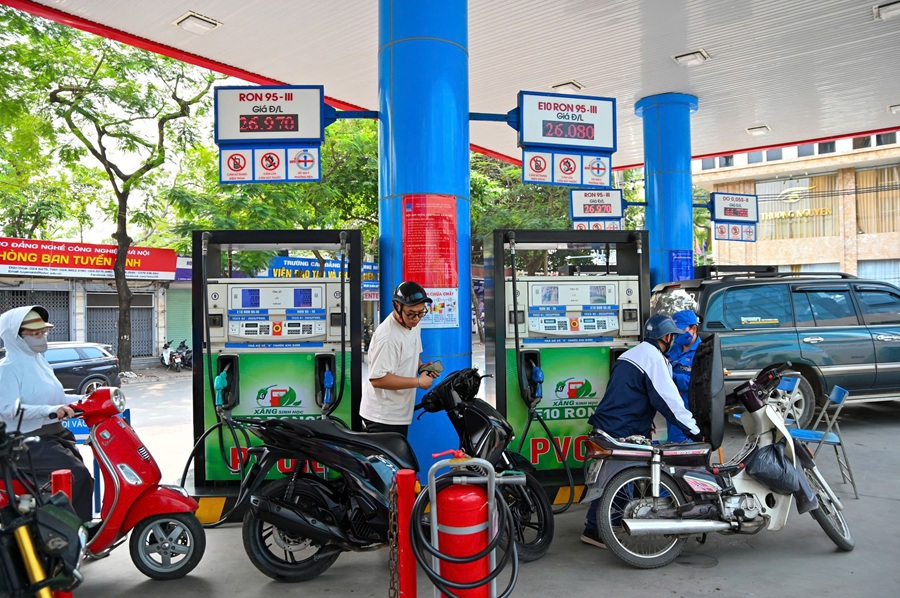 |
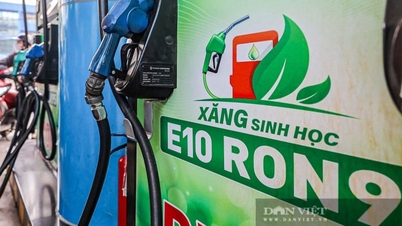
| People refuel at a gas station of the Vietnam Oil Corporation in Hanoi . Photo: HOANG DUONG |
According to Mr. Bui Ngoc Bao, most major global automakers such as Mercedes-Benz, BMW, Toyota, and many Japanese manufacturers have approved the compatibility of their vehicles with E10 gasoline. Vehicles manufactured from around 2010-2011 onwards are generally compatible with E10 gasoline. However, according to the Vietnam Petroleum Association, the concerns of the public in recent times are not entirely unreasonable. Nevertheless, most of the issues that arise relate to the condition of the vehicles or their driving habits.
E10 gasoline has a higher detergent effect than regular mineral gasoline. When used, the fuel can carry away dirt and grime that has accumulated over time in the fuel tank, fuel lines, or fuel injection system of the vehicle. This is especially likely to happen with older vehicles that have not been regularly maintained. The association recommends that users of older vehicles, especially those with carburetors manufactured before 2000, should clean their fuel systems, replace fuel filters, and perform basic maintenance before switching to E10 gasoline. Meanwhile, for modern vehicles using electronic fuel injection, the risk of technical problems is considered very low if the vehicle is maintained according to the manufacturer's recommendations.
There's no need to "shake the fuel tank" when using E10 gasoline.
One piece of information recently circulating on social media is that using E10 gasoline requires "shaking well" or a special manual blending process. According to Mr. Bui Ngoc Bao, this information has no scientific basis. "In reality, the blending process of E5 or E10 bioethanol gasoline is carried out using modern technology and equipment to ensure that ethanol is uniformly mixed with mineral gasoline according to the prescribed technical ratio. Therefore, the information suggesting that special procedures such as 'shaking well' are needed during use or blending of E5 or E10 gasoline is unfounded," Mr. Bao affirmed. Furthermore, all types of bioethanol gasoline must meet national technical standards and are subject to strict control by state management agencies before being released onto the market.
E10 gasoline quality: Needs to be assessed based on facts and science.
Feedback from many consumers indicates that the majority of responses after using E10 gasoline have been quite positive. Mr. Nguyen Van Viet (Bo De Ward, Hanoi City) said that after directly using E10 gasoline, he did not notice any negative differences in vehicle operation. The car still accelerates and runs stably as before.
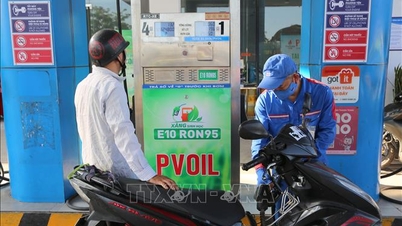
According to Ms. Vuong Thi Kim Thinh, Store Manager of PVOIL Nghia Tan Gas Station (Hanoi), initially, when information about the nationwide switch to E10 gasoline emerged, some people rushed to find gas stations still selling traditional RON 95 gasoline due to negative information on social media. However, after being clearly explained about the composition and quality of the fuel, most customers felt reassured. In fact, E10 gasoline only contains 10% ethanol, while 90% is still RON 95-III base gasoline, so the fuel quality is still guaranteed. Therefore, after being clearly explained, many customers still fill up their tanks normally, even to the brim, without any hesitation. While previously the store consumed about 25-27 m³ of E10 gasoline per day, now the production has increased to about 50 m³/day, almost double the previous amount.
The transition to E10 gasoline is an inevitable trend in the process of reducing emissions and developing clean fuels in Vietnam. However, for the transition to proceed smoothly, the most important thing is that people have access to complete, objective scientific information instead of being influenced by rumors or unverified information on social media. In addition, gasoline and oil businesses need to continue investing in technical systems, strengthening communication, and supporting consumers during the transition to biofuels.
Source: https://www.qdnd.vn/kinh-te/cac-van-de/thong-tin-lac-binh-xang-e10-la-khong-co-co-so-1041957


![[Photo] Admire the coral "masterpiece" amidst the million-year-old heritage of Dak Lak province.](https://vphoto.vietnam.vn/thumb/1200x675/vietnam/resource/IMAGE/2026/05/31/1780221235105_anh-man-hinh-2026-05-31-luc-16-53-27.png)
![[Photo] The General Secretary, President and his wife begin their state visit to the Philippines.](https://vphoto.vietnam.vn/thumb/1200x675/vietnam/resource/IMAGE/2026/05/31/1780230559452_anh-man-hinh-2026-05-31-luc-19-28-11.png)
![[Photo] Solemn bathing ceremony and Buddha procession in Hue](https://vphoto.vietnam.vn/thumb/1200x675/vietnam/resource/IMAGE/2026/05/31/1780228263543_1-jpg.webp)
![[Image] Hanoi Police officially crowned champions of V-League 2025/2026](https://vphoto.vietnam.vn/thumb/1200x675/vietnam/resource/IMAGE/2026/05/31/1780244769054_ndo_br_039d561b692be875b13a-jpg.webp)












![[Video] Sunset at Lap An Lagoon – Where the sun sets over the fishing nets](https://vphoto.vietnam.vn/thumb/340x192/vietnam/resource/IMAGE/2026/05/31/1780192137701_beach-landscape-sea-water-nature-grass-745871-pxhere-com.jpeg)





































![[Photo] Admire the coral "masterpiece" amidst the million-year-old heritage of Dak Lak province.](https://vphoto.vietnam.vn/thumb/402x226/vietnam/resource/IMAGE/2026/05/31/1780221235105_anh-man-hinh-2026-05-31-luc-16-53-27.png)































Comment (0)