

BBK - After numerous failures in agricultural projects, and recognizing market demand, Mr. Ha Van Tam in Bac Lanh Chang village, Luc Binh commune, Bach Thong district, chose snail farming as his business direction and has achieved success.
Recognizing the increasing scarcity of snails while the market demand is high, Mr. Ha Van Tam proactively learned the techniques to develop this business model.
Initially, due to a lack of experience, the water treatment was not done properly, leading to snail deaths and poor growth. However, Mr. Tam persevered in learning more techniques… and finally, success came. After many years of "befriending" apple snails, his family's snail farming area has now reached 3,000 m² with two models in two different locations, yielding over 5 tons of snails per year.
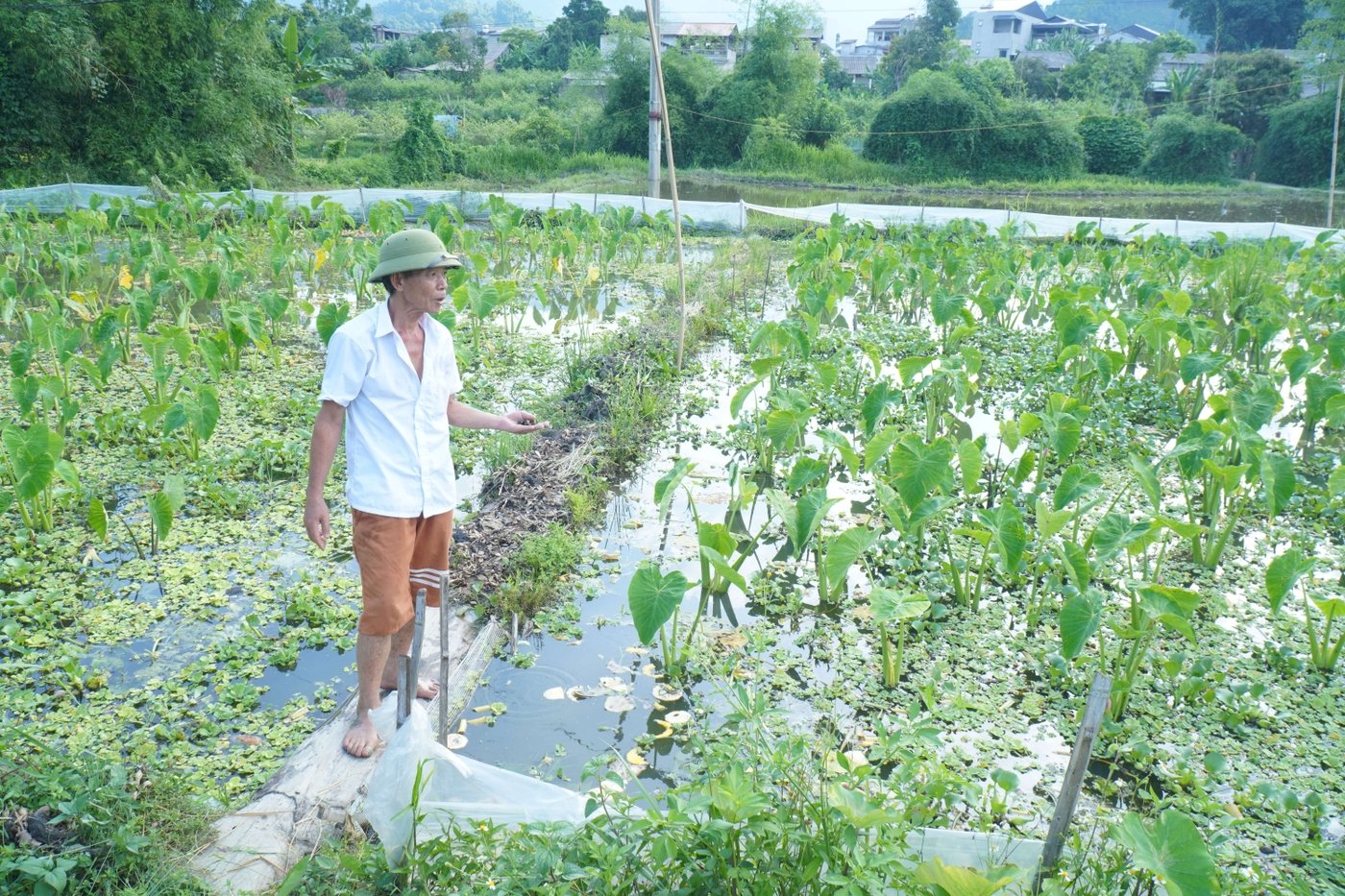 |
Raising apple snails is a new and promising direction for economic gain. |
To ensure the snails thrive and avoid diseases such as shell erosion, swollen siphons, and intestinal diseases, Mr. Tam said: "The amount of water in the snail pond must be sufficient, the water must be changed monthly, weeds must be cleaned, and biological products must be used to treat the pond bottom; pay attention to the food source, and avoid excess food that pollutes the snails' living environment."
Raising snails for commercial purposes requires extra careful attention. Both young and adult snails eat various types of soft-stemmed plants, gourds, loofahs, taro leaves, cassava leaves, etc., chopped into small pieces. They should be fed once a day in the evening. This ensures the snails grow well and are profitable.”
Mr. Ha Van Tam shared about the economic benefits of raising apple snails. |
Besides investing in ponds and purchasing initial stock, raising snails is not expensive because the main food source is duckweed, which farmers can supply themselves. This model also does not require much labor; snails only need to be fed once a day when the food runs out. Compared to other livestock, apple snails are easy to care for and provide a much higher income.
Initially, Mr. Tam imported snail eggs at a price of 800,000 - 1,000,000 VND/kg, incubated the eggs into baby snails, and then raised them in the fields to grow into commercial snails. The rearing time is 4 to 5 months before harvesting. Each 10,000 snail hatchlings will yield 2-3 quintals of mature snails. Thai pond snails sell for 100,000 VND/kg with a size of 3-10 snails/kg, while apple snails sell for 90,000 VND/kg with a size of 30-40 snails/kg.
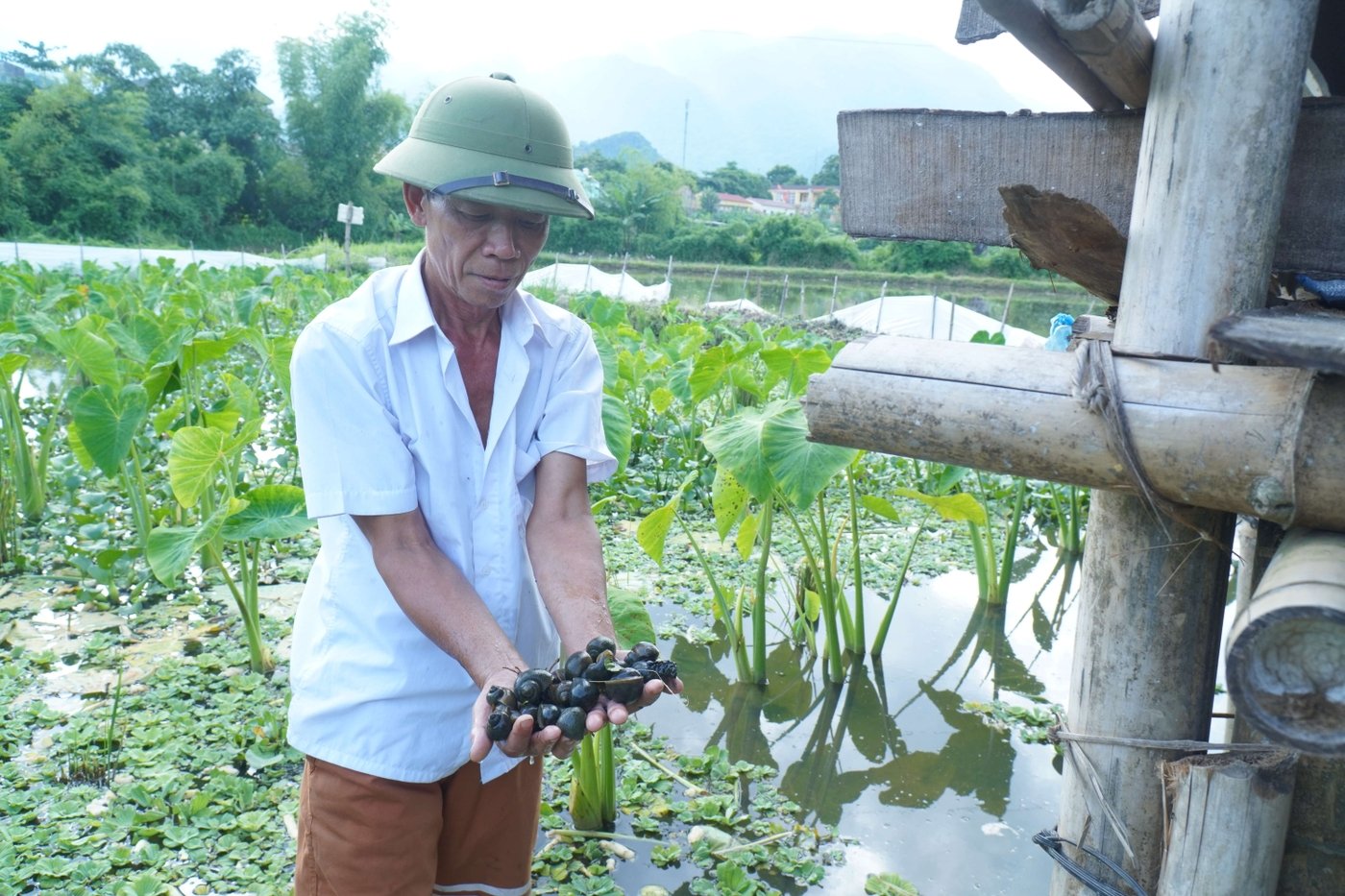 |
| Commercial snails in the ponds are thriving. |
Due to the specific weather conditions, snails can only be raised from March to September before being harvested. With high prices and significant profits, Mr. Tam has established a cooperative model with people in districts such as Cho Don, Ngan Son, and Ba Be… Currently, this model has nearly 700 members who purchase breeding stock to raise. Mr. Tam guarantees the purchase of the harvested snails and provides dedicated technical support to ensure maximum efficiency.
Mr. Nguyen Van Hau, Chairman of the People's Committee of Luc Binh commune, highly appreciated the effectiveness of Mr. Ha Van Tam's snail farming cooperative model. |
Raising snails for commercial purposes and supplying snail breeding stock is proving to be an effective economic development direction for low-lying rice paddies, suitable for the soil conditions of many localities. Mr. Ha Van Tam's economic model is very suitable for people to refer to and apply.
Source link






![[Update] Announcement Ceremony for the Merger of Provincial and Commune-Level Administrative Units in Thai Nguyen and Bac Kan Provinces](https://vphoto.vietnam.vn/thumb/402x226/vietnam/resource/IMAGE/2025/6/30/0de85cb56da843d897e30016b57b1412)


















































































Comment (0)