

The Ministry of Interior is coordinating with other ministries and agencies to research and propose salary policies and adjust some allowance regimes for officials, civil servants, public employees, armed forces personnel, and workers after the reorganization of the organizational structure and the two-tiered local government system.
The salary is not enough to live on.
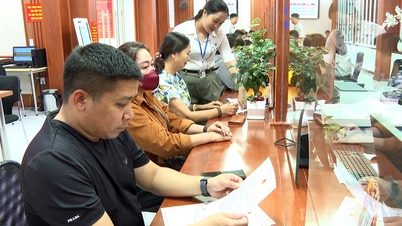
Due to personnel restructuring, Mr. D.T.D (a civil servant working in Ho Chi Minh City) was forced to change his workplace from Binh Duong Ward to Ben Thanh Ward. This relocation caused significant disruptions to his daily life. Every day, he has to leave home very early, walk nearly 30 minutes to the bus stop, and then travel by bus for almost 2 hours to get to work. Including both the commute and travel time, he spends approximately 5 hours each day.
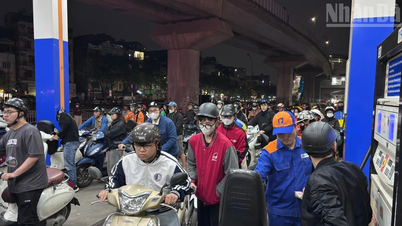
Due to the nature of his work, Mr. D. frequently has to travel to the field but lacks personal transportation, so he has to use ride-hailing services, incurring significant additional costs while his income remains unchanged. Furthermore, after the merger, the unit's staff decreased significantly, leading to a noticeable increase in workload. "The time and expenses spent on work are increasing, leaving me with almost no time for my family. In my opinion, besides assigning and arranging work more efficiently, the income of officials and civil servants needs to be improved accordingly to provide more motivation for dedication," Mr. D. expressed.
Wage policy is also a matter of particular concern to the people, especially in the context of fluctuating living costs. In a petition sent to the Ministry of Interior, voters in Ninh Binh province argued that after the implementation of the two-tiered local government model, the workload at the grassroots level has increased significantly, while remuneration, income, and allowances remain low. In addition to proposing timely adjustments to wage and allowance policies, voters in this province requested a comprehensive and effective wage reform, in line with the roadmap outlined in Resolution 27/2018 of the Central Committee of the Communist Party of Vietnam on reforming wage policies for officials, civil servants, armed forces personnel, and employees in enterprises.
From July 2024, the basic salary was adjusted from VND 1.8 million/month to VND 2.34 million/month (a 30% increase) for civil servants, public employees, and the armed forces. However, in the current context, this increase is considered insufficient to fundamentally address the salary issue in the public sector. Mr. Bui Tien Hiep (working at a public service unit) believes that compared to the price level and cost of living in 2025, the basic salary of VND 2.34 million/month is still quite far from the minimum living requirement. Although the CPI in 2025 is controlled around 3%, the actual costs for housing, food, transportation, healthcare, and education in urban areas remain high.
Related to job position
Economist Associate Professor Ngo Tri Long pointed out that the workload, responsibilities, and management pressure at the grassroots level are increasing significantly with the implementation of the two-tiered local government model. Meanwhile, the income of many officials is much lower than in the private sector. "If salaries are not yet based on job positions, the fundamental problem cannot be solved. A comprehensive, substantive, and more appropriate salary reform roadmap is needed, one that aligns with the new governance model and the requirements for improving the quality of the workforce," emphasized Professor Ngo Tri Long.
Adding further comments, Associate Professor Ngo Tri Long suggested that along with salary increases, the State must simultaneously reform institutions, improve job descriptions, and innovate evaluation mechanisms to ensure that salary policies fulfill their intended role. "Salaries need to be linked to productivity and work results, shifting to a salary system that combines position and performance. Each civil servant must have clear output targets, with the portion of income linked to results potentially accounting for 20%-30% of total income to create motivation," suggested Professor Long.
Citing feedback from commune-level officials and civil servants regarding a 2-3 fold increase in workload under the two-tiered local government model, National Assembly representative Duong Van Phuoc (Da Nang) argued that the existing remuneration and policies have not changed and are not commensurate, resulting in insufficient income to motivate staff, affecting their morale, job security, and ability to attract and retain officials at the grassroots level. Based on this situation, Mr. Phuoc proposed that the Ministry of Interior develop job positions and a minimum staffing framework as a basis for determining appropriate staffing levels for communes. He also suggested advising the Government to issue a salary mechanism and specific incentive policies to encourage commune-level officials and civil servants to work with peace of mind.
Lawyer Tran Huu Tin, Head of Tin & Associates Law Office, pointed out that from January 1st, the minimum wage in Region I for unskilled workers in the private sector is 5.31 million VND/month, while the starting salary for civil servants with a university degree is only slightly higher, around 5.47 million VND/month. Notably, before July 1st, 2025, the salary of civil servants will even be lower than that of unskilled workers without formal training.
The above reality shows that salary reform in the public sector has become an urgent issue, not only to narrow the gap between state salaries and market salaries but also to ensure a decent standard of living for salaried workers and to accurately reflect the value of labor. Salary reform is also a fundamental solution to prevent "brain drain" in the public sector, especially for highly skilled and professionally qualified civil servants. "Increasing salaries in the public sector is not just about the income of officials and civil servants; it is directly related to the effectiveness of state management, the quality of public services, the fight against corruption, and the goal of sustainable development," lawyer Tran Huu Tin stated.
It is urgent to increase the base salary.
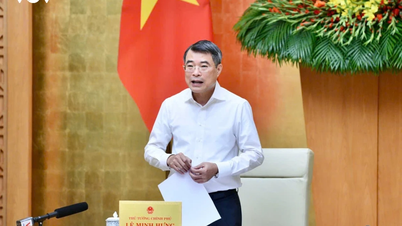
The Department of Wages and Social Insurance - Ministry of Interior recognizes that after the reorganization of the administrative apparatus, the workload and tasks, especially at the commune level, have increased significantly. In this context, further improving wage and allowance policies is identified as an urgent requirement to contribute to raising wages and income for officials, civil servants, and workers; ensuring social stability; and creating a favorable environment for socio-economic development and international integration.
Therefore, the Department of Wages and Social Insurance has advised and reported on matters related to wage regimes and policies to promptly resolve difficulties arising in practice, contributing to ensuring the rights and maintaining the morale of officials, civil servants, and employees during the process of restructuring and streamlining the apparatus. Currently, the Ministry of Interior is coordinating with the Ministry of Finance and other ministries and agencies to report to competent authorities for consideration and decision on increasing the basic salary level in 2026, ensuring it is consistent with the CPI, GDP, and the capacity of the state budget. The draft government decree stipulating the basic salary level for officials, civil servants, and the armed forces will be developed and finalized in the near future.
Regarding salary reform in general, in 2026, the Ministry of Interior will coordinate with relevant agencies to conduct a preliminary review of Resolution 27/2018. The focus will be on assessing the suitability and feasibility of the five salary scales and nine new allowance regimes in the public sector, linked to job positions, for submission to the Central Committee for consideration after 2026. This content will be compiled and submitted to the Politburo for comments in the third quarter of 2026. Based on the opinions of competent authorities on the overall salary policy, the Government will propose to the National Assembly a roadmap for salary policy reform that is consistent with practical conditions.
Promptly submit proposals for salary adjustments in Party and mass organization agencies.
In a recent conclusion on the situation and performance of the political system and local government at two levels, the Politburo and the Secretariat of the Central Committee instructed the Central Organization Department to urgently advise and submit to the Secretariat a document on amending and supplementing Decision 128/2004 of the Secretariat of the 9th Party Congress on the salary regime for officials and civil servants of Party agencies, the Fatherland Front, and mass organizations.
Source: https://baolaocai.vn/tien-luong-cong-chuc-da-den-luc-thay-doi-post890533.html





![[Photo] Delegation attending the 14th Congress of the Vietnam Trade Union visits the Mausoleum of President Ho Chi Minh.](https://vphoto.vietnam.vn/thumb/1200x675/vietnam/resource/IMAGE/2026/06/03/1780451842301_ndo_br_img-3824-jpg.webp)




























































































Comment (0)