

Following the first meeting at the foreign minister level on February 18th, the world is now eagerly awaiting a summit between the Russian and American leaders, hoping it will lead to a real breakthrough in the conflict in Ukraine.
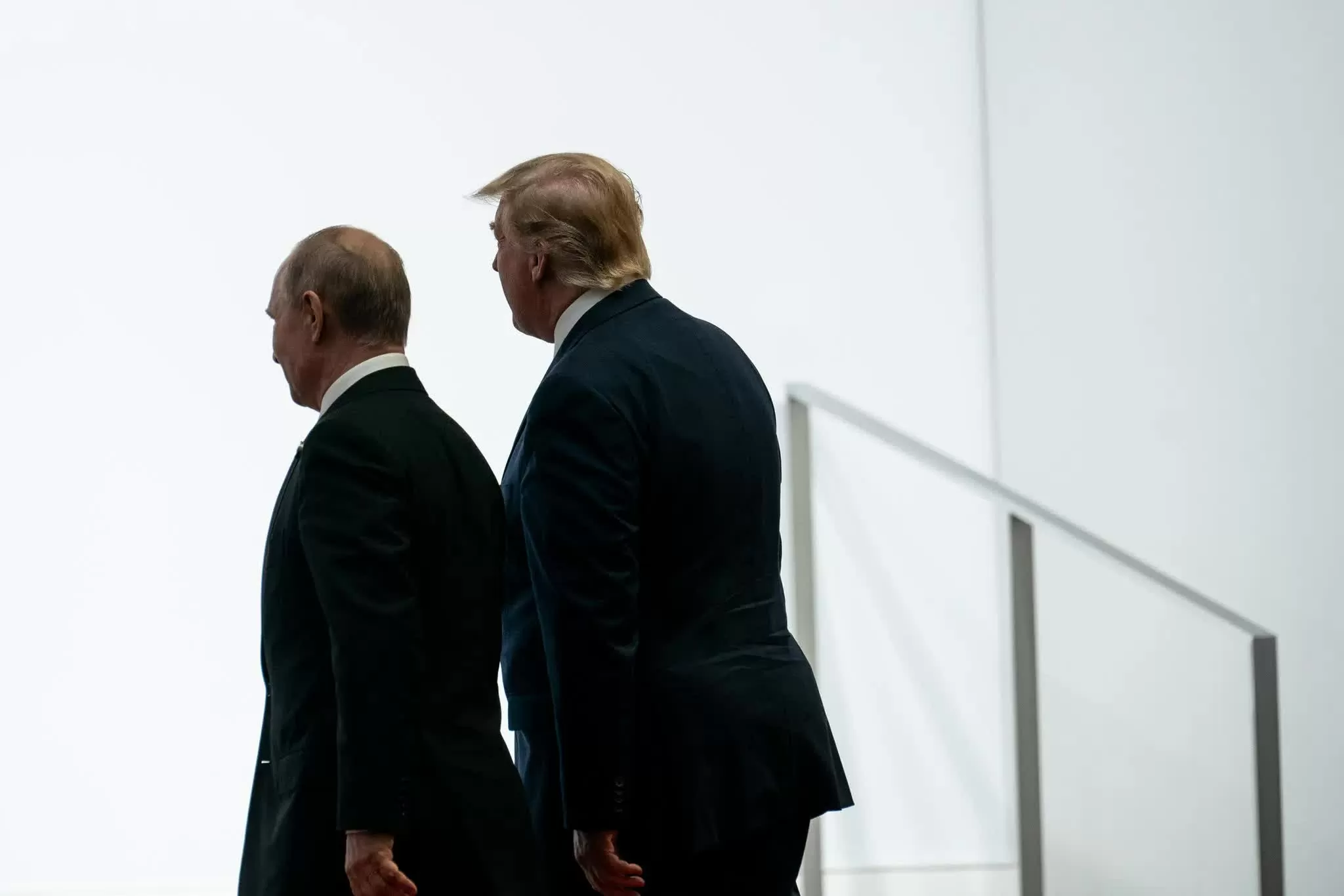 |
| President Donald Trump and President Vladimir Putin at the G20 summit in Osaka, Japan, 2019. (Source: New York Times) |
How will the three-year conflict between Russia and Ukraine end, and will the anticipated summit usher in a new phase of cooperation between the two "giants," Russia and the United States? This largely depends on the outcome of the recent meeting between the Russian and American delegations in Riyadh.
From commitment to action
Newly elected US President Donald Trump once made a shocking statement to the world, saying he would end the Russia-Ukraine conflict within 24 hours. However, the 47th president of the United States failed to achieve this. Nevertheless, what the world must acknowledge now is that Donald Trump has been and continues to push for the quickest possible end to the conflict in Ukraine through peaceful negotiations.
Since officially returning to the White House on January 20th, and until February 12th, a mere 20 days later, President Trump had his first telephone conversation with Russian leader Vladimir Putin. The call was described as "substantive and effective," aimed at ending the conflict in Ukraine.
Unlike his predecessor Joe Biden, Trump chose to end the Ukraine conflict through direct negotiations with Russian leader Putin, rather than Ukrainian President Zelensky. Six days after their first phone call, Trump sent a US delegation to Saudi Arabia to negotiate with the Russian delegation on February 18th. This rapid progress shows that Donald Trump is extremely eager and serious about fulfilling his promises, even if they don't quite live up to the campaign's stated goals.
The Russia-US talks at the Foreign Minister level concluded with positive signals. Both sides issued a statement agreeing to advance efforts to end the conflict in Ukraine, agreeing to restore normal operations of diplomatic missions between the two countries, and paving the way for a summit meeting between the two leaders.
Commenting on the meeting, US Secretary of State Marco Rubio said that the Russian side was "ready to engage in a serious process." On the same day (February 18), President Donald Trump also gave a positive assessment, saying he was much more confident that an agreement could be reached to resolve the conflict in Ukraine.
Meanwhile, the Russian delegation stated that the negotiations were very serious and all questions had been answered. Russia will soon initiate a “process for resolving the Ukraine issue.” President Putin also left open the possibility of direct negotiations with Ukraine if Moscow's conditions are met. According to Reuters , the US side made several “concessions” to Russia, stating that the West should consider lifting sanctions against Russia to reach a peace agreement, while emphasizing that the US has an interest in developing economic cooperation with Russia once the fighting ends.
Reaction and outlook
Kyiv took a new step immediately after the meeting. Speaking during a visit to Türkiye on February 18, Ukrainian President Volodymyr Zelensky announced the postponement of his visit to Saudi Arabia on February 19, citing his unwillingness to "legitimize" the US-Russia meeting in Riyadh.
According to Reuters, prior to the meeting, Europe had been working hard to prevent President Donald Trump from "selling out" Ukraine, a highly unlikely and difficult undertaking. When the meeting took place, European leaders held an emergency meeting in Paris, France. The three-hour meeting between EU leaders ended in deep division over the idea of deploying peacekeeping forces to Ukraine, as proposed by Ukrainian President Zelensky.
But in Riyadh, the initial results of the meeting showed that both the US and Russia had essentially found common ground in an agreement, including the four core principles of dialogue. This was a smooth, cautious start, demonstrating decisive attitudes and actions, mutual trust, and some concessions from the high-level leaders of both countries.
Many observers believe that the first round of negotiations in Saudi Arabia was not simply about finding a solution to end the conflict between Russia and Ukraine, or promoting bilateral cooperation; rather, behind it all, it may have been a "bargaining" session between Moscow and Washington in shaping a new world order.
For both Ukraine and Europe, the price to pay in this major power struggle between the two superpowers is quite profound and harsh. Both Ukraine and Europe, one directly involved in the conflict and the other an integral part of the war, share a common fate: being ignored by the US, not consulted, and worse, not directly involved in the recent negotiations. The fate of Ukraine and Europe now depends heavily on the bargaining between the leaders of Russia and the US.
Source: https://baoquocte.vn/trien-vong-sau-cuoc-gap-nga-my-o-riyadh-304901.html
![[Photo] Da Nang: Exploring the inside of Vietnam's largest "sail" symbol.](https://vphoto.vietnam.vn/thumb/1200x675/vietnam/resource/IMAGE/2026/03/31/1774964764698_ndo_br_anhcau1-jpg.webp)
![[Image] Creating urban areas along the Dong Nai River](https://vphoto.vietnam.vn/thumb/1200x675/vietnam/resource/IMAGE/2026/03/31/1774936857389_ndo_br_z7673258220978-0364bf985edfd080118668ad3c015934-resize-5023-jpg.webp)

![[Photo] General Secretary To Lam attends the Conference summarizing the work of the election of deputies to the 16th National Assembly](https://vphoto.vietnam.vn/thumb/1200x675/vietnam/resource/IMAGE/2026/03/31/1774952471746_ndo_br_bnd-2315-6970-jpg.webp)





































































Comment (0)