

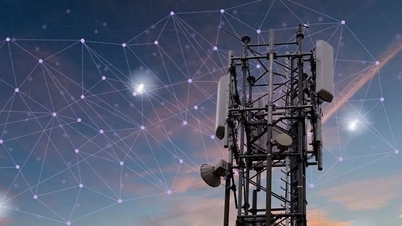
According to data released by China's Ministry of Industry and Information Technology earlier this week, the country had installed 3.5 million mobile base stations by the end of February. China now has 851 million 5G subscribers, accounting for nearly half of the country's mobile users.
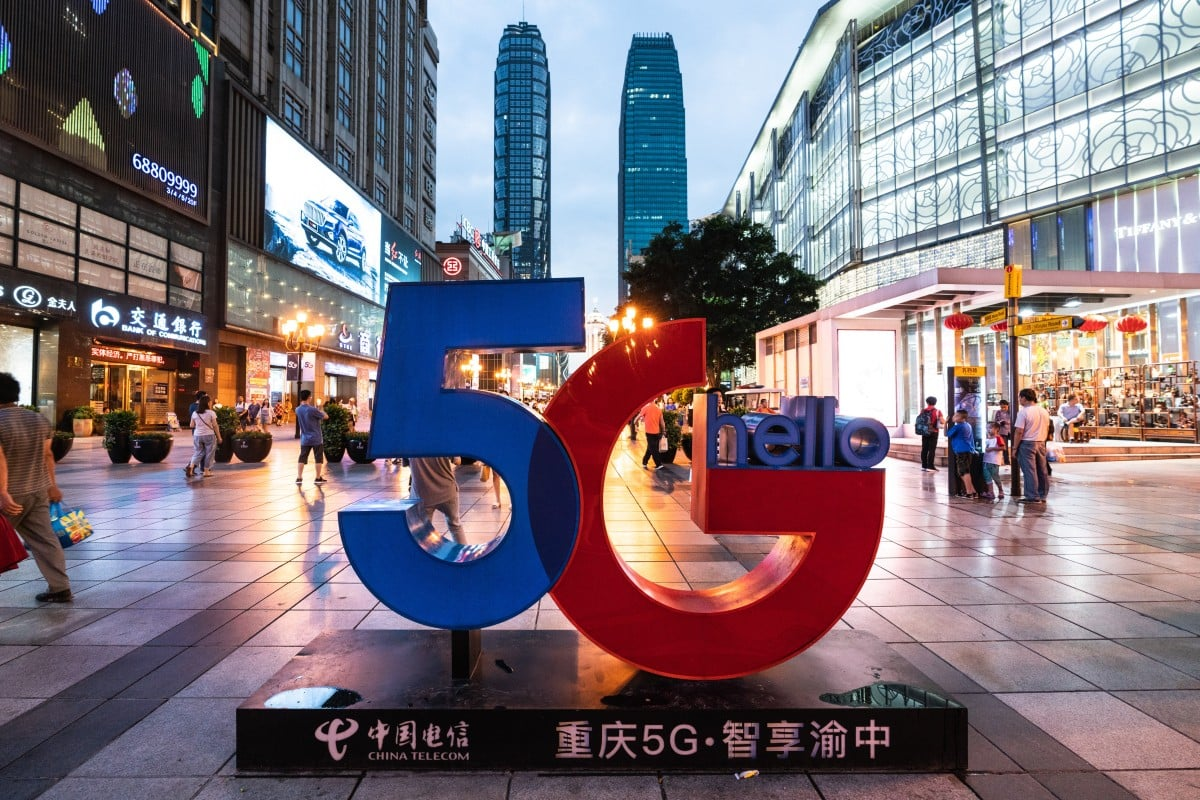
The total investment of the three domestic carriers – China Mobile, China Telecom, China Unicom – and the joint venture China Tower in 2023 reached 385 billion RMB (US$53.3 billion), a 2% increase from the previous year. However, their 2024 plan is projected to decrease by 5%, to 366 billion RMB. This is because investment in 5G has peaked.
China Telecom reported total investment last year of 98.8 billion yuan, up 7%, but forecasts a 3% decrease this year to 96 billion yuan. Chairman and CEO Ke Ruiwen told reporters that the main reason is structural change. For China Telecom, the proportion of investment in mobile networks, largely 5G, is smaller than the cost of “digitalizing the industry” by 2023. He predicted that investment will continue to decline in the coming years unless something on a large scale like 5G or 6G emerges.
China Mobile, the largest mobile operator by subscriber numbers, revealed that its investment peaked in 2023. Chairman Yang Jie repeatedly stated that the peak period for 5G investment was from 2020 to 2022, and that it would steadily decline in subsequent years. However, an exception is the investment related to enhancing computing capacity to support growth in artificial intelligence and cloud computing. Investment in this area could increase by more than 20% in 2024 to 47.5 billion yuan. This is still lower than the projected investment for 5G – 69 billion yuan.
Chairman Chen Zhongyue of China Unicom – the smallest of the three carriers – shares this view, stating that investment in computing capacity to support emerging fields like AI will continue to increase, but overall capital tends to decline unless a significant strategic opportunity emerges. China Unicom has partnered with China Telecom in recent years to “build together, share together” investments in 5G. As a result, both companies have saved 340 billion yuan in capital costs to date, helping to reduce operating costs by approximately 39 billion yuan annually.
China Mobile's chairman, Yang, predicts that the transition to 6G will occur around 2030. By then, the investment costs could be relatively reasonable due to technological advancements. In fact, investment costs for 5G in China peaked in 2023 but were still lower than the investment costs for 4G in 2015 (440 billion RMB).
The GSMA (Global System for Mobile Devices) has also just released its China Mobile Economy 2024 report. According to the report, the booming 5G market could contribute nearly $260 billion to China's GDP by 2030. The country's 5G connectivity is also expected to account for nearly one-third of the total global 5G connectivity during the same period.
In 2023, the mobile industry contributed 5.5% to China's GDP. Telecommunications is a pillar industry bolstering the country's rapidly developing digital ecosystem. A GSMA report indicates that the mobile industry has created nearly 8 million direct and indirect jobs.
GSMA assesses that the pace of 5G adoption in China is faster than expected due to the maturation of network deployment and the device ecosystem.
(According to SCMP and Nikkei)
Source
![[Photo] Capturing the moment the tide recedes at Yen Binh Son rapids - a million-year-old scenic spot in Quang Ngai.](https://vphoto.vietnam.vn/thumb/1200x675/vietnam/resource/IMAGE/2026/05/19/1779175463885_yen9-1199-jpg.webp)
![[Photo] General Secretary and President To Lam presides over a meeting on the implementation of Directive No. 34-CT/TW of the Party Central Committee.](https://vphoto.vietnam.vn/thumb/1200x675/vietnam/resource/IMAGE/2026/05/19/1779187768672_a1-bnd-2350-631-jpg.webp)

![[Photo] National Assembly Chairman Tran Thanh Man attends the groundbreaking ceremony for the National Highway 1A spatial axis project.](https://vphoto.vietnam.vn/thumb/1200x675/vietnam/resource/IMAGE/2026/05/19/1779161360398_ndo_br_bnd-1412-jpg.webp)





















































![[Photo] General Secretary and President To Lam receives Indian Defense Minister Rajnath Singh](https://vphoto.vietnam.vn/thumb/402x226/vietnam/resource/IMAGE/2026/05/19/1779184046302_anh-man-hinh-2026-05-19-luc-16-46-58.png)




















Comment (0)