

On the afternoon of May 28th, the National Institute of Nutrition ( Ministry of Health ) announced that it will launch the first phase of the 2026 Vitamin A supplementation campaign for children aged 6 to under 60 months nationwide, starting in June.

Associate Professor Truong Tuyet Mai shared about the benefits of regularly supplementing children with vitamin A.
Associate Professor Dr. Truong Tuyet Mai, Deputy Director of the Institute of Nutrition, stated that vitamin A plays a crucial role in growth, vision, and immunity. Regular high-dose supplementation is an effective, low-cost preventive measure that helps reduce micronutrient deficiencies and supports the comprehensive development of children.
According to the National Institute of Nutrition, 56% of children aged 6-59 months worldwide are deficient in at least one of three essential micronutrients (iron, zinc, and vitamin A). In Vietnam, the rate of anemia in young children is 18.1%, and in pregnant women it is 25.4%. Subclinical vitamin A deficiency in children under 5 years old is 8.9%, higher in the northern mountainous and midland regions.
Zinc deficiency remains common, with 53.3% of children aged 6–59 months and 63% of pregnant women having low zinc levels. Only about 21.2% of households use iodized salt that meets standards. Another survey also noted that 38.6% of children aged 6–11 months suffer from anemia; 31.1% of children aged 4–11.9 years are deficient in vitamin D; and over 60% are deficient in zinc.
According to experts, micronutrients are essential substances; although the daily requirement is very small (less than 100 mg), they play a crucial role in energy metabolism, immune system enhancement, and physical and intellectual development. Micronutrient deficiencies can cause many dangerous diseases.
Dr. Trinh Hong Son, Director of the Center for Nutrition Education and Communication (Institute of Nutrition), said that energy deficiency is easily recognizable, while micronutrient deficiency is often subtle, difficult to detect, but leaves long-term consequences in young children.
Micronutrient Day takes place over two days, June 1st and 2nd. In 2026, the campaign will target children aged 6 to under 60 months and high-risk groups such as those with severe acute malnutrition, measles, acute respiratory infections, or prolonged diarrhea. The program will be implemented for children aged 6-60 months in 23 provinces and cities and for children aged 6-36 months in 18 provinces and cities, following guidelines.

Micronutrient deficiencies are often referred to as "hidden hunger" in children.
Children aged 6-12 months should take one 100,000 IU tablet per dose; children aged 12-60 months should take one 200,000 IU tablet. Supplementation should be administered periodically every 4-6 months, aiming for a minimum of 98% of eligible children to receive the supplement.
The vitamin A supply is provided as a non-refundable grant by the Vitamin Angels organization (USA). In the first phase of 2026 alone, the National Institute of Nutrition allocated nearly 3 million capsules of 200,000 IU each to local areas.
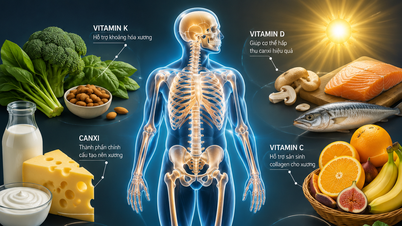
The National Institute of Nutrition recommends that parents take their children to receive vitamin A according to the schedule set by the commune/ward health station, while also maintaining a diverse diet and using foods rich in micronutrients to prevent deficiencies. The campaign is implemented twice a year, in June-July and December, in communes and wards.
Source: https://nld.com.vn/tu-1-6-tre-em-duoc-uong-vitamin-a-mien-phi-phong-thieu-vi-chat-196260528154400295.htm

![[Photo] The General Secretary, President and his wife begin their state visit to the Philippines.](https://vphoto.vietnam.vn/thumb/1200x675/vietnam/resource/IMAGE/2026/05/31/1780230559452_anh-man-hinh-2026-05-31-luc-19-28-11.png)

![[Photo] Admire the coral "masterpiece" amidst the million-year-old heritage of Dak Lak province.](https://vphoto.vietnam.vn/thumb/1200x675/vietnam/resource/IMAGE/2026/05/31/1780221235105_anh-man-hinh-2026-05-31-luc-16-53-27.png)
![[Photo] Solemn bathing ceremony and Buddha procession in Hue](https://vphoto.vietnam.vn/thumb/1200x675/vietnam/resource/IMAGE/2026/05/31/1780228263543_1-jpg.webp)


















![[Video] Sunset at Lap An Lagoon – Where the sun sets over the fishing nets](https://vphoto.vietnam.vn/thumb/340x192/vietnam/resource/IMAGE/2026/05/31/1780192137701_beach-landscape-sea-water-nature-grass-745871-pxhere-com.jpeg)
































![[Photo] Admire the coral "masterpiece" amidst the million-year-old heritage of Dak Lak province.](https://vphoto.vietnam.vn/thumb/402x226/vietnam/resource/IMAGE/2026/05/31/1780221235105_anh-man-hinh-2026-05-31-luc-16-53-27.png)





























Comment (0)