

From the Consensus 2025 forum to the shock of confidence.
At the Consensus 2025 blockchain event, Pi Network founder Nicolas Kokkalis envisioned an era of AI combined with decentralized blockchain, a public mainnet, and over 1,000 real-world Pi applications. However, the cryptocurrency community was soon met with a cold shower as experts warned that this vision was still a long way from becoming a reality.
Dr. Altcoin, a well-known analyst on the X platform, predicts that it will take another 2.5 to 5 years for Pi Network to create real value. Major challenges facing the project include a lack of clear startup support mechanisms, lengthy project selection and funding timelines, and the current poor quality of DApps.
Even if it's listed on a major exchange and the price increases by $2-3, this is still just a speculative effect and doesn't reflect sustainable value. Some more optimistic forecasts put Pi's price at $314 in the next 5 years, but this depends heavily on actual deployment and collaboration with exchanges like Binance.
Dr. Altcoin's blunt advice to the Pi community is: "Lower your expectations for the next 5 years."
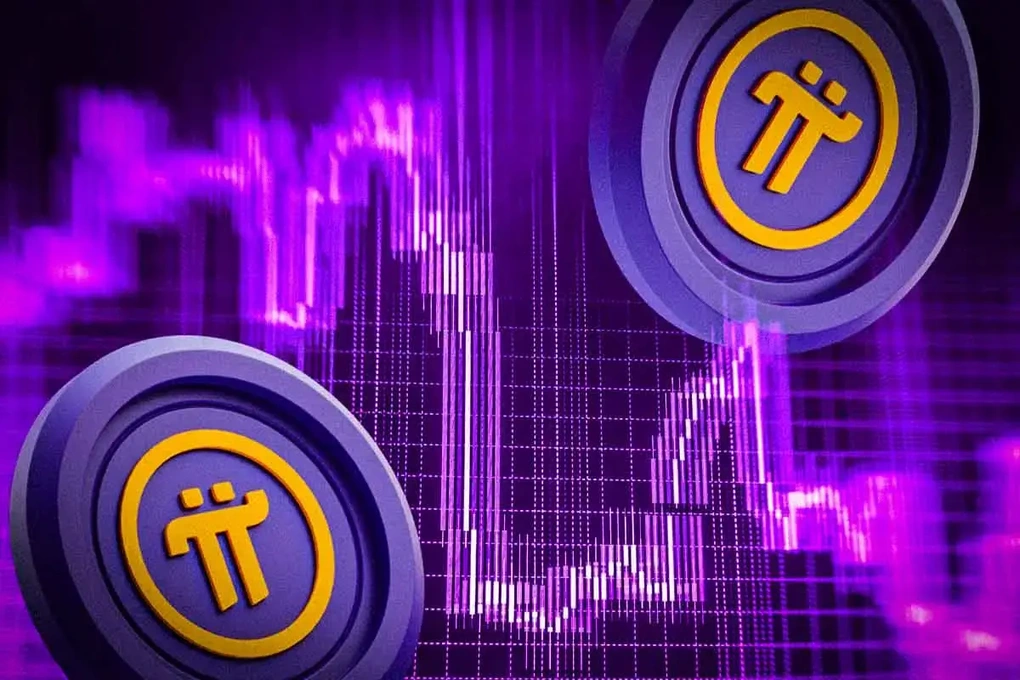
Many experts warn that it could take years for Pi Network to create real value (Illustration: Coingape).
The $100 million fund: A strategic boost or a betrayal?
Amid doubts about its development progress, on May 14th, the Pi Core Team announced the launch of Pi Network Ventures – a $100 million investment fund, a combination of USD and Pi tokens. The fund aims to support startups and businesses building practical applications using Pi in daily life, described as a "strategic turning point" to accelerate the launch of useful applications and promote the everyday use of Pi.
However, this announcement has drawn fierce criticism from within the Pioneer community and analysts. Dr. Altcoin called it "nothing short of a betrayal." He wrote: "We waited, believed, and contributed. Now we are told that the real DApps the team promised don't exist yet, and $100 million worth of value will be used to finally begin building them. That value comes from the trust and hard work of the Pioneer community."
Many users feel neglected as the development team seems to focus on new, ambitious projects instead of acknowledging the contributions of the community that has supported the project for many years. The lack of transparency regarding advertising revenue within the Pi Network app over the years is also a point of contention.
Furthermore, the fact that many users couldn't earn 1,000 Pi tokens because the team didn't reward referrals further fueled the community's feeling that their efforts were being disregarded. "The silence from the development team is jarring," commented Dr. Altcoin. "Pioneers aren't just users; they're the foundation of the Pi Network."
The sharp drop in Pi price: A lesson in "buy the rumor, sell the truth"
Amid high expectations, the cryptocurrency market witnessed a dramatic price surge for the Pi token in early May, pushing the price of Pi up by over 200% in just a few days, at one point peaking at $1.62 – its highest level since March 2025. This price surge was fueled by "teasers" from the Pi Foundation about an "important announcement" on May 14th and speculation about the possibility of Pi being listed on major exchanges like Binance.
However, when the official announcement of Pi Network Ventures was made (a long-term initiative rather than an immediate boost to the token's value), the market reacted with deep disappointment. The price of the Pi token plummeted by more than 50%, falling below $1.
This example is typical of the "buy the rumor, sell the fact" phenomenon – a familiar rule in the cryptocurrency market, where investors rush to buy in anticipation of good news, but then sell off immediately when the information turns out to be unexpected.
Despite the drop, some signals suggest that the Pi token price is stabilizing around its pre-surge range, indicating that volatility may be returning to normal levels. However, the recent sharp fluctuations (up 14.3% in 30 days, up 18.6% in 14 days, but down 18.4% in 24 hours and 2.7% in 1 hour as of the time of publication) show that Pi remains an extremely volatile asset.
The harsh reality: What does Pi Network need to survive?
Pi Network has successfully built a massive global user community. However, transforming this community into a truly viable economic ecosystem with practical applications is an enormous challenge. The project still faces many unanswered questions regarding the transparency of the development team, the fully open Mainnet roadmap, and the intrinsic value of the Pi token, which is not yet widely accepted for real-world transactions.
Compared to other blockchain projects like Bitcoin or Ethereum, Pi Network has fundamental differences in its "mining" mechanism and level of adoption. While Bitcoin and Ethereum have proven their value and liquidity, Pi Network is still in its development phase and seeking its foothold. The lack of prominent real-world applications and the participation of large institutions or investment funds is a significant obstacle.
At Consensus 2025, Nicolas Kokkalis primarily spoke about the vision, offering few concrete commitments regarding the mainnet timeline or solutions to the contentious issues. This only fueled further skepticism within the community.
Pi Network is at a crossroads: on one side is the dream of democratizing digital currency, on the other is the reality of limited resources and a lack of transparency. While Pi Network Ventures may be a step in the right direction, it also shows that the project is only just beginning its truly crucial phase.
True value won't come from promises or user numbers, but from a practical application ecosystem, reliable technology, and widespread acceptance. Until that happens, Pi remains a high-risk gamble – where only the wise survive.
Source: https://dantri.com.vn/kinh-doanh/tu-giac-mo-ty-do-den-thuc-te-phu-phang-pi-network-dang-di-ve-dau-20250517201857699.htm



![[Photo] General Secretary and President To Lam presides over the meeting to approve the draft report on the results of the second inspection by the Politburo of the Standing Committee of the Hanoi City Party Committee.](https://vphoto.vietnam.vn/thumb/1200x675/vietnam/resource/IMAGE/2026/05/26/1779789811432_a2-bnd-4430-9620-jpg.webp)





































































Comment (0)