

 |
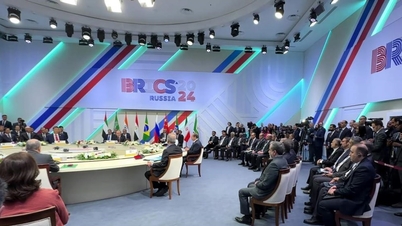
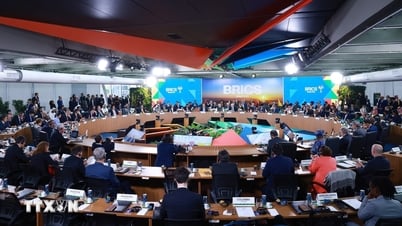
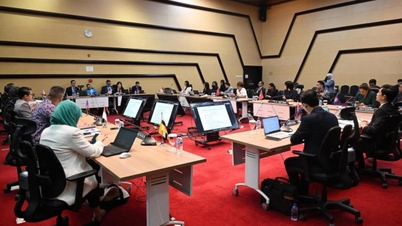
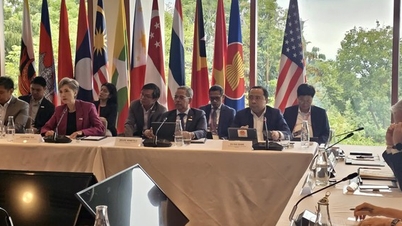
| The 15th annual summit of the group of leading emerging economies (BRICS) took place in Johannesburg. |
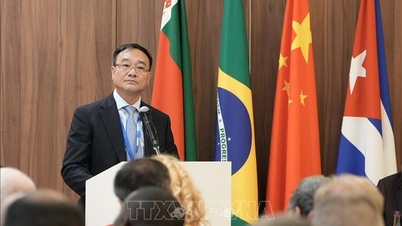
From August 22-24, the 15th annual summit of the BRICS group of leading emerging economies, comprising Brazil, Russia, India, China, and South Africa, took place in Johannesburg.
For the third time hosting the BRICS Summit since joining the group in 2010, South Africa chose the theme "BRICS and Africa: Partnership for Rapid Growth, Sustainable Development and Inclusive Multilateralism".
A new model of integration?
The BRICS group currently comprises 42% of the world's population and nearly 30% of its land area. It also accounts for approximately 27% of global GDP and 20% of global trade. South Africa announced that more than 40 countries have expressed interest in joining BRICS, with 22 formally requesting membership. Several countries, such as Iran, have highlighted the opportunity to strengthen partnerships and have clearly expressed their desire to become members of the group.
Unlike previous summits, this year, host country South Africa invited a large number of leaders and representatives from around 70 developing countries, including many African nations. According to Indian media, the 15th BRICS summit may be the first time that several countries, such as Argentina, Egypt, Indonesia, Saudi Arabia, and the United Arab Emirates (UAE), consider their membership aspirations.
In fact, since the 2017 conference, then-host country China has put forward the policy of admitting new members (BRICS+).
Russia views the addition of new members as a way to help BRICS develop and grow stronger, regardless of the form it takes.
Yaroslav Lissovolik, chief economist at the Eurasian Development Bank (EADB), believes that an expanded BRICS bloc would become the new model of integration for the global economy.
Commenting on a BRICS+ model, observers suggest that the current international system is dominated by the US and Western countries, and the views of developing countries are not fully reflected. Therefore, emerging economies hope to express their opinions, and the BRICS cooperation framework will provide that opportunity.
Outline of a new world order
According to Deutsche Welle (Germany), initial predictions about BRICS becoming the world's fastest-growing economy have not been entirely accurate so far. Instead, the bloc is now providing a developing diplomatic and financial forum outside the West.
In fact, during its first decade (2010), all five BRICS members performed very well, harboring ambitions to promote emerging market economies. However, the economic performance of the members began to decline in the second decade (2020), as each country in the bloc faced its own unique challenges.
Currently, the driving force behind emerging economies' desire to join the BRICS cooperation mechanism "is not just an economic club of rising powers seeking to influence global growth and development, but a political club defined by nationalism," as political scientist Matthew Bishop of the University of Sheffield notes.
Since the Russia-Ukraine conflict erupted, the BRICS countries have increasingly distanced themselves from the West. Moscow and Europe are deeply entrenched in a confrontation with little prospect of a way out. Meanwhile, neither India, Brazil, South Africa, nor China have joined the sanctions against Russia. According to expert Matthew Bishop, the conflict "appears to have drawn a clear line between a Russia backed by the East and one backed by the West."
For countries in the Southern Hemisphere, the conflict in Ukraine served as a wake-up call. On the one hand, it made Southern countries realize that the US and Western countries are doing everything to achieve their own strategic goals. On the other hand, these countries clearly understood that changing the international economic and political order that is unreasonable to them cannot rely on the US and developed countries to proactively change their stance, but requires unity to find a solution.
On the other hand, the way Beijing handles US-China relations fully demonstrates that China will strengthen cooperation with emerging market economies and will not follow US directives.
In other words, as Russian President Putin has repeatedly stated in the mass media, the goal is to overthrow the unipolar world order. Or, as the Indian Foreign Minister's message at the recent BRICS Foreign Ministers' Meeting conveyed – a strong message that: "The world is multipolar, the world is rebalancing, and old ways cannot solve new situations."
Considering their respective strengths, in late April 2023, Bloomberg published a forecast based on the latest data from the International Monetary Fund (IMF), stating that in 2020, the contributions of the BRICS and G7 countries (including the US, Canada, the UK, France, Italy, Germany, and Japan) to global economic growth were equal. Since then, the performance of the Western-led bloc has steadily declined. By 2028, the G7's contribution to the world economy is projected to fall to 27.8%, while BRICS will account for 35%.
Clearly, from a purely economic and trade perspective, BRICS has truly become a counterweight to the G7. Of course, to be ready for a truly new "multipolar world," BRICS leaders still have a long and challenging road ahead, with a multitude of intertwined difficulties.
However, with the goal sometimes as simple as South African Foreign Minister Naledi Pandor revealed, being to ensure that “we do not become victims of sanctions,” it is perfectly understandable that more and more countries are expressing interest in joining BRICS.
The news that BRICS is "gearing up" to expand its membership is neither new nor surprising. In one way or another, BRICS is preparing to move towards a future multipolar world. Thus, whether we like it or not, a new global overall picture has been outlined. A new trajectory for the world order seems to have been activated.
Source
![[Photo] National Assembly Chairman Tran Thanh Man working with the Standing Committee of the National Assembly's Delegation Affairs Committee.](https://vphoto.vietnam.vn/thumb/1200x675/vietnam/resource/IMAGE/2026/05/20/1779294340023_ndo_br_1-1691-jpg.webp)
![[Image] "Journey of Hope" promotes the organ and tissue donation movement in Vietnam.](https://vphoto.vietnam.vn/thumb/1200x675/vietnam/resource/IMAGE/2026/05/20/1779294400833_1-8910-jpg.webp)
![[Photo] General Secretary and President To Lam works with the Party Committee of the Ministry of Health on the work of Vietnamese traditional medicine.](https://vphoto.vietnam.vn/thumb/1200x675/vietnam/resource/IMAGE/2026/05/20/1779294323718_a1-bnd-2978-3319-jpg.webp)
















































Comment (0)