

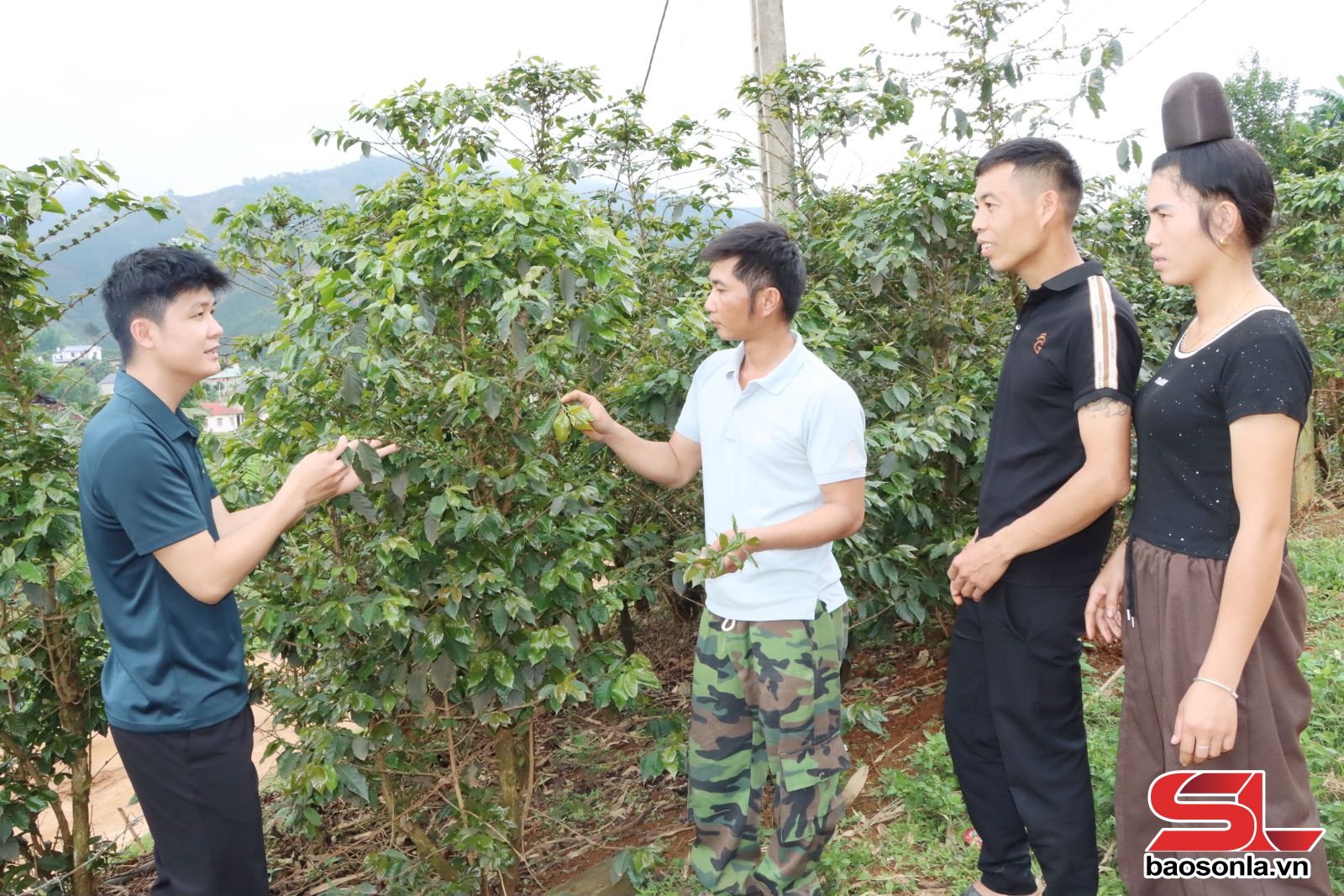
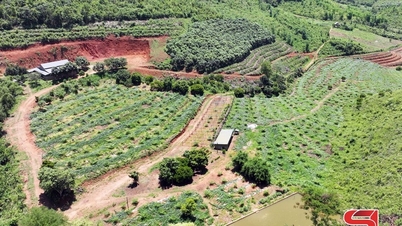
With fertile soil, a mild climate, abundant water resources, and gently sloping hills, this area is ideal for coffee cultivation. Rooted here for over 30 years, coffee is grown by local people on hillside fields and in their home gardens, primarily Arabica and Catimor varieties. These varieties, with their strong root systems deeply embedded in the soil, thrive year after year thanks to being grown from seeds and possessing drought-resistant properties. Currently, Muong Chanh commune has 2,800 hectares of coffee across all villages, with an annual production of nearly 40,000 tons. To develop a high-quality coffee growing area, from 2021 to 2025, Muong Chanh commune is mobilizing people to replant and graft new, high-yielding, high-quality varieties on over 500 hectares. They are also directing specialized agencies to train farmers in intensive coffee cultivation techniques and the use of organic fertilizers instead of inorganic fertilizers.
Returning to Muong Chanh this time, we were greeted by rolling hills covered in the lush green of coffee plantations. Scattered among the branches, a few late-blooming flowers still retained a touch of pristine white, interspersed with clusters of young, vibrant fruit. We stopped at Hom Loi village – the "origin" of the first coffee plants brought here over 30 years ago. While leading us through the verdant rows of coffee trees, Mr. Luong Van Nguyen, Party Secretary and Head of Hom Loi village, explained: Previously, cultivation relied entirely on nature and lacked pruning techniques. The coffee plantations were severely damaged by frost, resulting in low income. The real turning point came in 2011-2012 when the people began proactively applying advanced techniques to production.
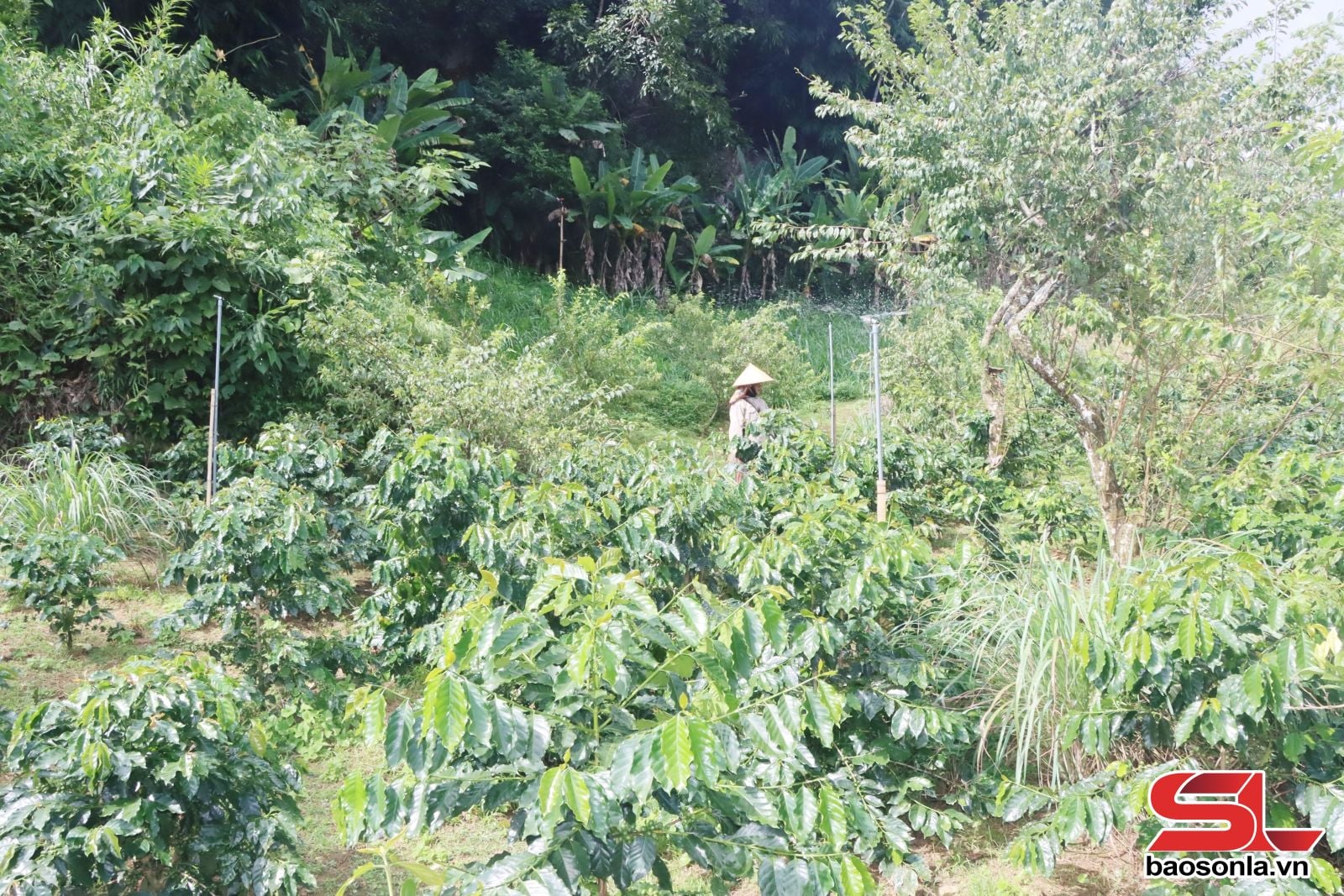
To enhance the value of coffee beans, Hom Loi village regularly collaborates with specialized agencies to organize technical training from cultivation and care to deep processing. The village management board actively operates a farming chain according to organic and VietGAP standards, while also switching to new varieties, intercropping with fruit trees, and resolutely replanting old coffee plantations while protecting the environment. To date, all 103 households in the village cultivate coffee on a total area of 41 hectares. The average yield reaches 13-15 tons/ha, producing 630 tons annually. Thanks to three consecutive years of good prices, each hectare brings in a profit of 150 million VND after deducting expenses. Thanks to coffee cultivation, the lives of the people are becoming increasingly prosperous, and the poverty rate in the village has decreased to 0.6%.
Not only in Hom Loi village, the success of the high-tech coffee cultivation model is spreading and being replicated throughout Muong Chanh commune, becoming a key development direction for the local government. Discussing this sustainable economic development strategy, Mr. Nguyen Bien Cuong, Chairman of the People's Committee of Muong Chanh commune, said: The commune has planned and developed a high-tech coffee cultivation area of 329.4 hectares, focusing on attracting businesses, cooperatives, and households to participate in a sustainable production and consumption chain. To date, the entire commune has 7 cooperatives and 1 enterprise linking with member households and farmers to expand production scale; promoting trade, advertising and introducing products, and developing OCOP products.
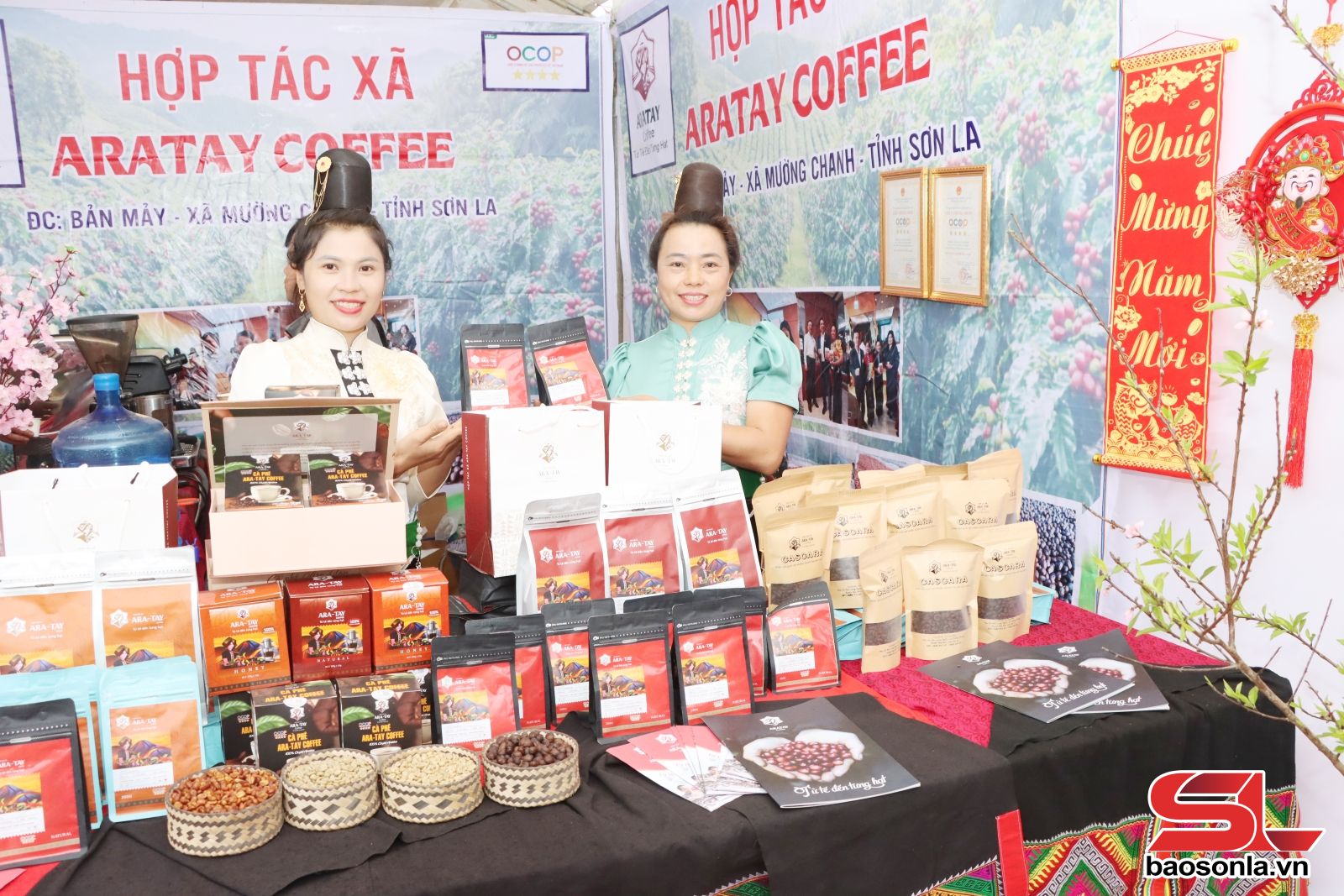
Following the general direction of the entire commune, Ara-tay Coffee Cooperative has emerged as a shining example in pioneering the development of a coffee brand. The cooperative has 14 members and is linked with over 100 households supplying raw materials for processing specialty coffee. Currently, the cooperative has 200 hectares of coffee plantations and over 300 hectares of satellite farms owned by households in the commune, providing raw materials for processing four products: Natural green coffee beans, Honey green coffee beans, and Natural ground and whole bean coffee. By 2025, the cooperative expects to sell over 90 tons of fresh coffee cherries, nearly 8 tons of green coffee beans, and 24 tons of processed coffee according to domestic orders and for export to South Korea and Japan. After deducting expenses, the cooperative's revenue is expected to exceed 2 billion VND.
Beyond traditional export orders to Japan and South Korea, Muong Chanh coffee beans are poised for a major breakthrough as they meet the stringent standards of the European market. Currently, Muong Chanh proudly stands as one of two pilot communes in Son La province selected to implement a sustainable coffee production model that meets EUDR (European Union Regulation on Deforestation). Accordingly, the commune receives support in surveying and reviewing coffee growing areas; establishing and managing digital data on growing regions; analyzing and identifying areas that meet EUDR standards and those at risk; and implementing product traceability for consumption and export. Simultaneously, forums and networks are being organized to promote sustainable coffee development. To date, Muong Chanh commune is reviewing and strictly managing coffee growing areas, completing land records, clearly defining growing regions, ensuring no areas violate forestry land regulations, and meeting the criterion of "no deforestation after 2020". Intensify propaganda and advise people to plant coffee according to the plan so that coffee gardens and plantations bring long-term and legal economic value.
Working alongside farmers, officials from the commune's General Service Center regularly visit the fields to provide technical guidance on coffee cultivation. Mr. Vi Van Than's family in Na Ca village has 1.3 hectares of coffee, and he actively participates in training courses on identifying signs of pest and disease infestation in coffee plants and methods of pest and disease control; how to choose fertilizers and pesticides, etc. Mr. Than shared: "Having grown coffee for over 10 years, I have a lot of experience in caring for the plants to achieve high yields and quality. Coffee plants become old after about 5-6 years, so we prune them, then focus on fertilizing and watering adequately, and about a year later the plants will yield a harvest again. This year, the weather is favorable, with plenty of rain, and my family is mobilizing labor to fertilize the plants to nourish the fruit. We expect this year's coffee yield to reach 17 tons of fresh fruit."
The journey of over 30 years, from spontaneously planted coffee trees to a high-tech agricultural production area, is a testament to the resilience and innovative spirit of the people of Muong Chanh. Beyond simply eradicating poverty, coffee beans now carry the aspiration for a green, responsible, and sustainable agriculture .
Source: https://baosonla.vn/nong-nghiep/vang-xanh-tren-nhung-vung-doi-muong-chanh-Ou4Ryf0vR.html
![[Photo] Ba Lang An Lighthouse - the "eye of the sea" amidst the "rock museum" of Quang Ngai province.](https://vphoto.vietnam.vn/thumb/1200x675/vietnam/resource/IMAGE/2026/05/29/1780038698840_anh-man-hinh-2026-05-29-luc-14-10-42.png)


![[Image] Pleasant weather helps students enter the 10th grade entrance exam with confidence.](https://vphoto.vietnam.vn/thumb/1200x675/vietnam/resource/IMAGE/2026/05/29/1780034401612_ngay-1-thi-lop-10-minh-duy-8-5009-jpg.webp)










































































Comment (0)