

" The pressure will intensify ."
During the National Assembly's discussion on the medium-term public investment plan for the period 2026-2030, many deputies pointed out a worrying reality: construction materials, which are traditionally a technical factor, are becoming a systemic bottleneck.
National Assembly Deputy Tô Ái Vang (Cần Thơ) noted that the shortage of sand and stone, along with price fluctuations, is one of the biggest obstacles to public investment projects, especially in the Mekong Delta region – an area with weak soil and a huge demand for leveling materials. At the macro level, National Assembly Deputy Trần Hoàng Ngân (Ho Chi Minh City) warned that with the medium-term public investment capital increasing sharply to 8.2 million billion VND, the pressure on the materials market will be even more intense than in the previous period. In the context of an unpredictable global economy and fluctuating raw material prices, the risk of having to adjust the total investment amount is very high.
In reality, even with total public investment at around 3 trillion VND, many projects are already facing material shortages. This raises serious questions about the ability to meet supply demands when the scale of investment increases many times over in the future.
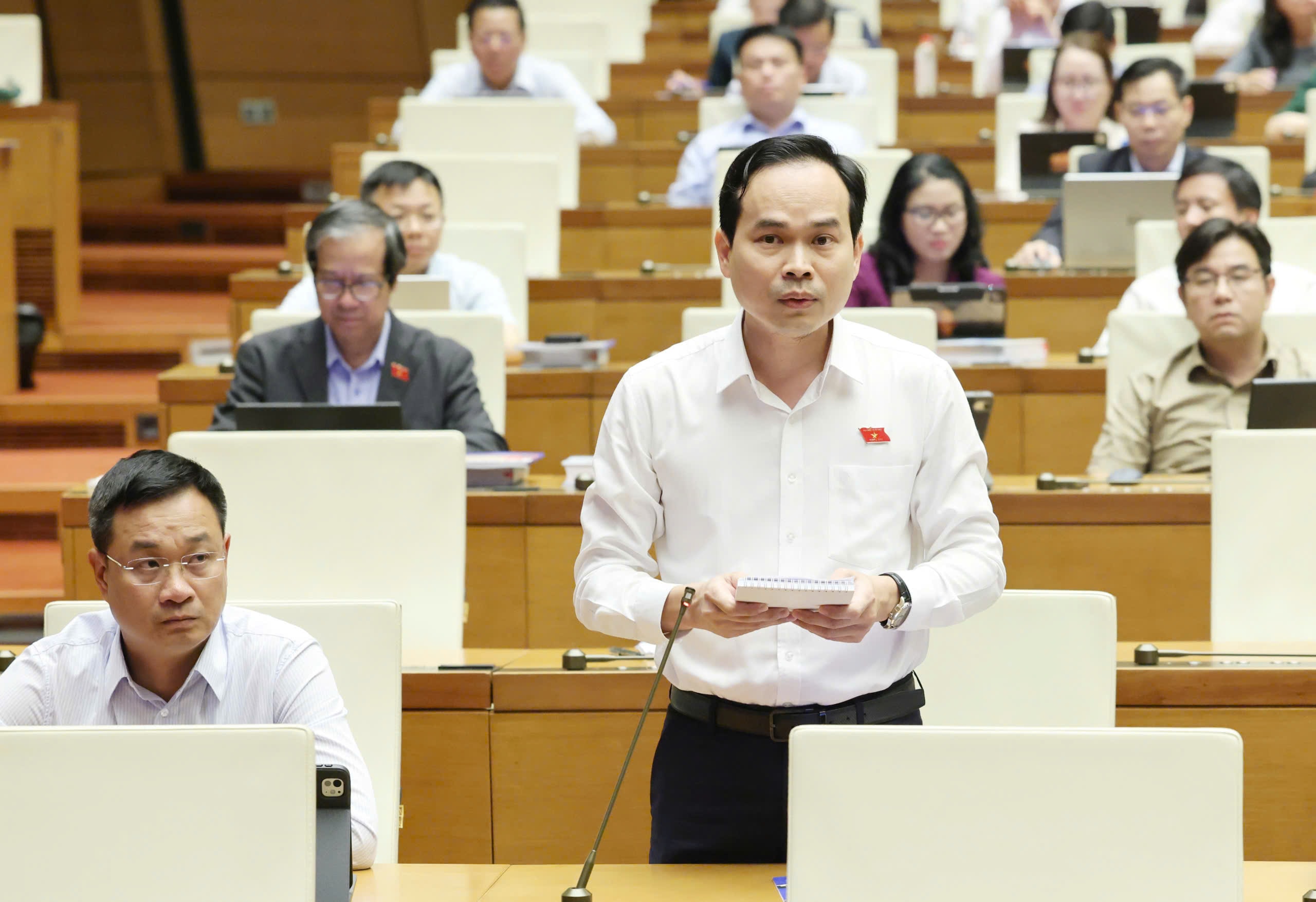
Notably, National Assembly Deputy Nguyen Duy Minh (Da Nang) pointed out a paradox: although mineral resources are owned by the entire population and managed by the State, when implementing public investment projects, raw materials still have to be purchased according to market mechanisms. This reality is creating a "cost loop" that is detrimental to the budget: the State has to use budget money to buy back its own resources at high prices. This paradox not only increases the total investment cost but also causes many projects to suffer from material shortages and delays in disbursement, thereby affecting the investment efficiency (ICOR).
According to delegate Nguyen Duy Minh, although there is a plan for mineral resources, including construction material mines, the current approach remains reactive and has not yet formed a proactive strategy to serve public investment. In reality, many projects only begin searching for material sources, going through the procedures for obtaining mining permits, or even adjusting the plan when they are about to start implementation. The "find what's lacking, deal with what's not" approach shows a lack of early preparation according to the needs of each project and region. This also reflects that current planning only focuses on resource management and is not closely linked to public investment planning and plans.
From situational handling to long-term strategy
Based on the above situation, National Assembly deputies believe that a more systemic and long-term approach is needed, instead of just addressing specific problems one by one.
Representative Nguyen Truc Son ( Vinh Long ) suggested that a mechanism similar to a "construction materials fund" should be studied to regulate the prices of sand and stone, avoiding sudden fluctuations that could cause difficulties for projects.
Representative Nguyen Duy Minh (Da Nang) proposed that the Government study mechanisms to regulate prices or establish a "strategic reserve" for construction materials, similar to the way gasoline and food are managed. However, it is not necessary to create a system of warehouses; the focus should be on planning material quarries with cleared land, while shortening the licensing procedures for exploitation so that they can be put into use immediately when demand arises, thereby contributing to lowering costs and avoiding prolonged bottlenecks due to land clearance issues.
Furthermore, delegate Nguyen Duy Minh argued that it is necessary to promote the circular economy model in the construction materials sector. This is not only an environmental solution but also a strategic direction that helps reduce dependence on natural resource exploitation, thereby reducing costs and stabilizing the market. "Solving the paradox of resource costs is not just a matter of pricing, but also requires perfecting the institutional framework for managing public assets to ensure that resource land rent is recycled to serve development instead of increasing the burden on the state budget," the delegate emphasized.
Also interested in new materials, delegate To Ai Vang (Can Tho) proposed standardizing the technical process to widely use sea sand in leveling highways, especially in sections that do not affect agricultural land. In addition, for areas with weak geological foundations, such as the Mekong Delta, switching from sand embankment construction to elevated bridge construction, while increasing initial investment costs, could reduce sand demand by 30-50%, while improving the structure's durability and flood drainage capacity.
Representative Tô Ái Vang also suggested that a digital data system on sand and stone reserves across the region should be developed to facilitate flexible coordination among localities, prioritizing key national projects. Given that sand prices at construction sites have sometimes increased by over 40%, localities should publish monthly material price indices that closely reflect market fluctuations, providing a basis for contractors to adjust contracts. Simultaneously, public investment projects should adopt contract mechanisms with clear and transparent adjustment and compensation coefficients based on actual fluctuations in construction material prices.
With public investment expected to be the main driver of growth in the coming years, resolving the material bottleneck is not only a technical requirement but also an institutional challenge. When planning, coordination, and pricing mechanisms fail to keep pace with the scale of investment, the full effectiveness of trillions of dong in budget funds will be difficult to realize. Conversely, if the "cost loop" is resolved and supply sources are proactively secured, public investment will not only be accelerated but can also spread more strongly throughout the entire economy.
Source: https://daibieunhandan.vn/vat-lieu-xay-dung-thach-thuc-lon-cua-dau-tu-cong-trung-han-10414653.html


![[Image] Pleasant weather helps students enter the 10th grade entrance exam with confidence.](https://vphoto.vietnam.vn/thumb/1200x675/vietnam/resource/IMAGE/2026/05/29/1780034401612_ngay-1-thi-lop-10-minh-duy-8-5009-jpg.webp)
![[Photo] Ba Lang An Lighthouse - the "eye of the sea" amidst the "rock museum" of Quang Ngai province.](https://vphoto.vietnam.vn/thumb/1200x675/vietnam/resource/IMAGE/2026/05/29/1780038698840_anh-man-hinh-2026-05-29-luc-14-10-42.png)














































































Comment (0)