

Nestled in the culturally rich Kinh Bac region, Dau Pagoda has long been a renowned spiritual destination in Northern Vietnam. Not only is it known as one of the oldest pagodas in Vietnam, but it is also considered the cradle of Vietnamese Buddhism, closely linked to the history of its introduction from the early centuries AD.
With a history spanning over 1,800 years, Dau Pagoda in Bac Ninh impresses with its ancient architecture, fascinating legends, and unique cultural values that have been preserved to this day.
Today, Dau Pagoda is not only a pilgrimage site for Buddhists but also an attractive stop for tourists who love the history, architecture, and folk culture of Northern Vietnam.
Where is Dau Pagoda located?
Dau Pagoda is located in Tri Qua ward, Bac Ninh province, in the ancient Luy Lau area – once a major economic , cultural, and Buddhist center of Vietnam during the early period of Chinese rule. In folklore, the pagoda is also known by many other names such as Chua Ca, Phap Van Tu, Co Chau Tu, or Dien Ung Tu.
From the center of Hanoi, it only takes about an hour to travel to the pagoda. Thanks to its convenient location and special historical value, it is often included in itineraries exploring the culture of Kinh Bac or spiritual tourism tours in the Northern Delta region.
In 2013, Dau Pagoda was recognized as a Special National Monument, affirming the pagoda's important role in the historical and religious landscape of Vietnam.
The temple is associated with the unique Four Dharma beliefs.
What makes Dau Pagoda special is not only its long history but also its unique Four Dharma belief system of the agricultural communities in Northern Vietnam.
Dau Pagoda is dedicated to Phap Van, the deity representing the god of clouds. The other three pagodas, however, worship the god of rain (Phap Vu) at Thanh Dao Pagoda, the god of thunder (Phap Loi) at Phi Tuong Pagoda, and the god of lightning (Phap Dien) at Phuong Quan Pagoda.
Since ancient times, the lives of rice-farming communities have depended heavily on the weather, leading them to develop beliefs in worshipping natural phenomena to pray for favorable weather and abundant harvests. When Buddhism was introduced to Vietnam, it blended with indigenous folk beliefs, creating a unique form of worship for the Vietnamese people.
Besides the Four Dharma Deities, Dau Pagoda also worships Thach Quang, a symbol bearing the mark of Shiva in Hinduism. This shows the profound cultural exchange between Indian Buddhism and indigenous beliefs during the early stages of Vietnamese culture.
Over 1,800 years of history in the ancient land of Luy Lau
According to many ancient documents, Dau Pagoda was built around the 1st-2nd century AD, a time when Buddhism began to spread to Vietnam through Indian merchants and monks.
In its early stages, Luy Lau was a major Buddhist center in Southeast Asia. Many famous high-ranking monks such as Khau Da La, Mau Tu, and Tini-da-luu-chi practiced and spread Buddhism there. Therefore, Dau Pagoda is considered the birthplace of Vietnamese Buddhism.
During the Ly and Tran dynasties, when Buddhism flourished and became the state religion, Dau Pagoda continued to receive attention from the court for renovation and expansion. Legend has it that in 1313, during the reign of King Tran Anh Tong, the scholar Mac Dinh Chi undertook a major reconstruction of the pagoda on a grand scale. At that time, a saying circulated among the people describing the grandeur of the structure: "a nine-story pagoda, a nine-span bridge, and a hundred-room pagoda."
More than just a place of worship, Dau Pagoda is also associated with many important religious events. In 1072 and 1703, the statue of Phap Van was carried to the capital city to pray for the rain to stop, demonstrating the pagoda's special sacred position in the spiritual life of the Vietnamese people.
Despite the ravages of war and time, many of the ancient structures are no longer intact, but Dau Pagoda still retains its ancient appearance and invaluable historical value.
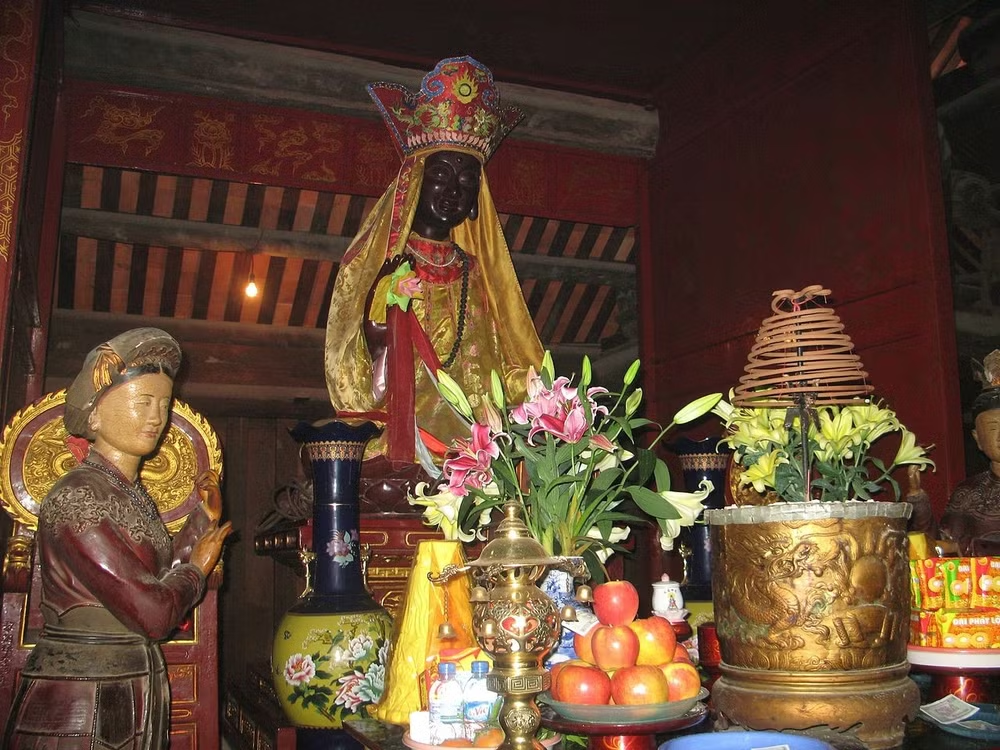
Discover the ancient charm of Dau Pagoda.
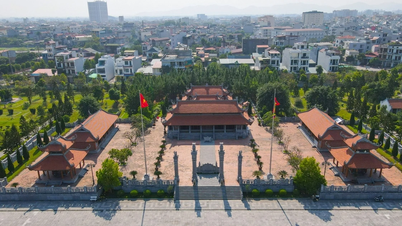
Dau Pagoda in Bac Ninh is built in the ancient "inner courtyard, outer enclosure" architectural style, consisting of three main buildings: the front hall, the incense burning hall, and the main sanctuary, connected to form the shape of the Chinese character "gong" (工). The entire grounds, covering more than 177 square meters, are enclosed by a wall built in the shape of the Chinese character "guo" (國). The buildings are arranged in a gradually increasing height from the outside to the inside, creating a majestic and solemn atmosphere for the ancient pagoda.
The temple's layout is arranged along an axis that gradually rises from the outside to the inside, creating a sense of solemnity while still harmonizing with the surrounding landscape.
Ancient entrance hall
The main hall consists of seven bays and two spacious side wings. Immediately in front is a system of stone steps extending through the five central bays. Most striking are the dragon carvings in the Trần Dynasty artistic style, still retaining their graceful and exquisite details.
Inside the main hall are altars dedicated to the Guardian Deities, the Venerable Master, the Holy Sages, and the Eight Vajra Deities. The space here is both ancient and solemn, creating a sense of tranquility for visitors.
Sacred incense burning chamber
Located in the central position connecting the front hall and the main hall, the incense burning hall houses the statue of the Nine Dragons - a familiar image in many Buddhist structures.
On either side of the corridor are altars dedicated to the Kings of Hell, the Prince of Tam Chau, and the scholar Mac Dinh Chi, who made significant contributions to the temple's restoration.
The rows of wooden columns, ancient tiled roofs, and the faint scent of incense give this place a unique beauty reminiscent of old Northern Vietnamese temples.
The main hall - the most sacred place.
The main hall houses the statue of Pháp Vân, affectionately known by locals as "Bà Dâu" (Lady Dâu). This is considered the most sacred area in the entire temple.
What's remarkable is that the exact material used to create the statue remains unknown. According to legend, the statue was carved from sacred wood taken from an ancient banyan tree deep in the forest.
Over the centuries, the statue has retained its majestic aura, becoming an important spiritual symbol for the people of the Kinh Bac region.
Hoa Phong Tower - the symbol of Dau Pagoda
In the center of the temple courtyard stands the ancient Hoa Phong Tower, a structure considered the symbol of Dau Pagoda.
The structure was built in 1313 during the reign of Tran Anh Tong, initiated by the scholar Mac Dinh Chi. The original tower had 9 floors, but now only 3 remain. It is built of handcrafted fired bricks, with four arched doorways on each floor. The second floor is inscribed with the three characters "Hoa Phong Tower." Inside are bronze bells and gongs cast in 1793 and 1817. At the base of the tower is an altar dedicated to the "Four Heavenly Kings." To the left is a stone stele (1738) and to the right is an 1,800-year-old stone sheep statue.
The image of Hoa Phong Tower has long been immortalized in folk songs: "No matter where one goes or comes from, if they see Dau Pagoda Tower, they will return." This simple verse evokes the deep affection of the people for this ancient pagoda.
Admire the national treasure, the wooden printing blocks of Dau Pagoda.
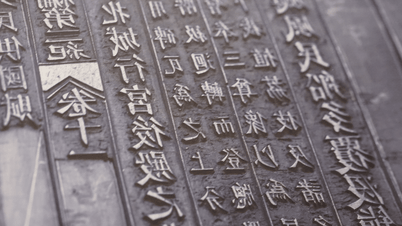
When visiting Dau Pagoda, one of the most worthwhile experiences is seeing firsthand the set of wooden printing blocks that were recognized as a National Treasure in January 2024.
The collection of wooden printing blocks from Dau Pagoda in Bac Ninh consists of 107 carved wooden planks made from persimmon wood, nearly 300 years old. This national treasure preserves precious content such as the legend of the Four Dharma Buddhas, Buddhist scriptures, rain-praying rituals, and many extremely exquisite hand-carved texts in Chinese and Nom script.
Each carved panel possesses an antique, sharp beauty with a harmonious composition, a vivid testament to the combination of traditional wood carving art and Vietnamese folk beliefs.
If you visit during the fourth lunar month, you'll have the opportunity to immerse yourself in the Dau Pagoda Festival – one of the major traditional festivals of the Kinh Bac region. The processions of the Four Dharma statues, Quan Ho folk singing, water puppetry, and other folk performances create an atmosphere that is both sacred and vibrant with cultural colors.
Here are some things to keep in mind when visiting Dau Pagoda in Bac Ninh:
- Dress modestly and respectfully: You should wear long clothing that covers your shoulders and knees; avoid overly short, revealing, or brightly colored outfits.
- Respectful behavior: Maintain silence, avoid loud talking, and refrain from joking around within the temple grounds. Limit the use of mobile phones and do not take photos in areas marked with "no phone use" signs or where ceremonies are taking place.
- Offering incense and gifts: Visitors should prepare vegetarian offerings such as fruits, sweets, sticky rice, and sweet soup… and only light 1-3 incense sticks at each altar to avoid creating smoke and ensure safety.
- Protecting historical sites: Do not touch Buddha statues, artifacts, or religious objects without instructions, and absolutely do not engrave names, draw graffiti, or litter within the temple grounds.
- Safeguard your belongings: During festive seasons or peak days, keep your personal items safe to avoid loss or theft.
Source: https://www.vietnamplus.vn/ve-bac-ninh-kham-pha-de-nhat-co-tu-troi-nam-post1109409.vnp
![[Photo] National Assembly Chairman Tran Thanh Man attends the groundbreaking ceremony for the National Highway 1A spatial axis project.](https://vphoto.vietnam.vn/thumb/1200x675/vietnam/resource/IMAGE/2026/05/19/1779161360398_ndo_br_bnd-1412-jpg.webp)
![[Photo] Capturing the moment the tide recedes at Yen Binh Son rapids - a million-year-old scenic spot in Quang Ngai.](https://vphoto.vietnam.vn/thumb/1200x675/vietnam/resource/IMAGE/2026/05/19/1779175463885_yen9-1199-jpg.webp)
![[Photo] General Secretary and President To Lam presides over a meeting on the implementation of Directive No. 34-CT/TW of the Party Central Committee.](https://vphoto.vietnam.vn/thumb/1200x675/vietnam/resource/IMAGE/2026/05/19/1779187768672_a1-bnd-2350-631-jpg.webp)





































![[Photo] General Secretary and President To Lam receives Indian Defense Minister Rajnath Singh](https://vphoto.vietnam.vn/thumb/402x226/vietnam/resource/IMAGE/2026/05/19/1779184046302_anh-man-hinh-2026-05-19-luc-16-46-58.png)




















Comment (0)