

Enduring Values
The writer and martyr Nam Cao, whose real name was Tran Huu Tri, was born in Hoa Hau commune, Ly Nhan district, Ha Nam province (formerly), now Nam Ly commune, Ninh Binh province. He was an outstanding realist writer, a staunch communist fighter, and made immense contributions to the literature, culture, and journalism of Vietnam.
Living through the years when the country groaned under colonial and imperialist yoke, he left behind famous realistic works such as: Chí Phèo, Lão Hạc, Đời Thừa, Sống Mòn… Nam Cao's writings profoundly depicted the fate of people in the old society with their suffering, aspirations for life, and human dignity, using simple language, rich in realism and full of humanism. Participating in the revolution, he was a staunch revolutionary fighter. He sacrificed his life in the resistance against French colonialism at the young age of 36, but he left behind indelible marks : a unique literary style and a vibrant life of revolutionary activity .
For his immense contributions to the revolutionary cause and literature, he was posthumously awarded the First Class Resistance Medal against the French and the Ho Chi Minh Prize for Literature and Arts (first round) in 1996 by the Party and the State.
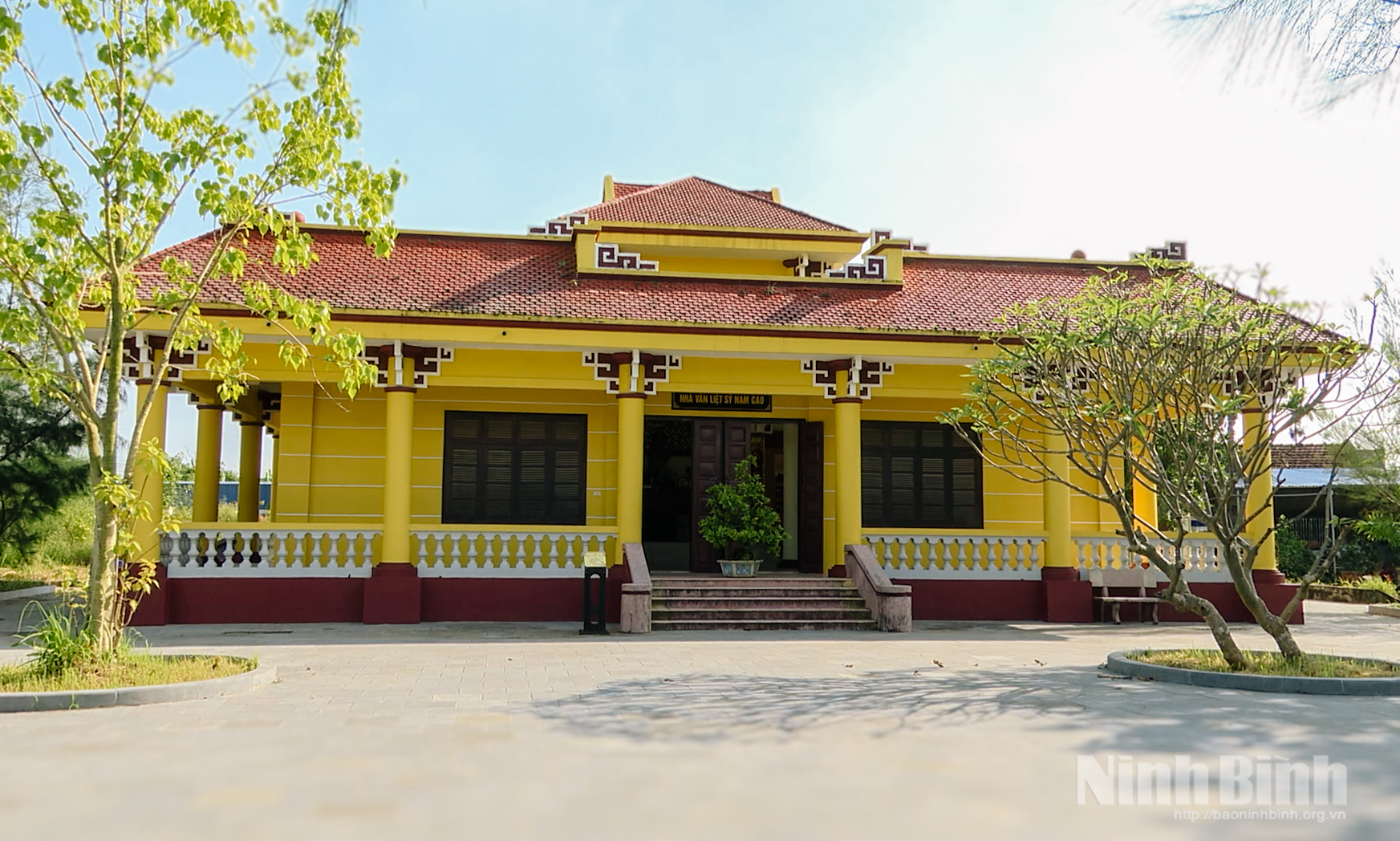
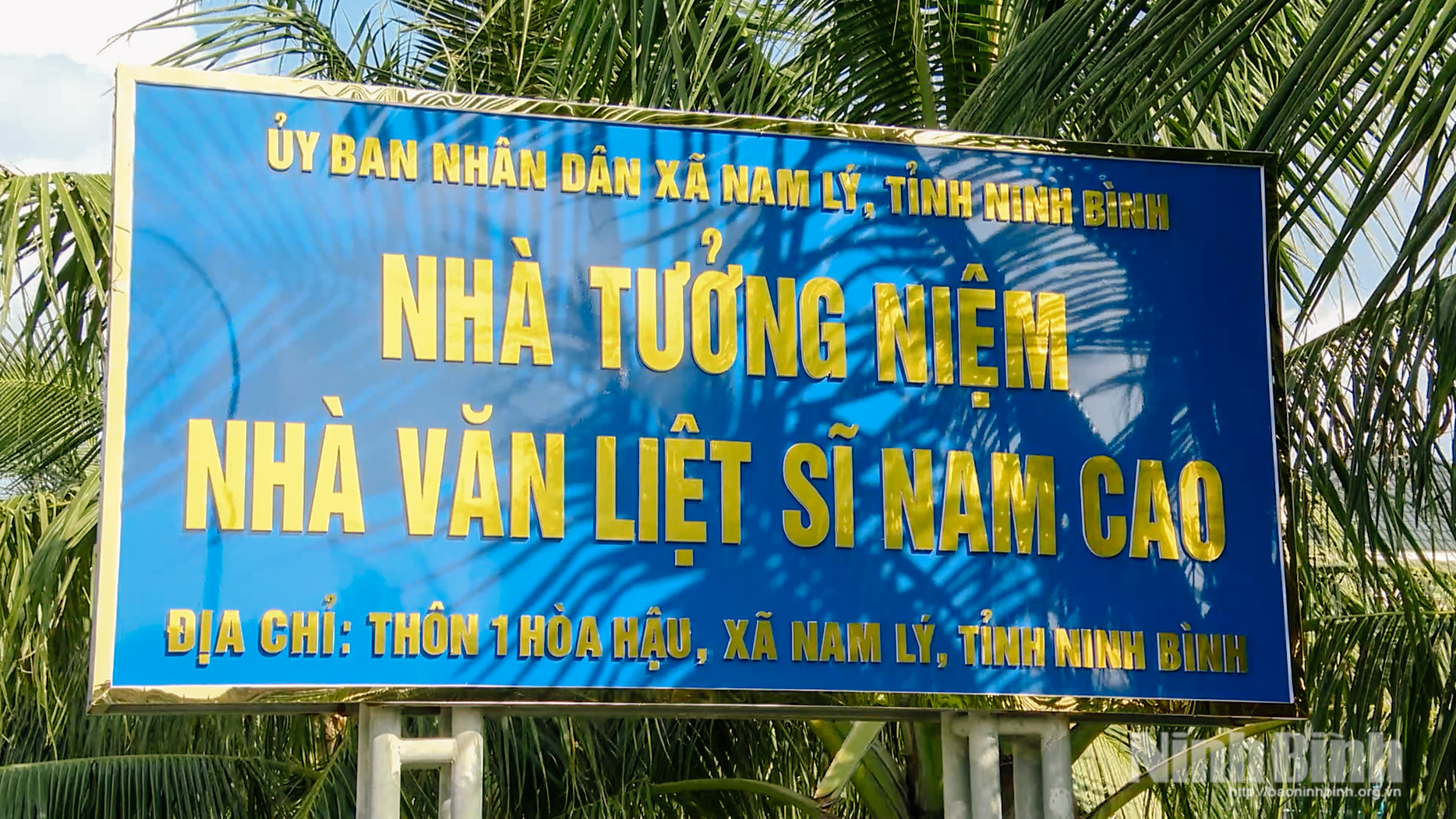
The Nam Cao Memorial Area is a place that preserves memories and artifacts associated with the name and career of the late writer. The current Nam Cao Memorial House is built on the land of the houses of the two village elders, Mr. San and Mr. Luong, two real-life people from Dai Hoang village who served as the inspiration for the character Lao Hac in the work of the same name.
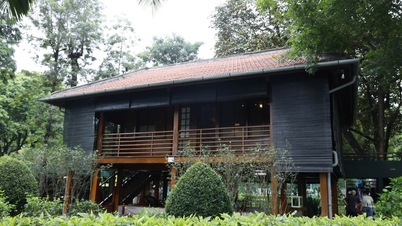
The house is built with three spacious rooms. The central room is designed to be set back in a hammer-handle style. From the main entrance, the memorial house leads to the writer's shrine. The altar is placed on a raised platform 0.5m high, accessible via three steps. The altar features a bronze bust of the writer, and above it hangs the First Class Resistance Medal against the French and the Ho Chi Minh Prize posthumously awarded by the State.
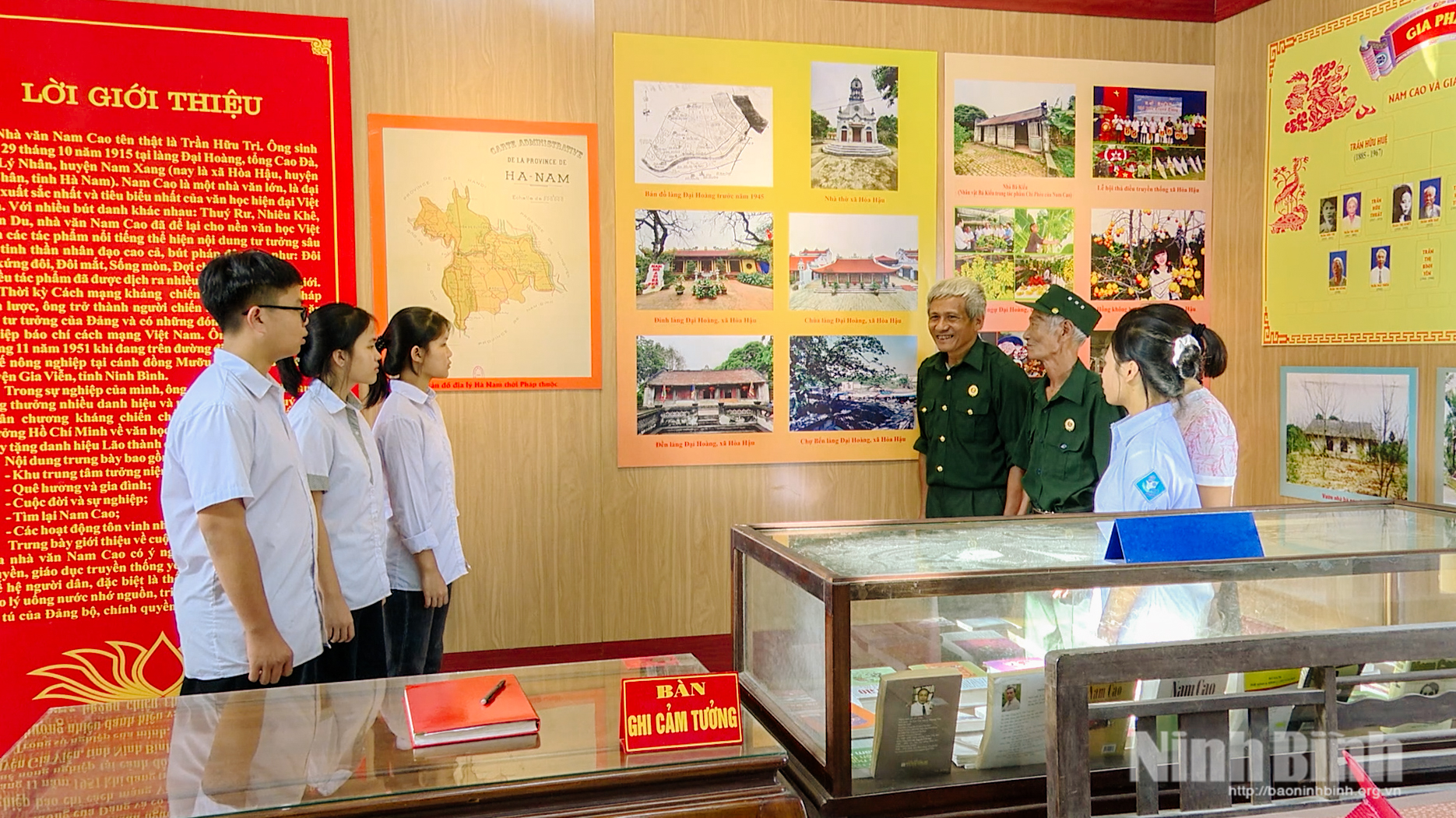
In 2011, to commemorate the 60th anniversary of the writer's death, the exhibition space was reorganized to include documents and artifacts about the writer's life, career, and hometown, as well as tributes and commemorative activities by local authorities, associations, organizations, and individuals nationwide towards the writer Nam Cao.
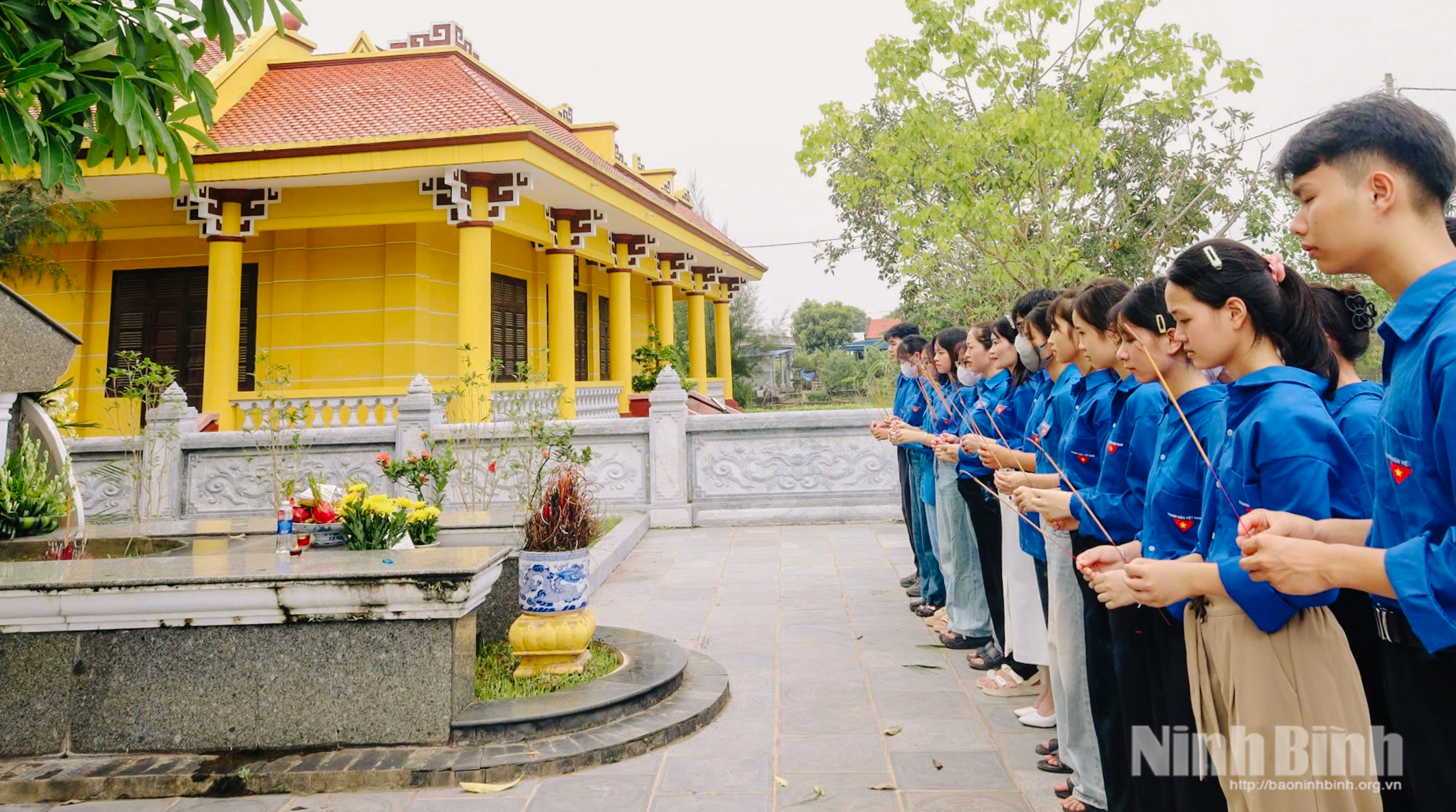
The tomb of writer Nam Cao is located within the memorial grounds. In front of the tomb are a portrait of the writer and two pages inscribed with his artistic manifesto, excerpts from his works "The Superfluous Life" and "Diary in the Forest". On February 24, 2023, the Nam Cao tomb complex and memorial site were recognized as a National Monument by the Ministry of Culture, Sports and Tourism.
The memorial site is not only a place to preserve artifacts associated with the writer's name and career , but also a place where writers and visitors who love and admire the writer come to light incense and pay their respects. In particular, the memorial site attracts a large number of students who come to visit and learn about the writer during exam periods, holidays, and festivals, serving as a place to educate many generations of students in the province about local historical traditions .
Tran Trong Vinh, a student from Hoa Hau Secondary School, proudly shared: “ I am very proud to be born in this heroic land, the homeland of the martyred writer Nam Cao. He not only possessed a realistic and revolutionary literary soul but was also a very patriotic and courageous soldier. He sacrificed his life, but his will, spirit, and works live on forever with future generations. This is the spiritual motivation that gives us strength to strive to learn more, to follow the example of writer Nam Cao, and to contribute our small efforts to building a richer and more beautiful homeland and country in the future .”
Promoting the value of the Memorial Area
The memorial site was built as a space to preserve and display documents, artifacts, and works by the writer Nam Cao, as well as articles by authors about him. It is not only a place to honor him but also a vibrant space that transports visitors back to the settings that once existed in Nam Cao's works.
Every year, the memorial site hosts activities to honor and commemorate the writer on his birthday, death anniversary, and the Day of War Invalids and Martyrs (July 27th). In addition to visits, students from schools in the commune organize cleaning and landscaping activities, caring for trees and creating a greener, cleaner, and more beautiful memorial area for the writer. According to statistics, the Nam Cao Memorial Site receives approximately 2,500 to 3,000 visitors annually, mainly students, demonstrating the central role of this heritage site in extracurricular education.
At the memorial site, visitors can revisit the "Ba Kien" house, the rural market, the abandoned brick kiln area... landmarks and characters from the literary works of writer Nam Cao. Everything is authentically and intimately depicted, creating a space rich in rural charm and literary charm. More than just a destination with cultural and historical value, the memorial site also offers attractive community tourism experiences.
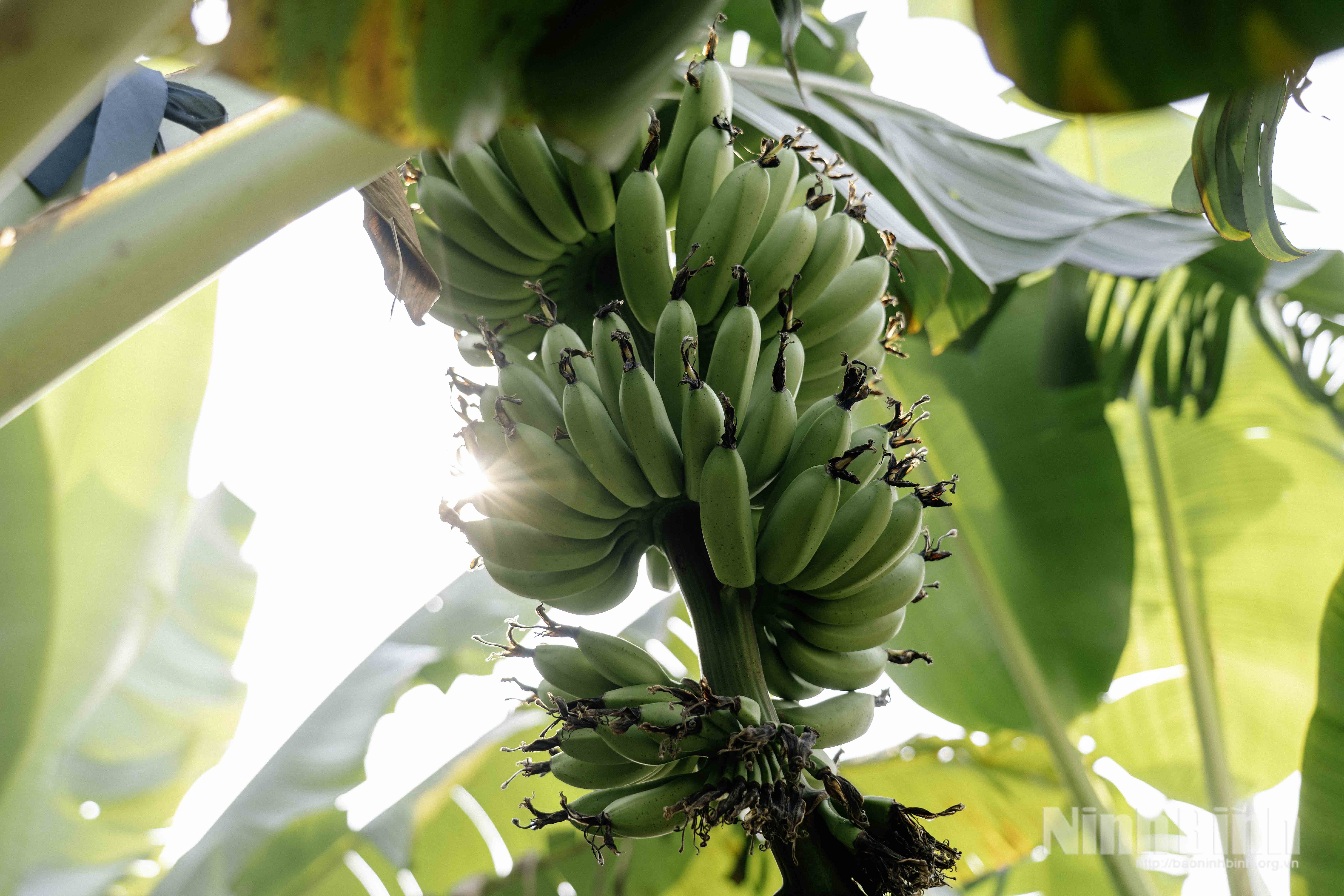
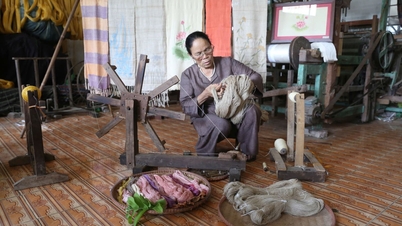
What attracts tourists when visiting the Memorial Area is the opportunity to enjoy famous local specialties such as Dai Hoang royal bananas, once offered to the King, and the flavorful braised fish from Nhan Hau village. They can also visit and experience the traditional weaving craft of Vu Dai village, a place that has preserved the beauty of traditional labor practices for generations.
Spending an entire day experiencing Village 1 in Hoa Hau, Ms. Nguyen Thi Hoa, a tourist from Hanoi, excitedly shared: “It’s hard to find a place that can give me such wonderful experiences as here. At the birthplace of writer Nam Cao, our group got to experience cooking fish with the locals, enjoy the unique ‘royal’ banana delicacy, and visit the house of Mr. Ba Kien. I felt like I was living and immersing myself in the vivid pages of Nam Cao’s writings.”
Immediately after implementing the two-tiered local government model, the People's Committee of Nam Ly commune proactively developed a plan to receive and preserve the original state of the memorial site's facilities; and strengthened political and ideological education for the younger generation by organizing field trips and educational visits for students to the memorial site.
On the other hand, in order to strongly promote the values of the historical site, the People's Committee of Nam Ly commune has proactively developed tours and travel routes to visit and experience the Memorial Area, combined with experiencing the unique cultural and culinary values of the locality; assigning organizations and individuals to take care of, preserve, and clean the environment of the memorial area.
Mr. Tran Tien Thieu, Head of the Culture and Social Affairs Department of Nam Ly Commune, said: “The Nam Cao Memorial Area, recognized as a national historical relic, is a great honor and source of pride for the people of Nam Ly Commune. In the coming time, we will actively advise the Provincial People's Committee to strengthen the renovation, repair, and restoration of some items in the Memorial Area. In addition, we will call on travel agencies to promote tourism connections, linking the Memorial Area with a chain of cultural, historical, and culinary tourism, thereby contributing to enhancing the value of the relic and strongly promoting the unique traditional values of our homeland.”
Returning to the old Dai Hoang village, we can clearly feel the strong development of a rapidly growing rural area. The hardworking and resilient people of "Vu Dai Village of yesteryear" have risen out of poverty, bringing about a vibrant new face of a developing countryside. The complex of tombs and memorials of the martyred writer Nam Cao has been recognized as a National Historical Monument, a source of pride and honor for the people of Nam Ly commune in particular and the people of Ninh Binh province in general.
We believe that, with the joint efforts of all levels of government and the endeavors of the people, the Memorial Area of the martyred writer Nam Cao will become increasingly more beautiful to serve the people and tourists from all over, worthy of being a significant site for educating about the revolutionary history and culture of Ninh Binh, a land of culture and heroism.
Source: https://baoninhbinh.org.vn/ve-tham-khu-tuong-niem-nha-van-nam-cao-260204125023548.html
![[Photo] General Secretary and President To Lam presides over a meeting on the implementation of Directive No. 34-CT/TW of the Party Central Committee.](https://vphoto.vietnam.vn/thumb/1200x675/vietnam/resource/IMAGE/2026/05/19/1779187768672_a1-bnd-2350-631-jpg.webp)
![[Photo] Capturing the moment the tide recedes at Yen Binh Son rapids - a million-year-old scenic spot in Quang Ngai.](https://vphoto.vietnam.vn/thumb/1200x675/vietnam/resource/IMAGE/2026/05/19/1779175463885_yen9-1199-jpg.webp)
![[Photo] National Assembly Chairman Tran Thanh Man attends the groundbreaking ceremony for the National Highway 1A spatial axis project.](https://vphoto.vietnam.vn/thumb/1200x675/vietnam/resource/IMAGE/2026/05/19/1779161360398_ndo_br_bnd-1412-jpg.webp)

































![[Photo] General Secretary and President To Lam receives Indian Defense Minister Rajnath Singh](https://vphoto.vietnam.vn/thumb/402x226/vietnam/resource/IMAGE/2026/05/19/1779184046302_anh-man-hinh-2026-05-19-luc-16-46-58.png)


























Comment (0)